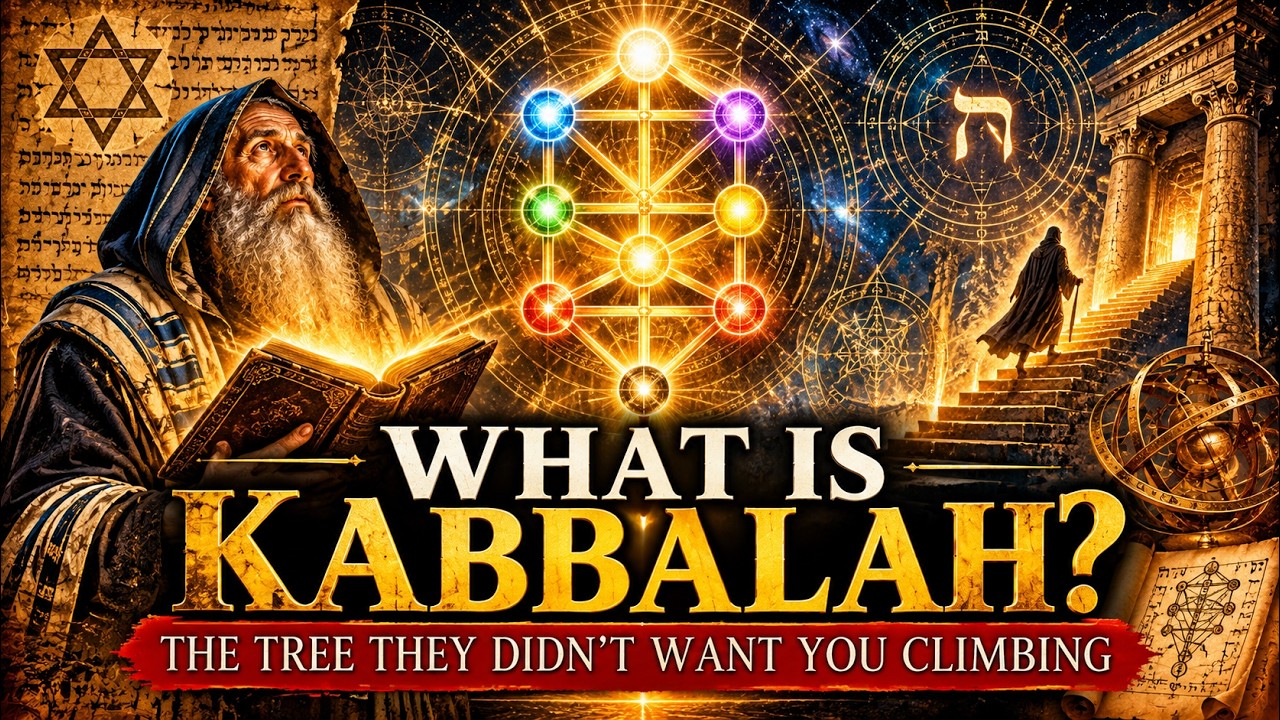
What Is Kabbalah? The Tree They Didn't Want You Climbing
This video is a solo narrated piece on Kabbalah, the Jewish mystical tradition built around the Tree of Life diagram of ten sefirot connected by 22 paths. The narrator (speaker identity not stated) traces the tradition from early rabbinic sources such as the Mishnah and the Talmud's story of four sages entering a mystical orchard, through medieval texts including the Sefer Yetzirah, the Bahir, and the Zohar, and Isaac Luria's teachings in Safed, to its later adoption into Christian Kabbalah and Western occultism. The piece's center of gravity shifts from this historical and textual background toward the narrator's own interpretive application of the tree's symbolism, such as Chesed, Gevurah, and Tiferet, to everyday emotional and behavioral balance, a move the narrator frames as the real guarded teaching behind the diagram rather than a claim resting on independent historical support.
The narrator's core framing argument is that the real guarded teaching in Kabbalah was never the diagram itself but the lived experience behind it, since memorizing the names of ten circles takes no courage [19:36].
- The tradition discussed throughout the video is called Kabbalah [01:11].
- The narrator states the word Kabbalah comes from a Hebrew root meaning 'to receive,' making it the received tradition [02:28].
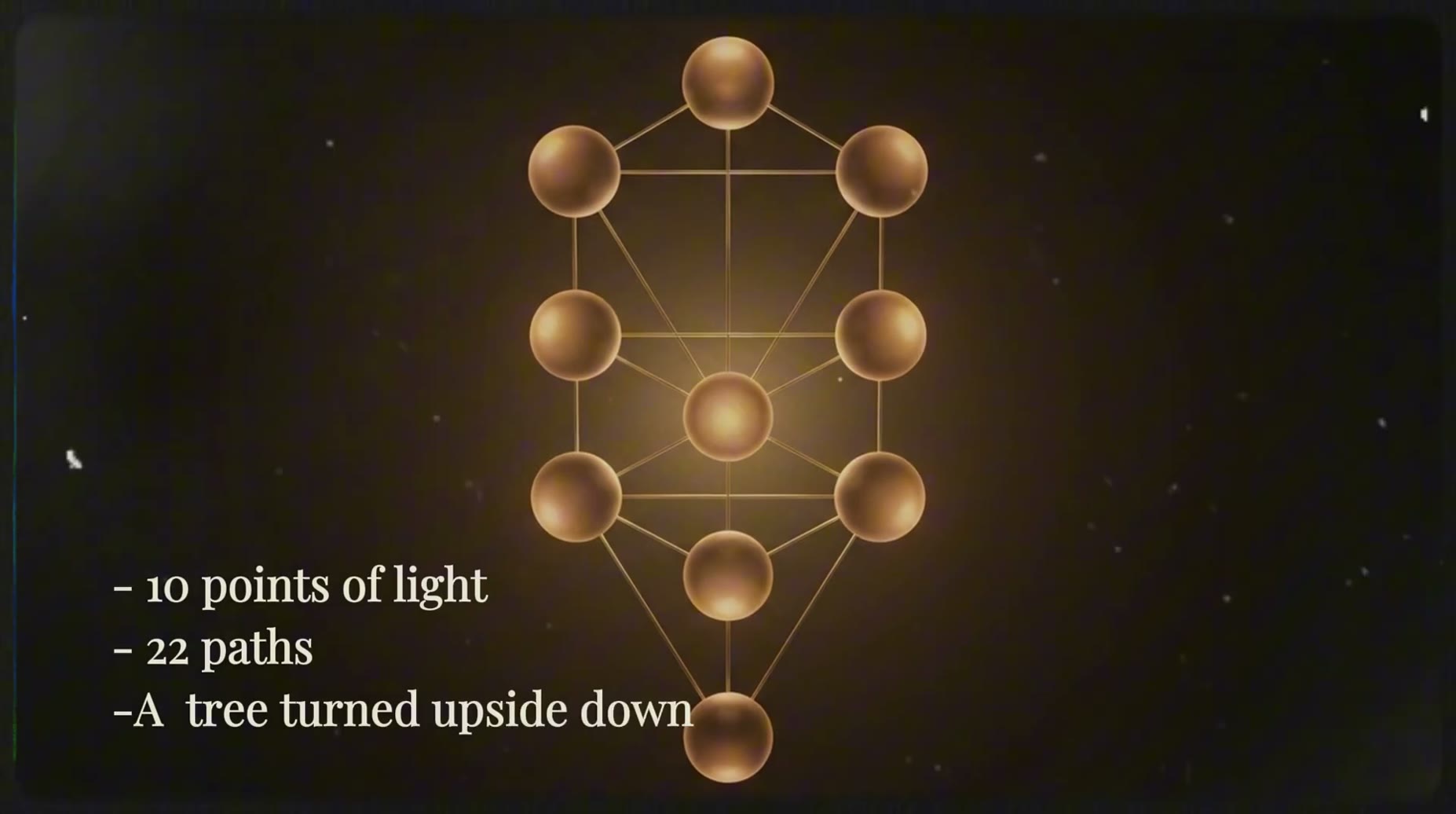
- The central diagram is described as ten points of light connected by 22 paths, arranged like a tree turned upside down [00:57].
- Within the tradition, Kabbalists trace their knowledge back to Adam, Abraham, and Moses receiving more than the written Torah at Sinai, a claim presented as the tradition's own, stated without independent evidence given [03:06].
+ 52 more takeaways
- Historian Gershom Scholem is cited as arguing Kabbalah emerged as a distinct movement in the Middle Ages, mainly from the 12th century onward in southern France and northern Spain, drawing on older streams of Jewish mysticism [03:38].
- A Mishnah passage is described as containing a sentence that functions like a warning label on the subject [01:45].
- The Mishnah, in tractate Hagigah, is cited as ruling that the account of creation may not be taught before two people, and the chariot may not be taught before even one person unless that person is already wise [04:51].
- The Mishnah is cited as warning that whoever looks into four things, what is above, what is below, what came before, and what comes after, would have been better off never born [05:30].
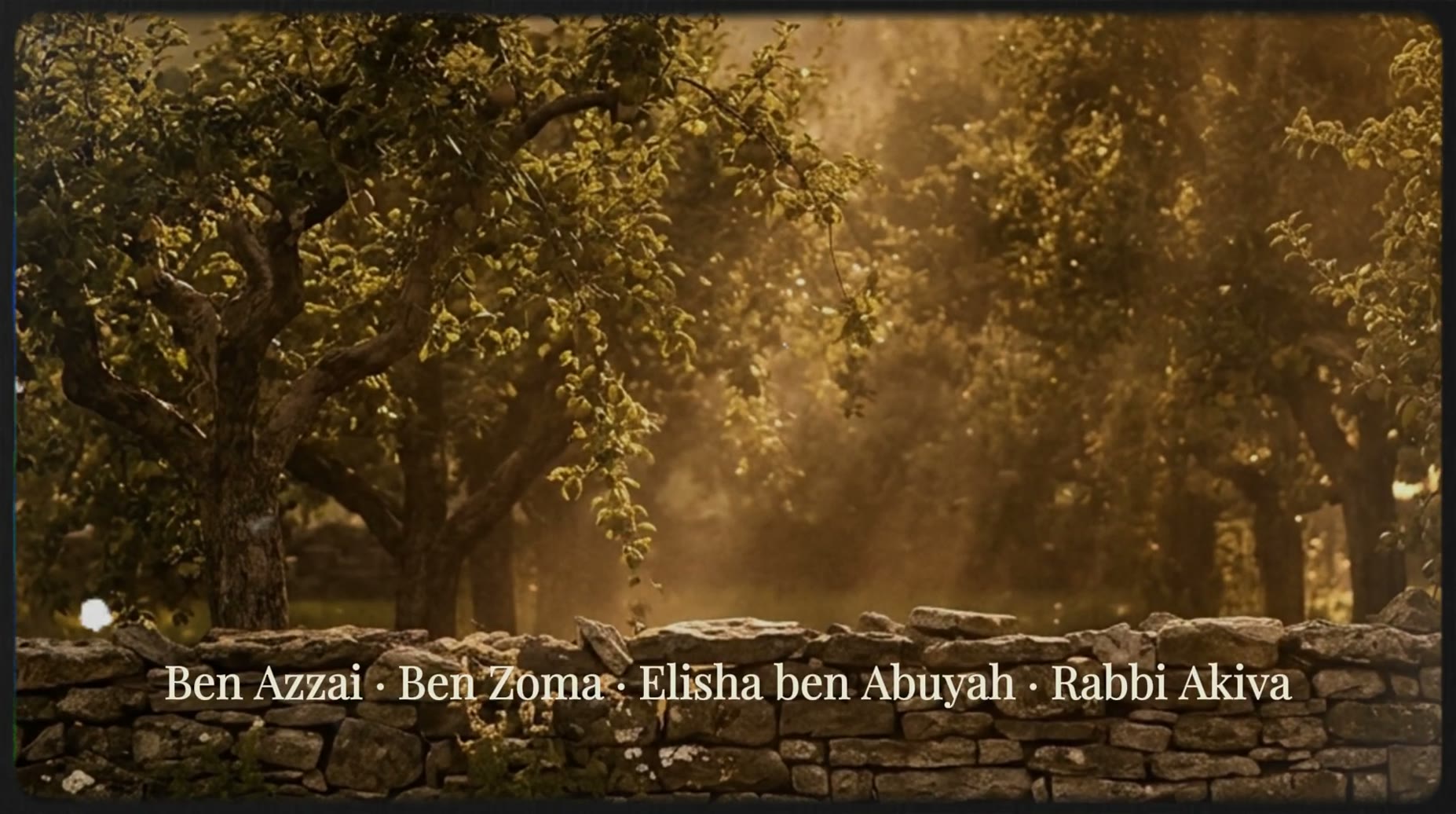
- A Talmudic story is cited describing four sages, Ben Azzai, Ben Zoma, Elisha ben Abuyah, and Rabbi Akiva, entering the pardes, a word meaning orchard or walled garden [05:51].
- Of the four, Ben Azzai looked into the pardes and died [06:09].
- Ben Zoma looked and was struck, described as losing his mind [06:09].
- Elisha ben Abuyah cut the shoots, described as losing his faith and becoming known as 'the Other' [06:09].
- Rabbi Akiva alone entered in peace and left in peace [06:09].
- The prophet Ezekiel is cited as describing a vision of a throne carried by living creatures, with wheels within wheels, fire, and brilliance, known in Hebrew as the Merkavah, the chariot [04:17].
- Mystical writings called the Hecalot literature are cited as describing mystics rising through heavenly palaces toward that throne [04:29].
- Alongside the chariot, mystics are described as also studying the account of creation, called Maaseh Bereshit [04:37].
- The Sefer Yetzirah, the Book of Formation, of uncertain date and unknown authorship though tradition ascribes it to Abraham, is cited as describing creation happening through 32 paths of wisdom made of the 10 sefirot and the 22 Hebrew letters [07:34].
- The word sefirot is described as debated among scholars, related to the Hebrew for number and counting, with some later writers connecting it to the word for sapphire or brilliance [08:23].
- In the late 12th century in Provence, southern France, a text called the Bahir, meaning brilliance, is cited as the point where the ten sefirot first begin to look like aspects of God rather than abstract numbers, using the image of a tree [08:58].
- In 13th century Spain, the Zohar, the Book of Splendor, is cited as emerging, written mostly in Aramaic and presented as the teachings of 2nd century sage Rabbi Shimon bar Yochai [09:32].
- Scholar Gershom Scholem is cited as arguing the Zohar was actually composed in 13th century Castile largely by Spanish Kabbalist Moses de Leon, which the narrator notes remains the dominant scholarly view even though believers attribute it to Rabbi Shimon bar Yochai [10:22].
- At the top of the tree is Ein Sof, meaning without end or the infinite, described as unknowable in itself, the limitless source before any attribute, name, or form [10:53].
- Keter, the Crown, is described as standing at the threshold between the unknowable and knowable as pure will [11:45].
- Beneath Keter sits Chokhmah, Wisdom, described as the flash of insight [11:45].
- Beneath Keter also sits Binah, Understanding, described as giving that flash of insight shape and depth [11:45].
- Chesed, loving kindness or expansion, and Gevurah, strength or restriction, are described as balanced in the middle by Tiferet, beauty or harmony, called the heart of the tree [12:14].
- Below Tiferet come Netzach and Hod, endurance and splendor, representing persistence and the willingness to yield [12:45].
- Yesod, the foundation, is described as the channel where everything above gathers and passes downward into connection [12:54].
- Malkhut, the kingdom, is described as the bottom sphere representing the physical world, 'this room, this day, this body, this decision' [13:04].
- The tree is described as read not only as a diagram of how God became a world but also as a map of a human being, called Adam Kadmon, the primordial human form, with mind, heart, will, and action mapped onto the ten points [13:21].
- In 1492 Jews were expelled from Spain, and many eventually settled in Safed in the Galilee, which became a center of Kabbalah where Moses Cordovero systematized the Zohar's teachings [14:00].
- Isaac Luria, known as the Ari, the Lion, is cited as teaching in Safed for only a few years before dying in 1572, leaving his ideas recorded mainly by his student Chaim Vital [14:22].
- Luria is cited as teaching that before creation Ein Sof filled everything, so through tzimtzum, contraction, it withdrew to make room [14:49].
- Luria is cited as teaching that light then poured in but some vessels shattered, called shevirat ha-kelim, the breaking of the vessels [14:49].
- Luria is cited as teaching that the human task of tikkun, repair, is to lift the fallen sparks back through ordinary acts done with attention and care [14:49].
- In late 15th century Renaissance Italy, scholar Giovanni Pico della Mirandola is cited as beginning to study Kabbalistic texts with Jewish teachers and translators [17:32].
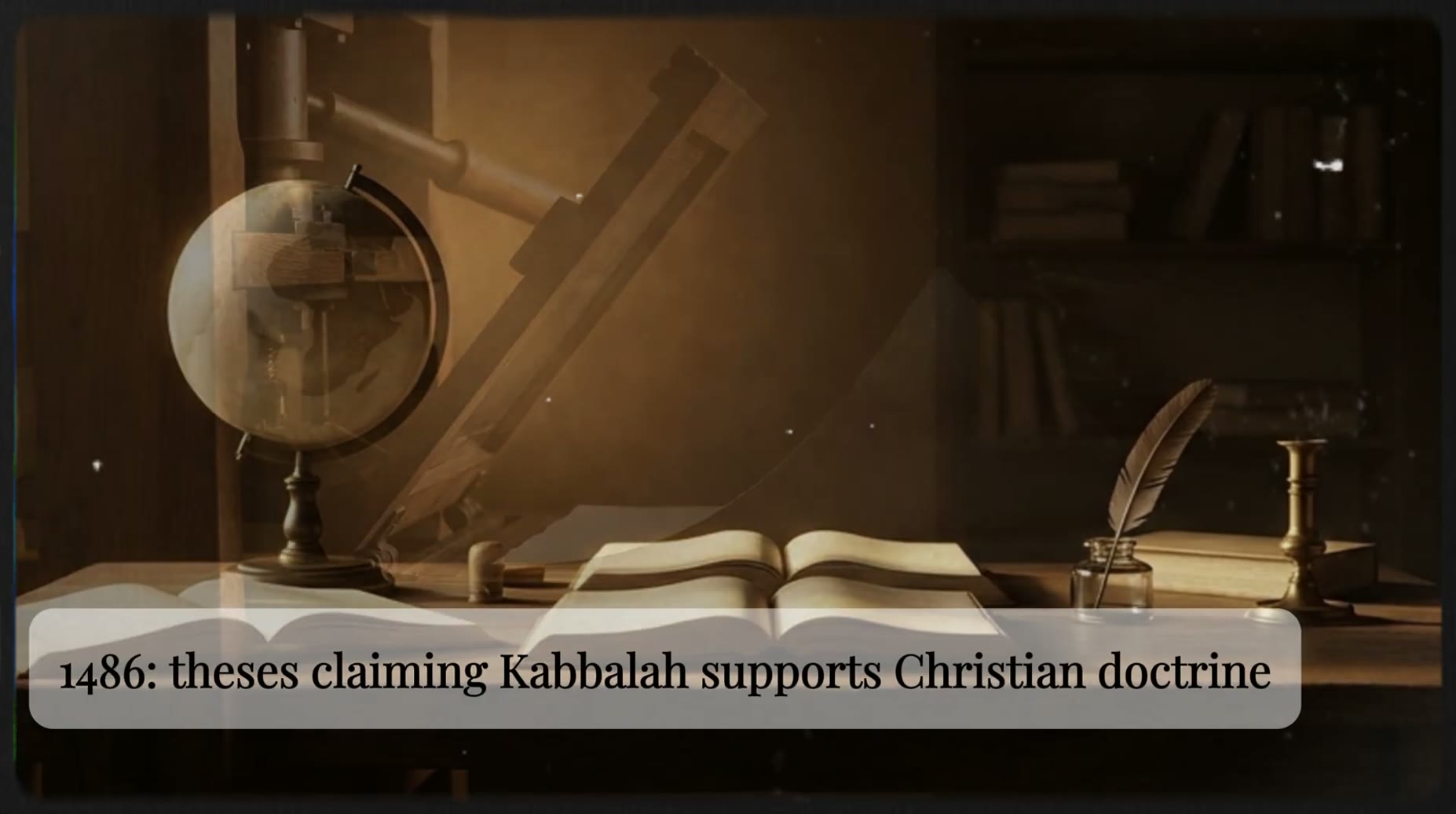
- In 1486, Pico is cited as proposing a set of theses claiming that Kabbalah supported Christian doctrine, launching what historians call Christian Kabbalah [17:45].
- In 1516, a Latin translation of Joseph Gikatilla's work titled Portae Lucis, The Gates of Light, is cited as being printed, including one of the earliest printed diagrams of the Tree of Life [18:04].
- In the 19th and early 20th centuries, occult groups like the Hermetic Order of the Golden Dawn are cited as combining the tree with tarot, astrology, Egyptian symbols, and ceremonial magic, spelling it 'Qabalah' with a Q to distinguish it from the Jewish original [18:39].
- Shifting from historical description to his own interpretation, the narrator frames the real guarded teaching as noticing your own Gevurah, severity, in how you speak to family [19:54].
- The narrator also frames it as realizing your Chesed, giving, may have been about being needed rather than love [19:54].
- The narrator states, in his own application of the framework, that feeling stuck in life often means one paired force has taken over: all Chesed produces endless giving and quiet exhaustion missing the boundary of Gevurah, while all Gevurah produces discipline and criticism starved of Chesed [20:35].
- The narrator argues, in this same interpretive application, that the answer isn't switching sides but Tiferet, a specific living harmony or proportion fitting the moment [21:10].
- The narrator adds that one level up, Chokhmah, the spark of an idea, needs Binah, the structure to give it shape, or it goes cold [21:10].
- The narrator frames the pair Netzach and Hod, in this same application, as pushing too hard and refusing to rest versus yielding so easily you never plant your feet [21:40].
- The narrator describes Malkhut, in this application, as turning whatever you understood into an actual action on your calendar with a time attached, not just a feeling [21:50].
- The narrator states that the real practice of the tree is repeatedly asking which part of you is overworked, which part is silent, and what it would take to bring them into balance, a claim stated without evidence given [22:04].
- The narrator reinterprets Luria's teaching to argue that because the vessels shattered at the beginning, felt brokenness is the condition of the whole world rather than evidence something is wrong with you specifically [22:16].
- The narrator frames the task of gathering sparks with examples given as patience with a difficult person, an honest apology, a meal prepared with care, a kept inconvenient promise, and a moment of quiet attention instead of scrolling [22:28].
- The narrator warns to go gently and step back if you start losing sleep or feeling you've uncovered a secret structure everyone else is blind to, calling that 'one of the oldest traps in the garden' [23:11].
- The closing instruction is to pick one of the ten words, such as hesed, gevurah, or tiferet, ask where it's missing from your life, and identify the smallest possible act of repair [24:54].
- The narrator promises a next video on the structure of the soul [24:54].
- No points of disagreement are presented in the piece, since it is a single-narrator essay rather than a host and guest exchanging views; speaker identity beyond 'the narrator' is not stated.
- Quotable take: the narrator says of Malkhut, 'this room, this day, this body, this decision' [13:04].
- Quotable take: the narrator says 'memorizing ten circles' names takes no courage' [19:36].
- Quotable take: the narrator calls the trap of feeling specially enlightened 'one of the oldest traps in the garden' [23:11].
How this brief was shaped: Discourse (interview / podcast / video essay) · confidence Low
A single narrator opens with a rhetorical thesis about an unnamed inner longing and then unpacks Kabbalah and the Pardes orchard story as an interpretive answer to that thesis, which is an argumentative or meaning-making spine rather than neutral systematic teaching. The OCR shows symbolic and mystical imagery (gates, thrones, the sephirot candelabra, kintsugi bowl) rather than slides or course material, supporting an essay-style treatment over a classroom lecture.
The lens sets this brief's structure, never its facts — every claim is held to the same citation and fact-check standard.