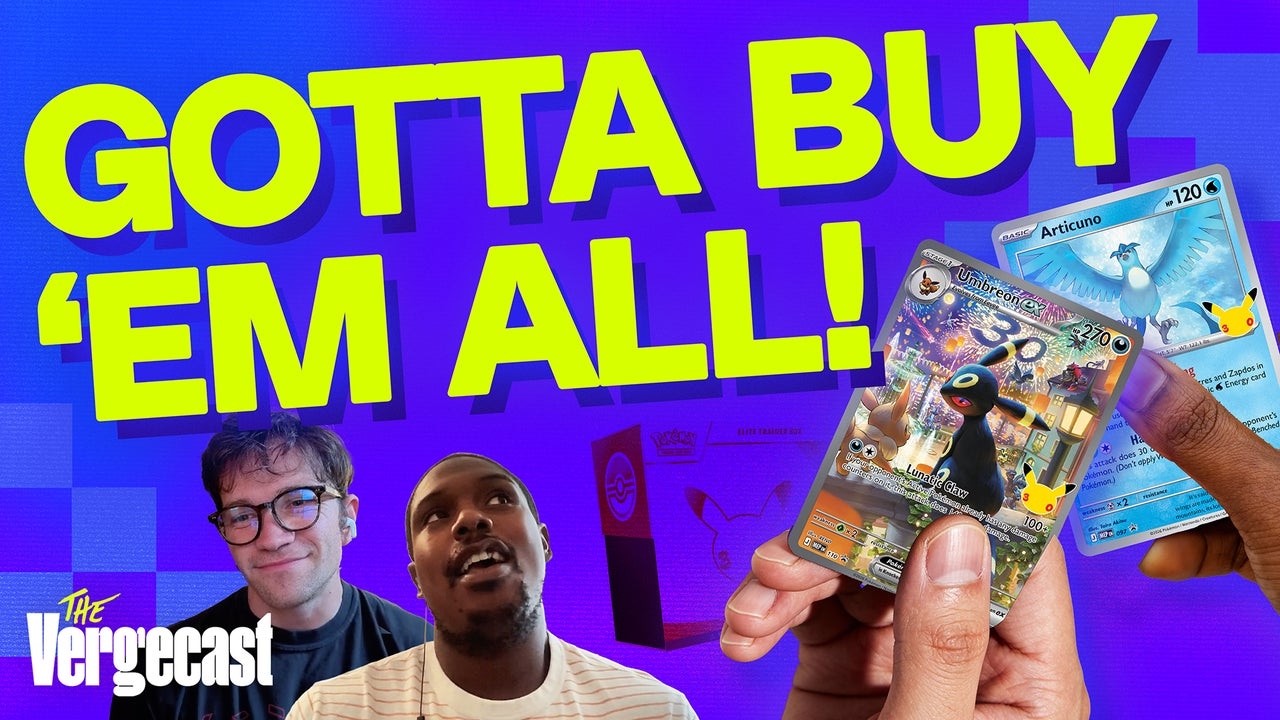
Pokémon trading cards are their own economy | The Vergecast
On this episode of the Vergecast, the host is joined by Charles Pulliam-Moore, identified as a Film and TV Reporter, to discuss his reporting on the scalping ecosystem surrounding Pokemon card releases, centered on the 30th anniversary set. The guest traces how bot-assisted buying, Discord marketplaces, and livestream resale platforms like WhatNot have scaled up Pokemon card scalping, drawing comparisons to sneakerhead culture and Apple product-launch lines. A tension running through the discussion is whether resellers help or harm the ecosystem, with scalpers framing their activity as guaranteeing sellouts as a favor to Nintendo, a framing the guest pushes back against. The conversation also touches on other collectible crazes, such as blind box toys and Silly Bands, as points of comparison before the episode closes.
[03:52] The guest, Charles Pulliam-Moore, a Film and TV Reporter, said he wrote a story about the state of the Pokemon scalping ecosystem tied to the 30th anniversary set, which is the episode's central topic.
- [04:41] The guest said that in the 90s, people were less sophisticated about pursuing Pokemon cards, simply checking stores like Toys R Us or KB Toys for stock.
- [05:12] The guest said that by 2026, hustle culture had evolved into people looking for quick ways to make money and teaching others to do it, making Pokemon cards an ideal commodity to target.
- [06:21] The guest said the pandemic made the Pokemon card situation worse because people were home on their computers and Pokemon became an easy way to grab attention on camera.
- [07:10] The guest said the rise of platforms like TikTok exacerbated the trend by giving people more avenues to consume this content.
+ 22 more takeaways
- [07:49] The guest recalled being in New York around 2017 and seeing stacks of Pokemon cards casually available in a Target's card section.
- [08:26] The guest compared the current Pokemon card frenzy to sneakerhead culture, saying it is not new since people have lined up for hours to buy Jordans for much longer.
- [11:01] The guest cited sneakerhead culture and Apple iPhone launch camping lines as earlier examples of people lining up outside stores, while noting that Pokemon card buying is more transactional than the Apple 'event' vibe.
- [09:20] The guest said pulling a Lugia card is known to be worth a few hundred dollars, contrasting it with sneakers, where mismatched shoe sizes complicate resale.
- [10:20] The guest said brick-and-mortar stores are the best bet for buying Pokemon cards since buying online is almost impossible.
- [11:44] The guest said Discord channels can be paid for to access scalping bots that automatically buy large numbers of packs online as soon as they release.
- [12:38] The guest said these bots brute-force their way through sales by continuously adding items to a cart and checking out.
- [12:47] The guest said the bots are programmed with virtual credit cards, meaning a fake credit card number attached to a real credit card and a fake account, to evade retailer limits on orders per IP address or account.
- [13:51] The guest said Target is known for doing product drops around 3 in the morning, and that Discord servers buzz with activity from midnight to 2:30 a.m. as people wait to pounce.
- [14:18] The guest said that after acquiring cards, resellers often flip them to individual collectors who missed out on a store's sale.
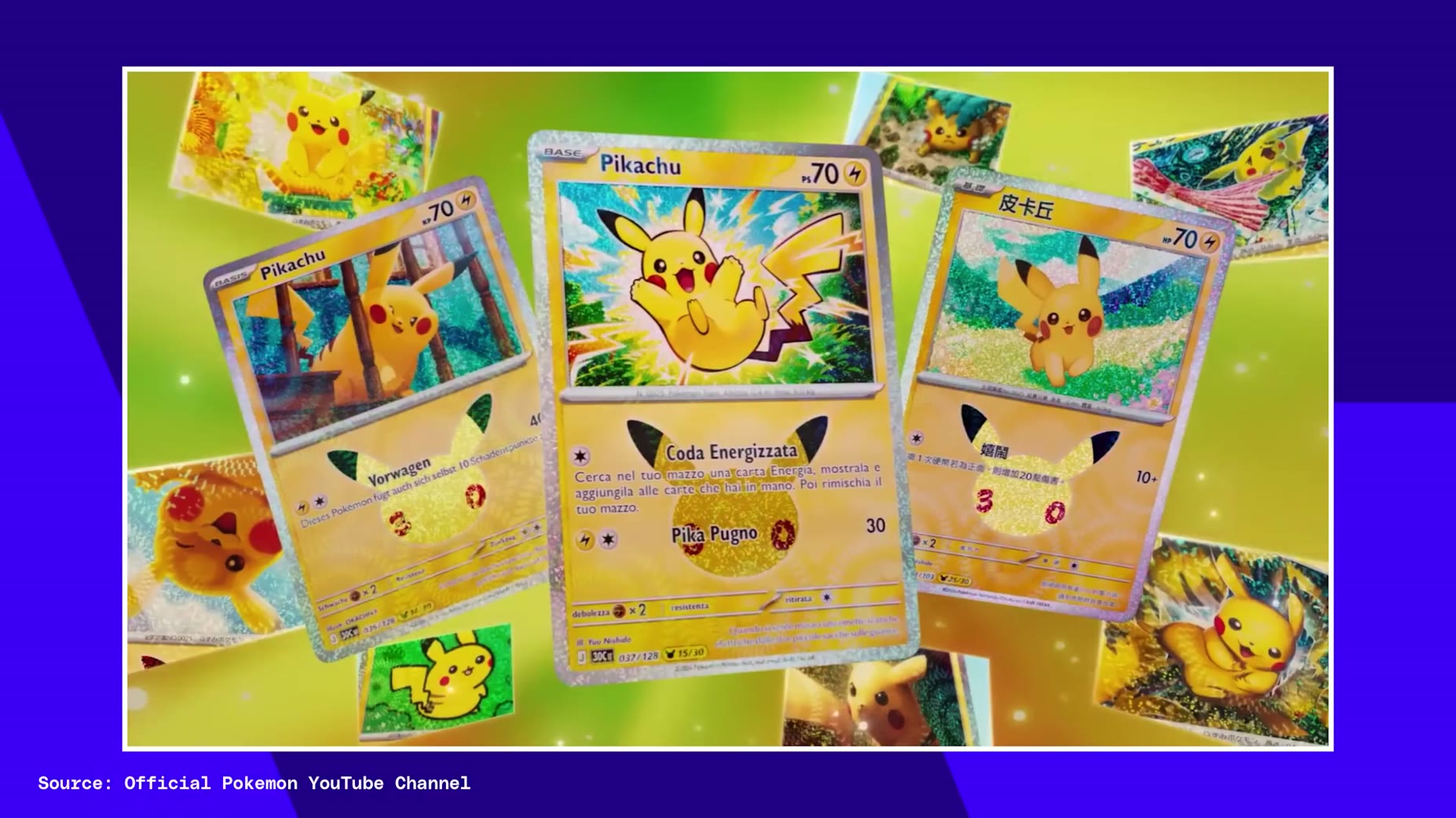
- [18:52] A speaker noted that the 30th anniversary Pikachu set had recently dropped and looked notably different from how other sets have been handled.
- [20:11] A speaker said that unlike the new set, the 25th anniversary set was hard to get but still findable by checking a few stores, whereas the reselling economy has now made shortages feel much larger.
- [21:35] A speaker said they believe this is the second year in a row that Pokemon has printed something like 10 billion cards globally across multiple languages, yet shortages persist; this was stated without evidence given.
- [25:09] A speaker described WhatNot as "an unholy cross between TikTok, eBay, and QVC," a live-shopping service where people watch someone open Pokemon card boxes and can pay to purchase specific unopened rows or columns of cards, a practice called ribbon-shipping, or rip-ship.
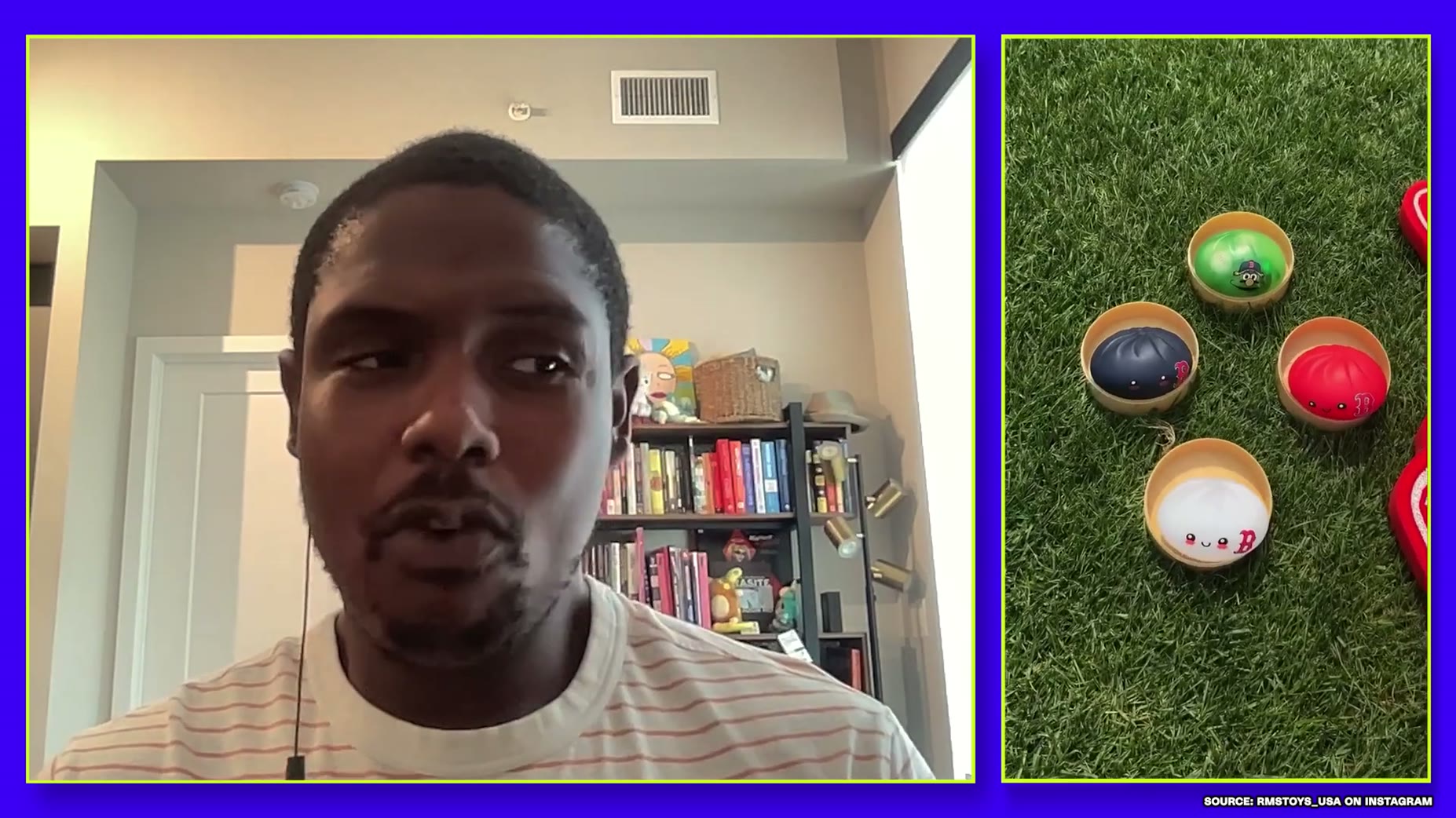
- [31:31] A speaker described blind boxes shaped like steaming containers that hold a squishy bao or bun-shaped toy with eyes and a face.
- [32:05] A speaker recounted that at a Five Below store, signs limited purchases to two squishables per person, and a mother and daughter argued they should get four since they were two people.
- [32:36] A speaker recalled that Silly Bands, rubber bands shaped like objects such as dinosaurs, were huge with kids for a short period before disappearing.
- [33:09] A speaker said Pokemon cards can be collected, played with, used to enter the competitive scene, or resold.
- [33:43] A speaker contrasted this with a Beanie Baby, which is mainly just looked at and displayed, saying Pokemon cards have multiple uses.
- [34:02] The host thanked the guest, Charles, for joining as the episode closed, giving the contact info hotline 866-VERGE11 or email [contact removed].
- The $399 pair of over-ear headphones offers a triple driver design, AuraCast support, and a dedicated flat EQ switch which removes the audio processing.
- Oh, that's like the chase card of the set that someone has bought for like $5, right?
How this brief was shaped: Discourse (interview / podcast / video essay) · confidence Medium
Transcript is a podcast (Vergecast) where the host explicitly brings on a guest, Charles Pulliam Moore, to discuss Pokemon card market drama, and the 25% slice shows a back-and-forth conversation comparing the trend to sneaker collecting culture. This is a two-voice interview/discussion format, not a scripted narrative or a taught lecture.
The lens sets this brief's structure, never its facts — every claim is held to the same citation and fact-check standard.