
I Turned Claude Code Into a Game Studio (free kit)
This video shows how the creator used Claude Code plus a free downloadable "game kit" skill to build two games, a 3D space shooter called Comet Run and a globe-based builder called Terraform, aiming for games that both look good and feel good to play. The setup is: download the kit zip from the video description, drag it into Claude Code, and tell it to install the skill, then prompt it with an idea, a vibe, and whether the game is 2D or 3D. The creator says the resulting Comet Run build took under an hour using a five-move method (install kit, three-part prompt, polish what's noticed first, ask for juice effects, have Claude self-check with screenshots). No on-screen code or exact commands beyond the spoken "install this skill" phrase are described in the source.
Goal: use a free skill kit with Claude Code to build games that look and feel good to play, shown via Comet Run (3D space shooter) and Terraform (globe-based builder). [00:02]
- Context: the featured game lets players fly through rings, loop around a giant planet, and fight waves of enemies and a boss. [00:05]
- Goal: video promises to show how to build a game like this using one free kit. [00:14]
- Problem stated: most AI-made games either look like flat colored shapes or look good but feel bad to play. [00:16]
- Step 1 (00:32): install a game kit, described as a free skill made for games that picks tools, makes real art, and tests the game first.
+ 18 more takeaways
- Command (00:49): download the kit from the link in the description, drag the zip into Claude Code, and say "install this skill."
- Step 2 (00:58): write a prompt containing three things, the idea, the vibe, and whether the game is 2D or 3D.
- Example (02:10): asked Claude for light streaks, glowing engine trails, and a camera kick every time the player boosts in Comet Run.
- On-screen detail (02:17): Terraform opens on a spinning globe split into sections, and clicking a section swoops the camera down to build.
- Definition (02:28): "juice" is the term for small reactions that make a game feel alive, like screen shake, sparks, and sound on every hit.
- Step (02:39): you can ask Claude for juice effects by name and it knows what's meant.
- Pitfall/check (02:46): the kit opens the game in a real browser before handoff and counts the game as broken if the browser's error log shows even one error.
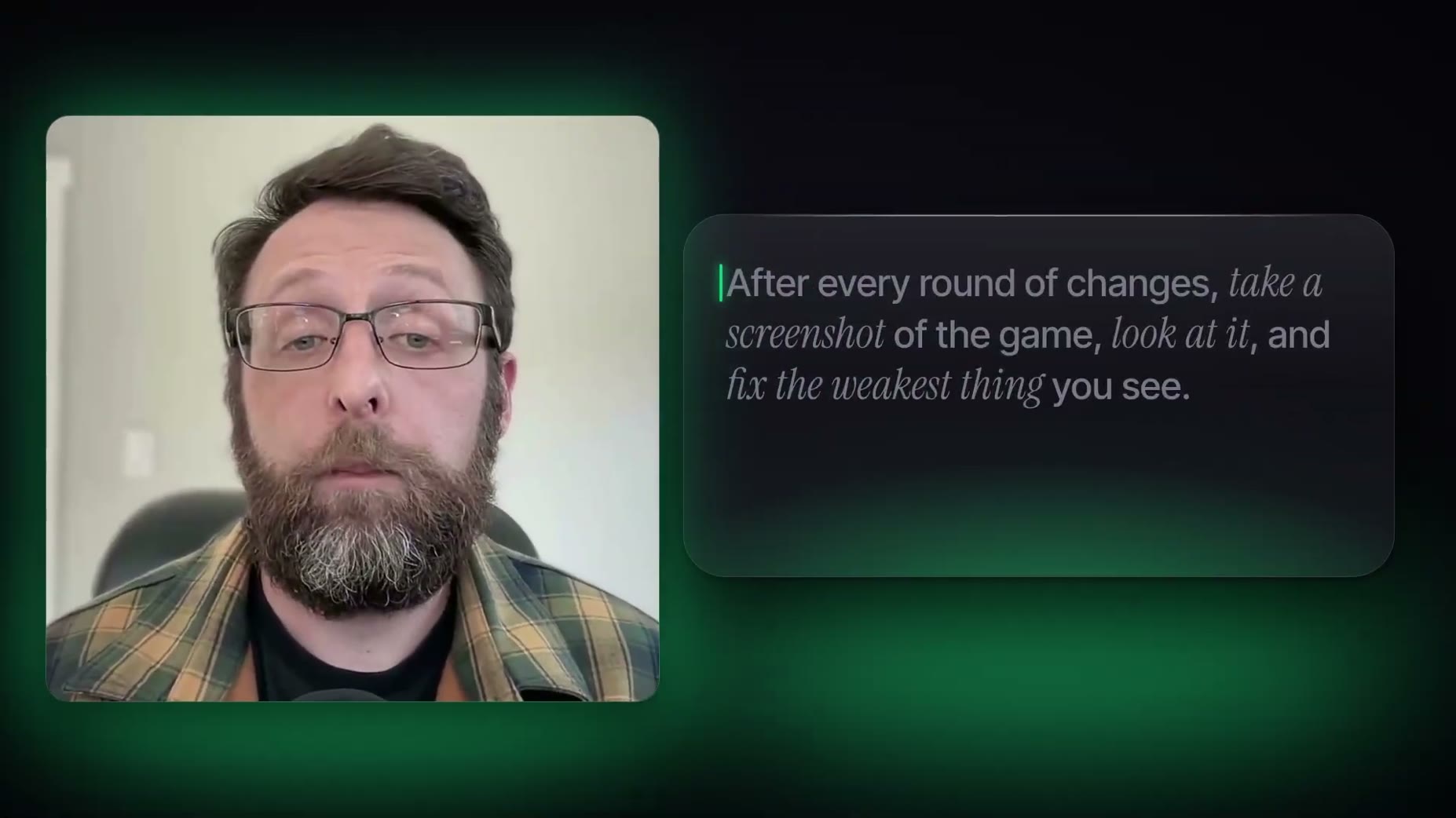
- Step (03:00): suggested self-check prompt is, after every round of changes, screenshot the game, look at it, and fix the weakest thing you see.
- Result (03:12): using that self-check prompt, Claude reviewed its own Comet Run build six more times, and the whole process took under an hour.
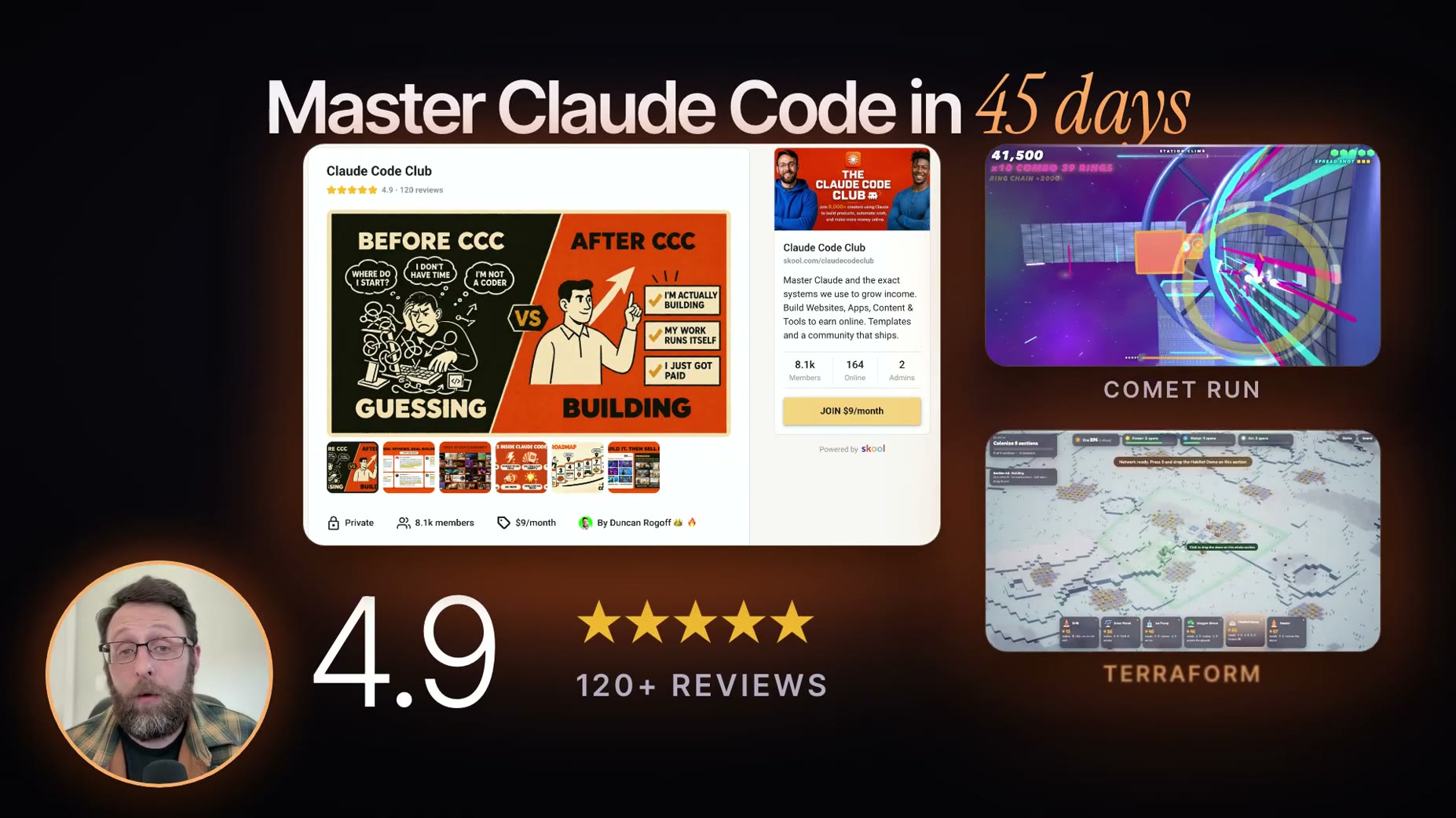
- Reference (03:21): a game-building module lives inside the Claude Code Club on Skool (skool.com/claudecodeclub, run by Duncan Rogoff, 8.1k members, 4.9 rating, $9/month).
- Example (03:43): told Claude to let players zoom into one flat section of Terraform, and Claude rebuilt it that way.
- Example (03:49): the first version of Comet Run had players dodge enemies and chase rings at the same time, so he asked Claude to split those into separate phases, rings, then a battle, then rings again.
- Pitfall/advice (04:03): don't use game jargon, just say what you felt, and change one or two things at a time.
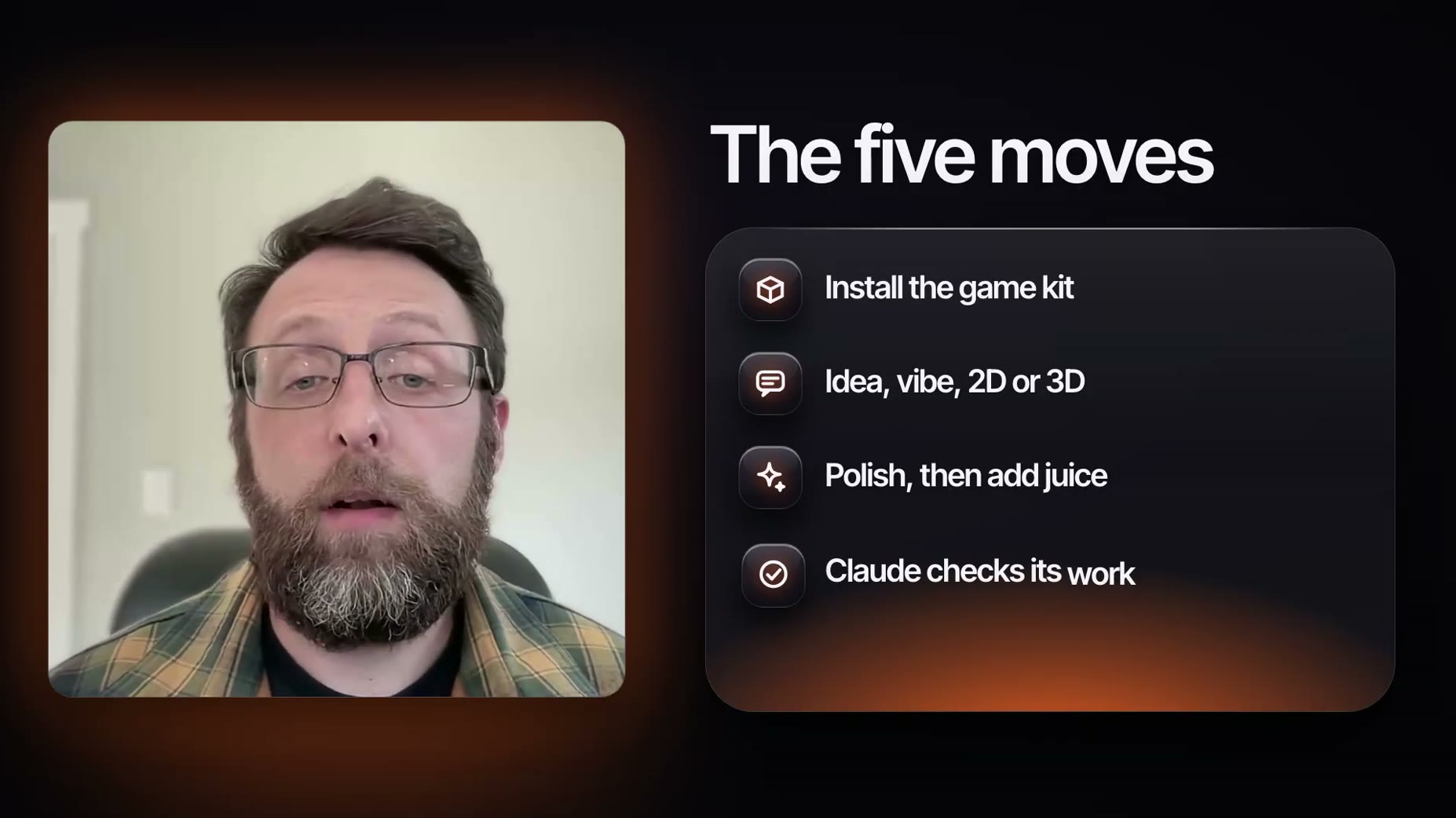
- Step summary (04:11): the five moves are install the kit, write a prompt with the idea, the vibe, and 2D or 3D, polish what people notice first, ask for juice, and make Claude check its own work.
- Pitfall (04:23): playing the game yourself and saying what feels wrong is the move most people skip.
- Context (04:30): a simple game is a good starting point for beginners, people exploring AI, or showing kids how to build with AI.
- Final result (04:40): you can get something playable in under an hour, with every requested change showing up on screen.
- Reference (04:46): the Claude Code Club, an 8,000+ member community run by Duncan Rogoff for $9 a month, covers Claude Code mastery in 45 days plus the Comet Run and Terraform games.
A 3D space shooter on a set track. You fly a small rocket at high speed, collect glowing rings, and shoot down waves of enemy drones. Weapon power-ups make your guns stronger. The track has loops, corkscrews, and a climb straight up a space station. The vibe is bright, fast and colorful: neon rings, a purple and teal nebula, a giant ringed planet you fly through, and big explosions 3D.
Polish the thing players notice first: the feeling of speed. Add light streaks, engine trails and a camera kick when I boost. Then add juice: screen shake, sparks and a sound on every hit.
After every round of changes, take a screenshot of the game, look at it, and fix the weakest thing you see.
How this brief was shaped: Deep-Dive (coding / tutorial / how-to) · confidence Medium
Transcript lays out a goal (build a 3D space shooter) and explicit numbered steps (install a game kit, write a three-part prompt, add juice) meant for replication, and OCR shows the actual Claude Code build UI with a system prompt and in-progress game stats rather than a finished product review.
The lens sets this brief's structure, never its facts — every claim is held to the same citation and fact-check standard.