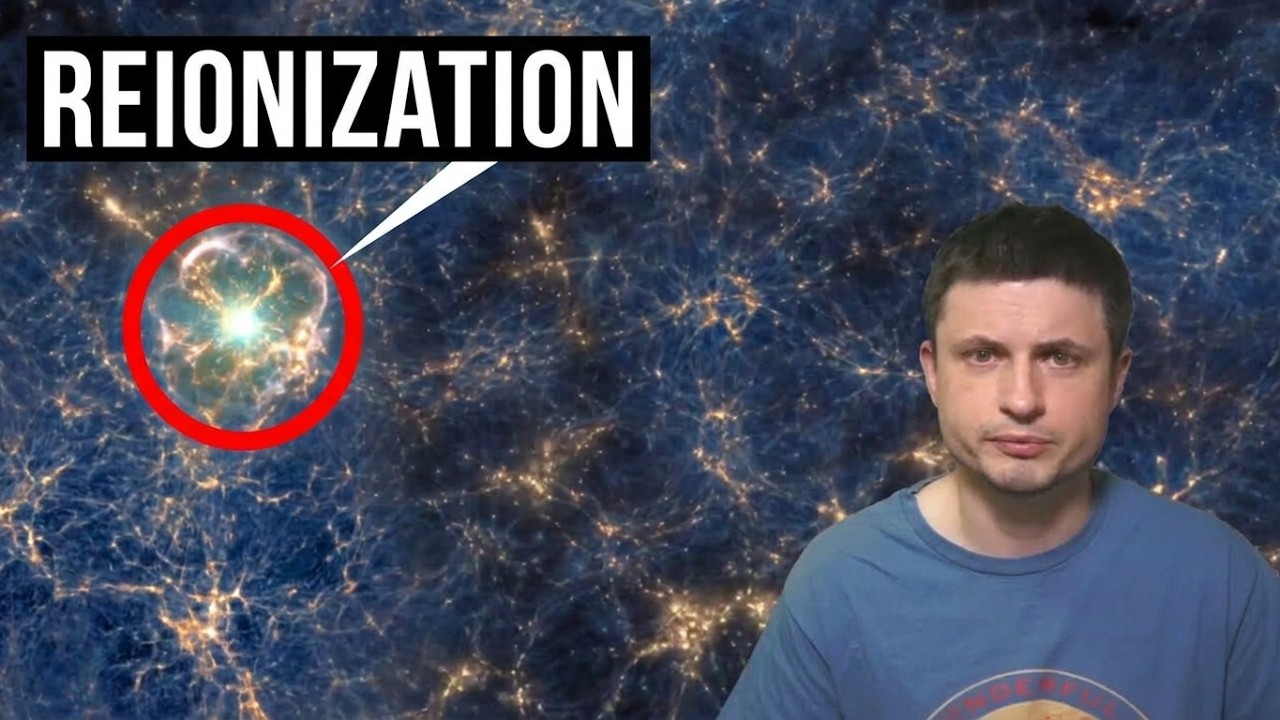
What Really Happened When the Universe Turned On?
What this video is
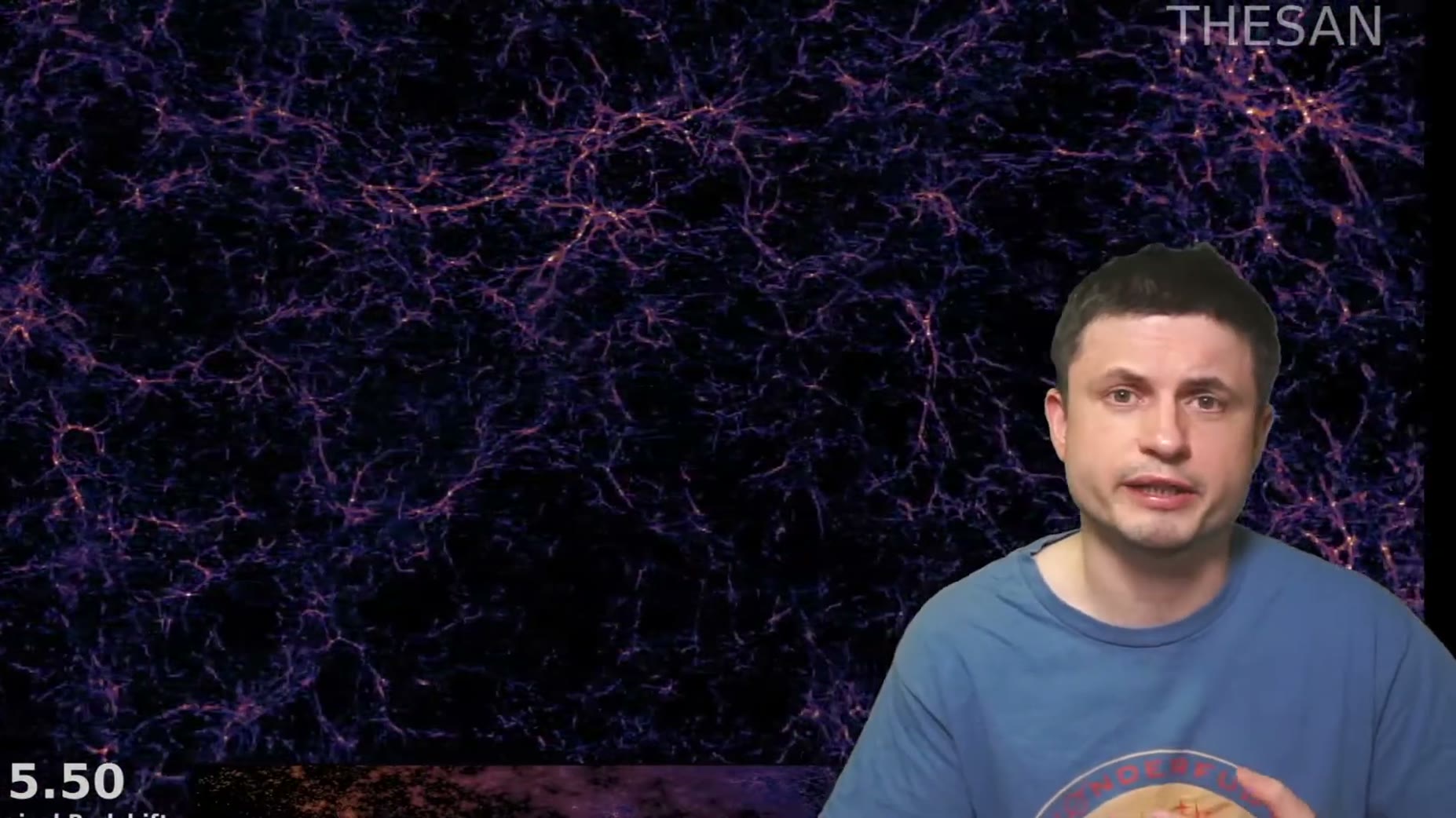
⚡ a 12-minute video, readable in 60 secondsTHESAN is a cosmological simulation built by a team including MIT researchers to model the universe's Cosmic Dawn and reionization era, a period too distant and ancient for telescopes to observe directly. Run on the SuperMUC supercomputer, it traces the universe from a hot ionized plasma through the neutral-hydrogen Dark Ages to the first stars and galaxies and the eventual re-ionization that made the universe transparent. The simulation's release coincided with Hubble's discovery of the most distant star ever found, and scientists hope future tools like James Webb can fill remaining gaps. Population 3 stars, the first stars thought to have triggered this transformation, remain undetected and are still one of astronomy's biggest mysteries.
[00:56] THESAN ran on the SuperMUC supercomputer using 60,000 computer cores, equivalent to about 3,500 years of calculation on a typical desktop computer.
Key takeaways
- [01:21] The simulation spans approximately 300 million light years and covers from about 400,000 years after the Big Bang to roughly the first billion years.
- [02:51] Around 400 million years after the Big Bang, hydrogen clumped into the first stars, called Population 3 stars, which were extremely massive and almost entirely hydrogen.
- [03:14] Population 3 stars remain one of astronomy's biggest mysteries since no direct evidence of them has ever been detected.
- [04:10] Radiation from early stars and galaxies turned neutral hydrogen back into ionized hydrogen, a period called reionization.
+ 4 more takeaways
- [05:17] In the last seven years scientists realized gravitational waves could also help study this era, though detecting gravitational waves from the ancient universe is still beyond current capability.
- [07:17] Scientists added cosmic dust to the simulation to show how it interacts with newly formed galaxies.
- [08:16] The simulation suggests most reionization occurred around more massive galaxies with more active stars.
- [08:40] The simulation's release coincided with NASA's Hubble telescope discovering the most distant star ever found, located at the end of cosmic dawn.
Jump to a moment
Their links, sorted & clickable
🔗 Other links34
linklinklinklinklinkPrevious videosPrevious videosSpace Engine is available for free hereTwitchNew CameraCPUVideo CardMotherboardRAMPSUCaseMicrophoneMixerRecording and EditingMIT,Thesan Simulations,CreditsSailko CC BY 3.0Mdw77 CC BY-SA 4.0CreditsCreditsLicenses usedLicenses usedLicenses usedLicenses usedLicenses usedLicenses usedLicenses usedLicenses usedWas this brief useful?