Why Israel Looks Increasingly Ungovernable
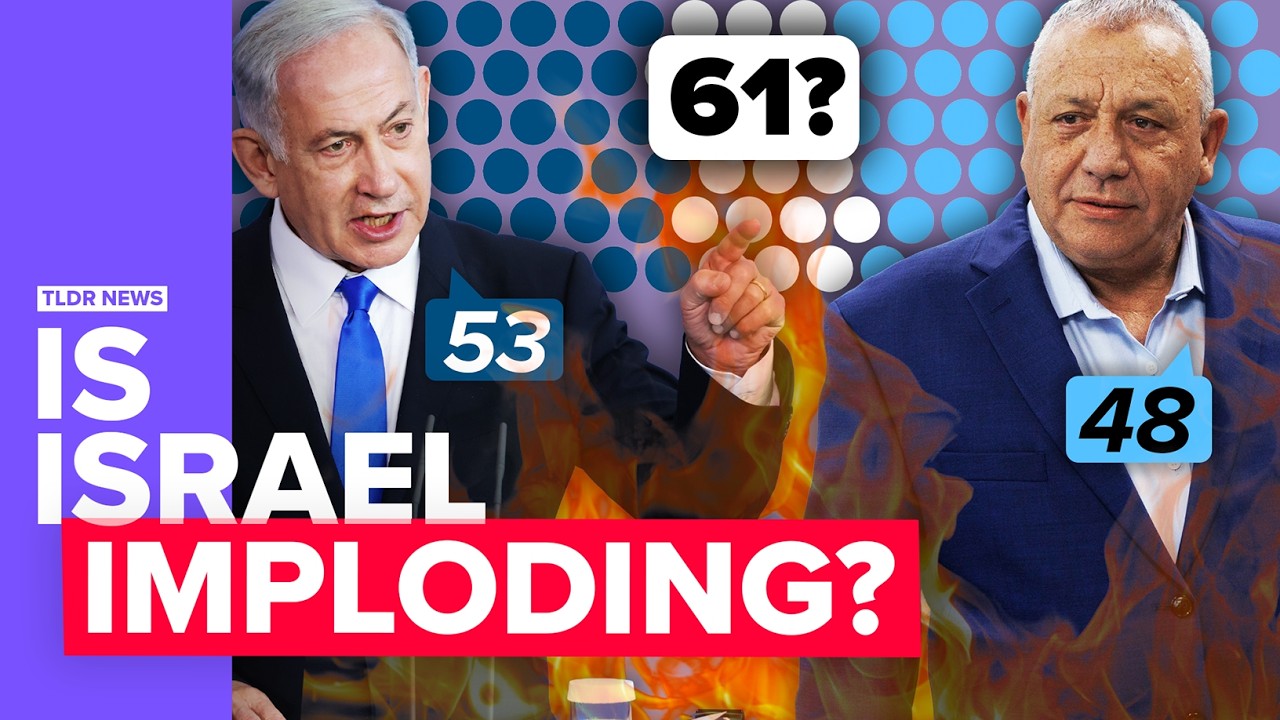
The creator reports that Israel's election left Netanyahu's coalition with 53 of 120 Knesset seats against 48 for Gadi Eisenkot's opposition bloc, with the remaining 19 seats split between the Arab parties Ra'am and the Joint List, so neither side reached the 61-seat majority needed to govern and President Isaac Herzog must now pick someone to try to form a government. In the creator's view, this stalemate exposes deep pre-existing fissures in Israeli society, pointing to the 2023 judiciary protests, voter anger over Netanyahu's handling of the October 7 attacks, and resentment over ultra-Orthodox draft exemptions as evidence the country is politically broken. The creator further speculates that this domestic dysfunction may be why Netanyahu appears eager to restart conflict with Iran after the midterms, framing war as a way to temporarily unify competing factions, though this is presented as the creator's own reading rather than a sourced fact.
Confirmed: Netanyahu's coalition won 53 seats in the 120-member Knesset, while the opposition bloc led by Gadi Eisenkot's Yashar party won 48 seats.
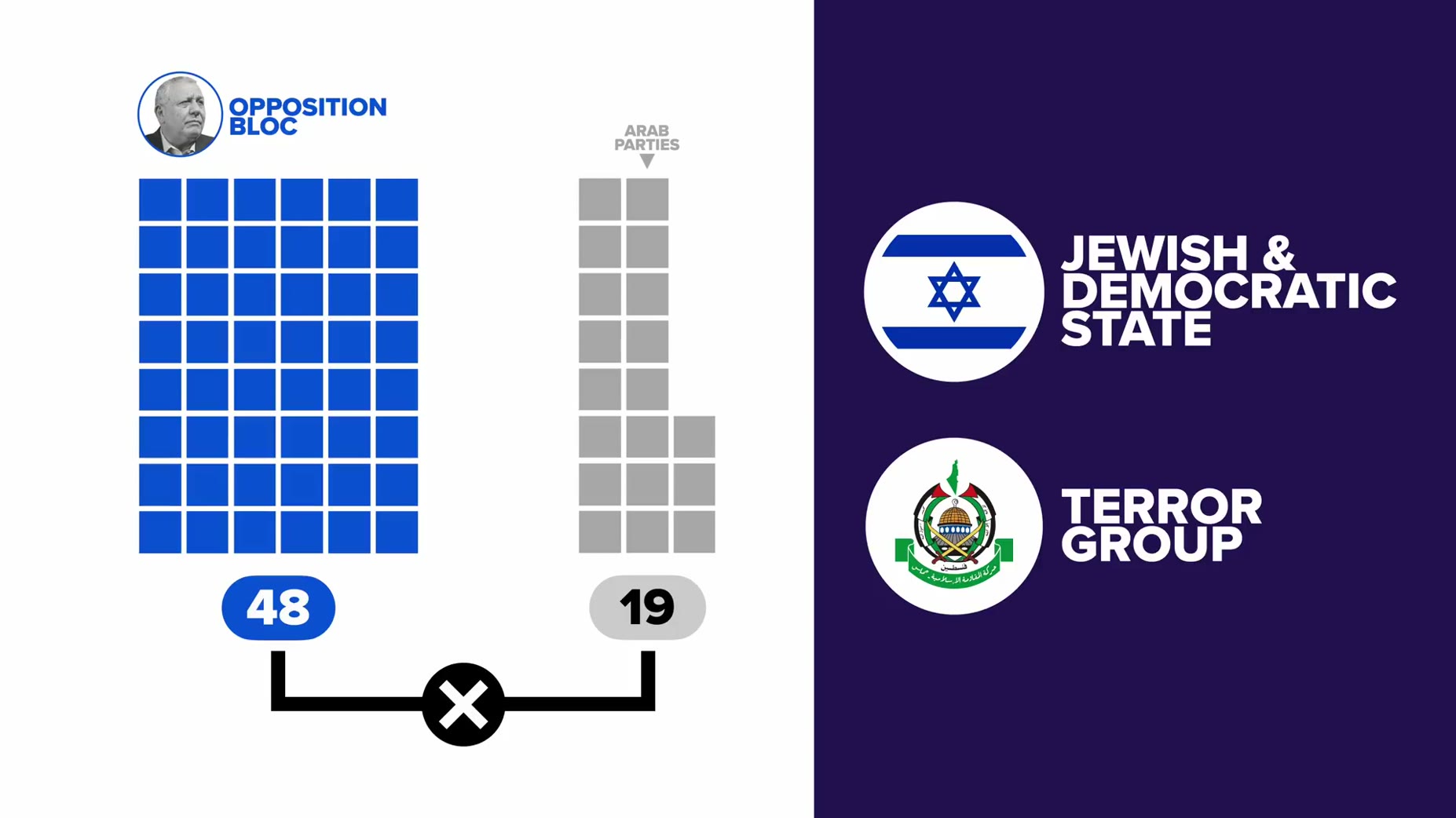
- Confirmed: The remaining 19 seats went to the Arab parties Ra'am and the Joint List, and neither main bloc reached the 61-seat majority needed to form a government.
- Confirmed: Voter turnout was almost 78% [00:36].
- Confirmed: Israeli President Isaac Herzog must choose someone to try to form a government and can pick a leader other than the one whose party won the most votes.
- Confirmed: Netanyahu's coalition includes Likud, Bezalel Smotrich's Religious Zionism party, and Itamar Ben-Gvir's Otzma Yehudit (Jewish Power).
+ 21 more takeaways
- Confirmed: Eisenkot's bloc includes his Yashar party, Yair Golan's Democrats, Avigdor Lieberman's Yisrael Beiteinu, and the Together alliance led by Naftali Bennett and Yair Lapid.
- Confirmed: Eisenkot proposed coalition terms for the Arab parties that include recognizing Israel as a Jewish and democratic state and labeling Hamas a terror group [02:49].
- Take (creator): these terms are called unlikely to be accepted by Arab lawmakers, and some parties within Eisenkot's own bloc have already ruled out such a deal [02:49].
- Confirmed: Netanyahu has ruled out cooperating with the Arab parties [03:04].
- Take (creator): Netanyahu has low odds of persuading opposition bloc members to defect since most opposition parties have vowed not to work with him [03:04].
- Take (creator): this kind of coalition stalemate is common in Israel, whose parliament has never produced a one-party government [03:20].
- Take (creator): this election, the first since the October 7th attacks, has revealed deeper divisions scarring the country [03:27].
- Confirmed: Even before October 7th, many Israelis opposed Netanyahu's efforts to weaken the power and independence of the judiciary, which sparked massive street protests in 2023 [03:37].
- Confirmed: After October 7th, many Israeli voters blamed Netanyahu for security failures [03:48].
- Unverified: an on-screen report referencing a September 2023 warning call from UAE President bin Zayed to Netanyahu is noted in the source, but this snippet may belong to a different segment and should not be conflated with the election results [03:48].
- Confirmed: Eisenkot galvanized supporters by stoking anger at Netanyahu for refusing to establish a state commission of inquiry into how the October 7 attack happened [04:00].
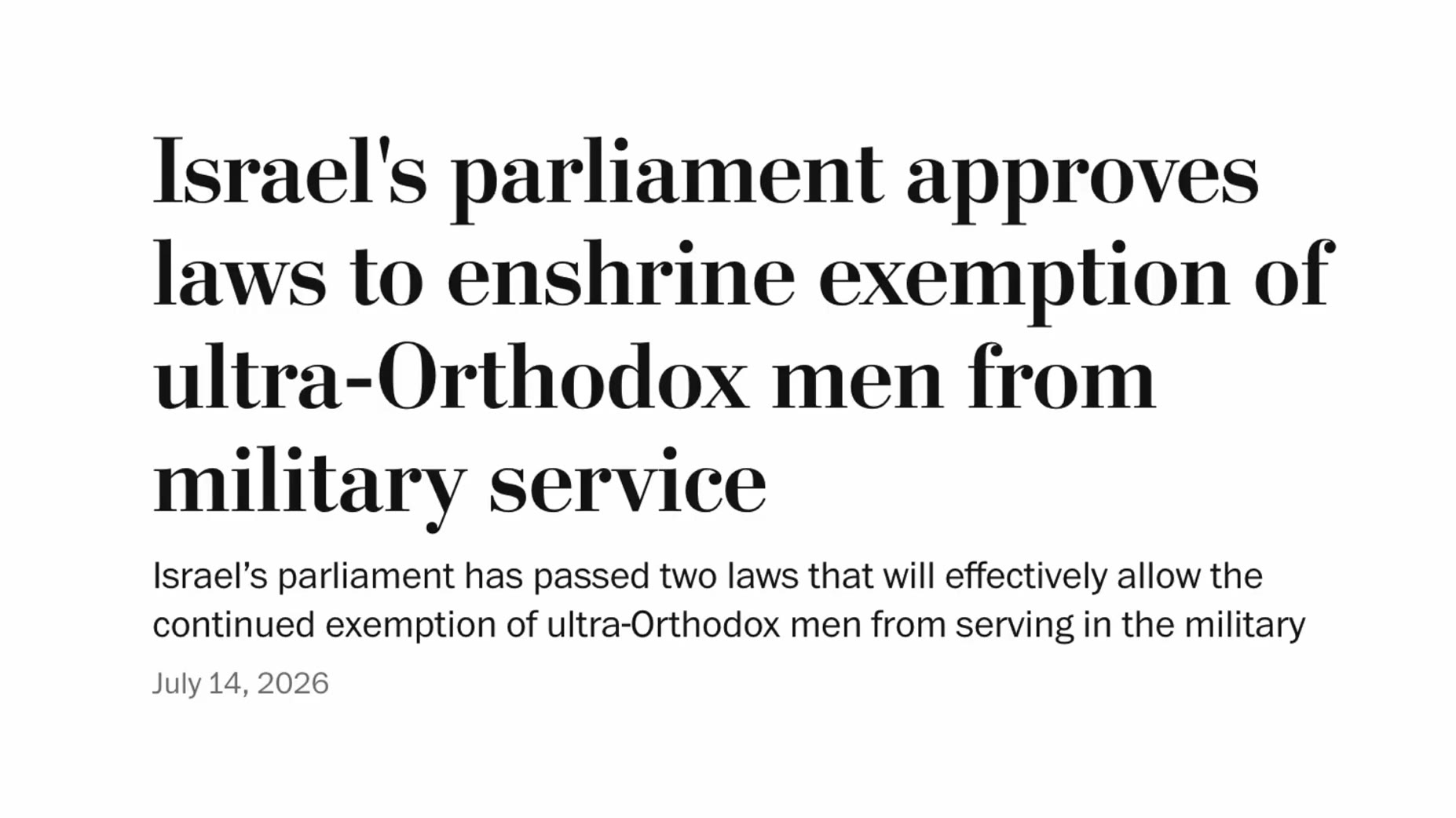
- Confirmed: Many anti-Netanyahu voters resent that Netanyahu's government allowed ultra-Orthodox men to avoid military service, and in July 2026 Israel's parliament passed two laws effectively enshrining that exemption ahead of fall elections [04:11].
- Confirmed: Voter turnout in the settlements, home to more than 500,000 Jewish Israelis, was very high and predominantly favored Netanyahu's coalition, partly due to Bezalel Smotrich's Religious Zionism party [04:59].
- Confirmed: After the election, Smotrich vowed to continue expanding settlements in the occupied West Bank, which are considered illegal under international law [05:13].
- Confirmed: Those in the top 10% of socio-economic status voted 80.9% for opposition parties, while those in the bottom 10% voted 96.7% for Netanyahu's coalition [05:33].
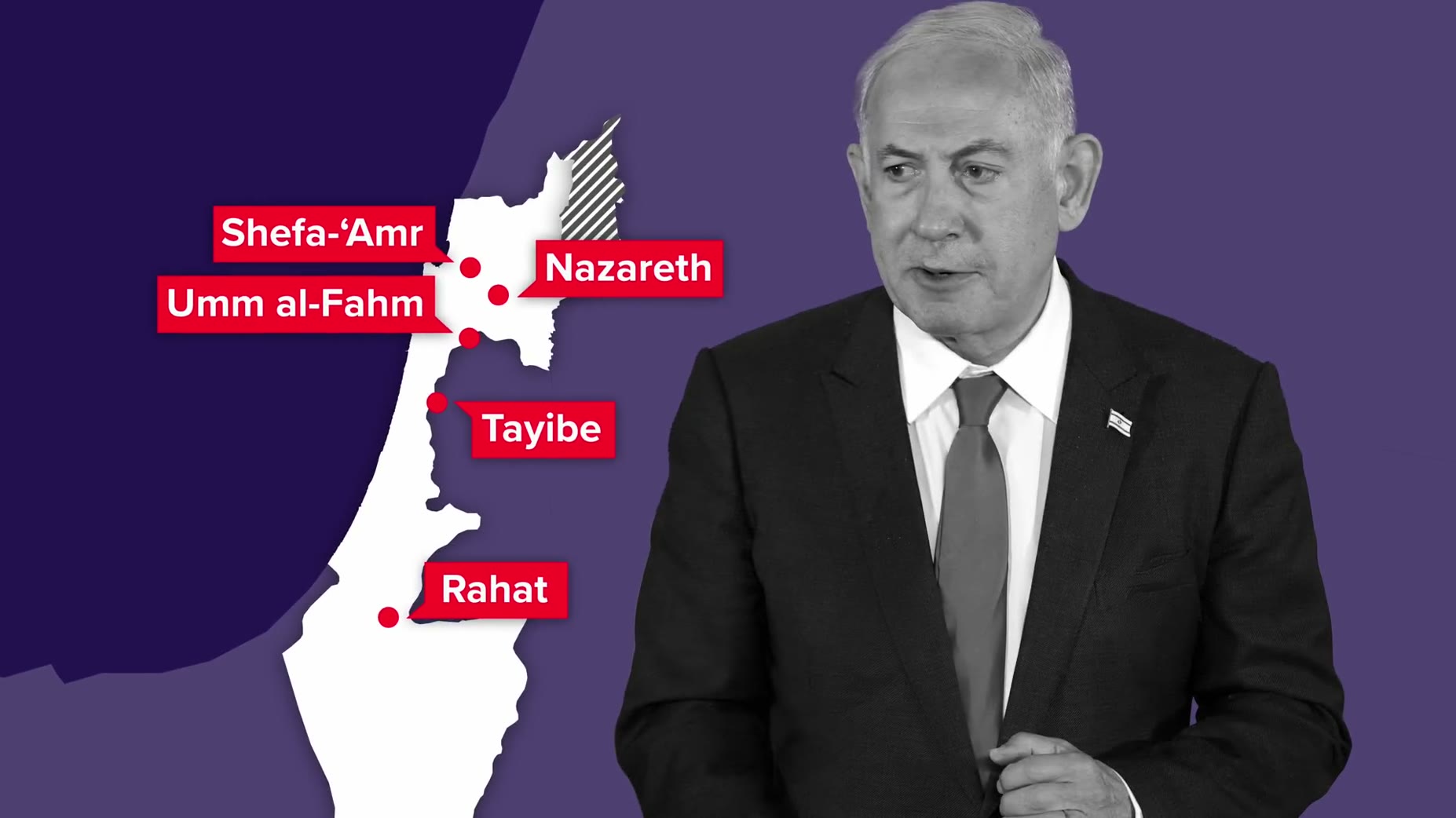
- Confirmed: Turnout increased significantly in five major Arab cities, Shefa-Amr, Umm al-Fahm, Nazareth, Tayibe, and Rahat, compared with 2022, positioning Arab parties as kingmakers and infuriating Netanyahu's coalition [05:52].
- Confirmed: After losing his majority, Netanyahu accused Arab parties of stealing the election, and Likud went to the police, Shin Bet, and the Central Election Committee demanding a fraud investigation despite zero real evidence, per the source [06:10].
- Confirmed: The Central Election Committee chairman asked the Shin Bet to investigate possible foreign interference aimed at encouraging Arab-Israeli voting [06:22].
- Confirmed: Mansour Abbas, leader of Ra'am, was the only independent Arab party leader to join an Israeli governing coalition, doing so in 2021 to help unseat Netanyahu [06:37].
- Take (creator): Israel's domestic politics look genuinely broken, which the creator suggests might partly explain why Netanyahu is apparently eager to restart the war with Iran after the midterms [07:19].
- Prediction: the creator predicts a restarted war with Iran could temporarily unify Israel's competing political factions [07:19].
How this brief was shaped: News Analysis / Commentary · confidence Medium
Transcript gives concrete confirmed seat counts for each bloc and party then explicitly pivots to the creator's own interpretive framing of societal fissures, and OCR shows a seat-count bracket chart plus an unrelated investigative snippet about a pre-Oct 7 warning, matching the fact-versus-take split of news analysis rather than a pure developing-story recap.
The lens sets this brief's structure, never its facts — every claim is held to the same citation and fact-check standard.