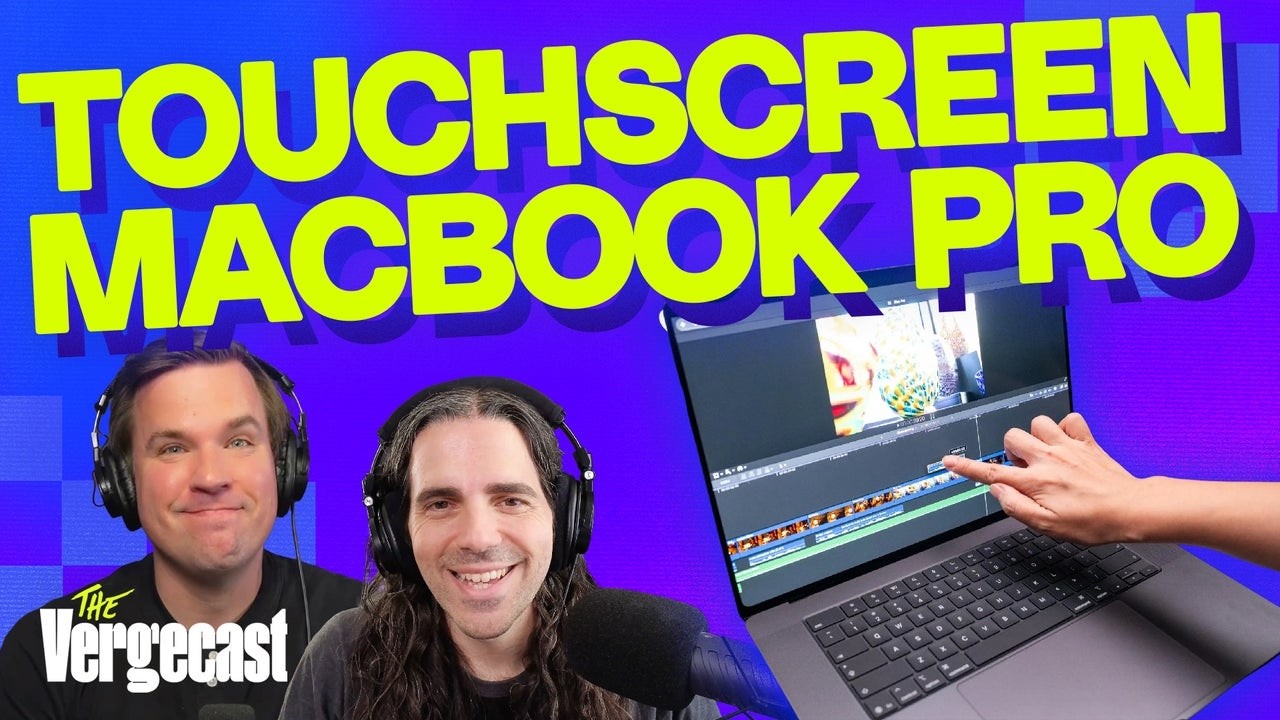
The touchscreen MacBook Apple said it wouldn't make | The Vergecast
This Vergecast episode centers on Apple's new touchscreen MacBook Pro (officially the MacBook Pro with ProLED XDR), debated by host David Pierce along with Antonio DiBenedetto, who attended Apple's LA launch event, and others including a speaker named John. The core tension is whether specific demoed touch uses (video timeline scrubbing, photo pinch-zoom, music sequencer work) make the feature genuinely useful, versus the hosts' recurring skepticism that touch gestures duplicate existing trackpad gestures, overlap with the iPad, and risk landing the Mac in an 'uncanny valley.' The episode also includes a separate news brief (DoorDash's acquisition of Instacart, Google search-growth comments, Samsung RAM supply) and a segment where David Pierce reviews the Pebble Index smart ring. No side 'wins' the touchscreen debate; pricing and long-term rollout remain open questions the hosts leave unresolved.
The episode's central question is whether Apple's new touchscreen MacBook Pro meaningfully justifies touch input or is an underwhelming, overlapping feature, a tension the hosts return to throughout the discussion.
- [02:19] Apple's new touchscreen MacBook is officially named the MacBook Pro with ProLED XDR.
- [05:27] One speaker noted the device is called the MacBook Pro with ProLED XDR rather than 'MacBook Pro Touch,' which they read as signaling Apple's intent not to center the product on touch.
- [01:54] David Pierce recalled Steve Jobs's famous line that touchscreen laptops are a bad idea because nobody wants to reach out and poke a vertical screen.
- [02:24] Antonio DiBenedetto attended Apple's event in Los Angeles and said he has seen, touched, and used the new MacBook Pro.
+ 45 more takeaways
- [03:21] Antonio DiBenedetto said he doesn't use touch functions much on clamshell laptops but uses them more on two-in-ones, convertibles, and Surface Pro-style devices.
- [04:45] A speaker argued the MacBook Pro's lighter weight will affect daily use more than its touchscreen will.
- [04:57] The larger new MacBook Pro model is a full pound lighter than before, and the 14-inch model is a half pound lighter.
- [08:08] Apple's demos at the event featured professionals including a fashion designer, a photographer, video professionals, and people from ILM.
- [08:33] One demo used an iPhone adapted with a Zeiss glass lens.
- [08:48] The hosts observed that in the professional demos, the touchscreen was used only occasionally, such as tapping or swiping, rather than as a core interaction method.
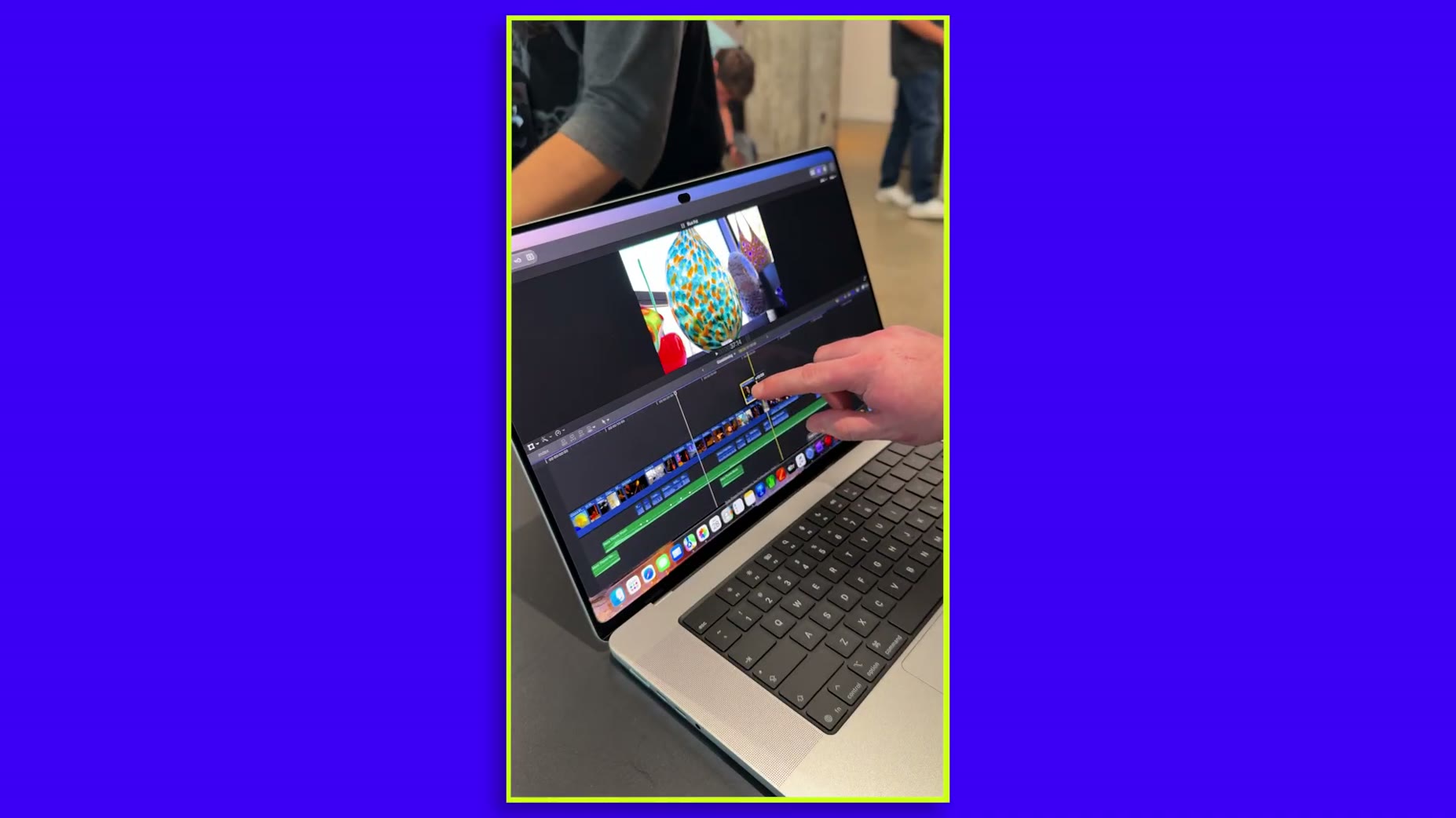
- [09:32] The touch features highlighted for the MacBook include swiping through timelines in video editing apps and pinching to zoom on large images.
- [10:50] A music producer demoed sequencer beat work on the touchscreen, citing a hotel-room scenario where plugging in other gear isn't convenient.
- [11:39] Antonio DiBenedetto said he hopes Apple Pencil support, or a new supported pencil, eventually comes to the touchscreen MacBook.
- [12:04] Antonio DiBenedetto said he ran into Apple's John Ternus at the event and told him the touchscreen MacBook 'seems very normal,' meaning underwhelming.
- [12:50] Ternus responded to the Pencil-support question by pointing back to the iPad as the best device for that.
- [13:26] Antonio DiBenedetto imagined a MacBook where an Apple Pencil attaches to the side to charge and the screen tilts forward, comparing the idea to Microsoft's Surface Laptop Studio.
- [14:09] The hosts noted touchscreen support is launching first on the most expensive MacBook Pros, raising the question of how long until the MacBook Air or other models get it.
- [14:44] One macOS change for touch is that the traffic-light minimize and close buttons magnify as you tap them.
- [15:11] The hosts said this magnification effect doesn't work seamlessly on the iPad and said they expect it to be messy on the Mac.
- [15:47] The touch gestures on the new display are the same multi-finger swipe gestures already used on the trackpad, such as switching desktops and showing apps or the desktop.
- [16:54] One host called native window resizing on the Mac 'a disaster,' saying you essentially can't easily put two apps side by side without a third-party app.
- [18:11] One host described dragging a window to the side with touch and accidentally triggering the same desktop-switching behavior that happens with the trackpad, calling it frustrating.
- [19:03] Apple's example of touch optimization is DaVinci Resolve, where tapping a color wheel on screen expands it so the finger doesn't block the control.
- [20:47] One speaker said Apple wants to bring more iPad and iPhone apps and widgets to the Mac, which the speaker said makes touchscreens more useful and important.
- [21:16] The hosts said the 'going home' gesture familiar from touchscreens is essentially impossible on a laptop with just a keyboard and trackpad.
- [22:47] The hosts argued the demo of someone playing piano on the touchscreen MacBook is pointless, since anyone who needs that already owns an iPad.
- [23:21] One speaker worried that going further than minor touch support could land the laptop in an 'uncanny valley' trying to be both iPad and Mac.
- [24:02] One speaker, describing culling and editing photos on location, said double-tapping the screen to zoom in Lightroom Classic while keeping one hand on keyboard shortcuts might speed up their workflow.
- [25:31] Swiping down from the top of the touchscreen summons Spotlight/Siri, equivalent to the Command-Space shortcut, and it remembers its last position.
- [26:08] One speaker predicted no sophisticated keyboard-shortcut user will actually swipe down from the top of the screen for Spotlight, calling it a feature that doesn't matter.
- [26:44] A speaker said that if the touchscreen does everything discussed and adds zero dollars to MacBook prices, that would be 'a smashing success.'
- [26:59] The same speaker said if touchscreen becomes a base feature adding $100 to $200 to MacBook prices, expectations for it will rise accordingly.
- [28:03] Apple launched M5 Pro and M5 Max chips earlier this year, so current laptops and the new touchscreen models now coexist with overlapping chip generations.
- [28:18] One speaker said he gave up four years ago trying to understand Apple's chip-to-laptop naming and placement logic, though he said the chips are all fast.
- [29:33] The hosts noted MacBooks already got more expensive earlier this year due to 'Ramageddon' memory price increases, adding to the pricing uncertainty around touchscreen models.
- [31:19] Antonio DiBenedetto said Apple is good at upselling buyers through configuration choices, getting them to step up from one chip tier to another.
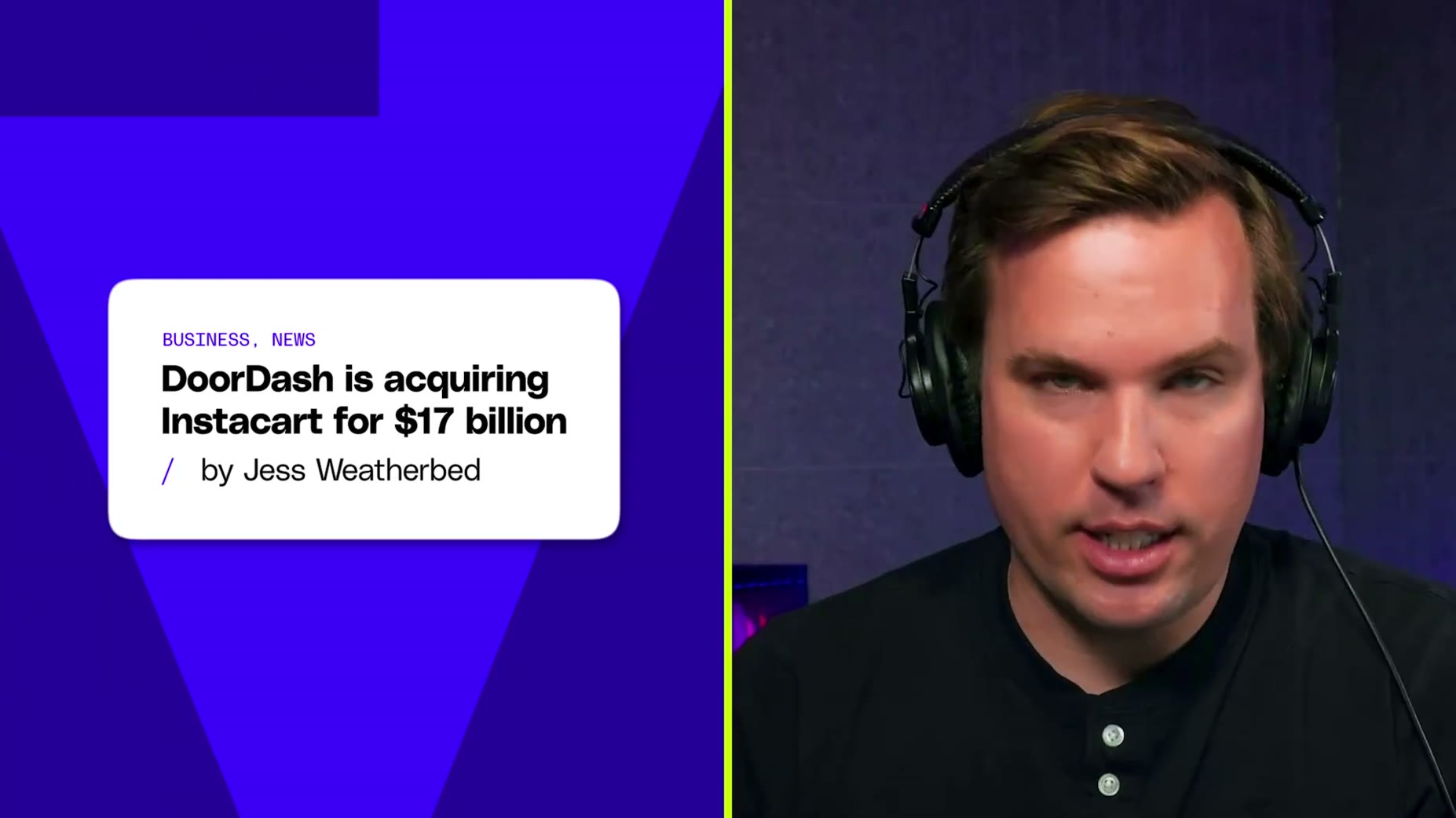
- [00:22] In the episode's news segment, the hosts reported that DoorDash is acquiring Instacart for approximately $17 billion and says it doesn't plan to combine the brands.
- [01:06] The hosts reported that Sundar Pichai said Google's query growth rate is at its highest point in five years, driven in part by AI investments.
- [01:14] The hosts reported that Google's Chief Business Officer Philip Schindler said the company is seeing lower monetization from its AI mode ads so far.
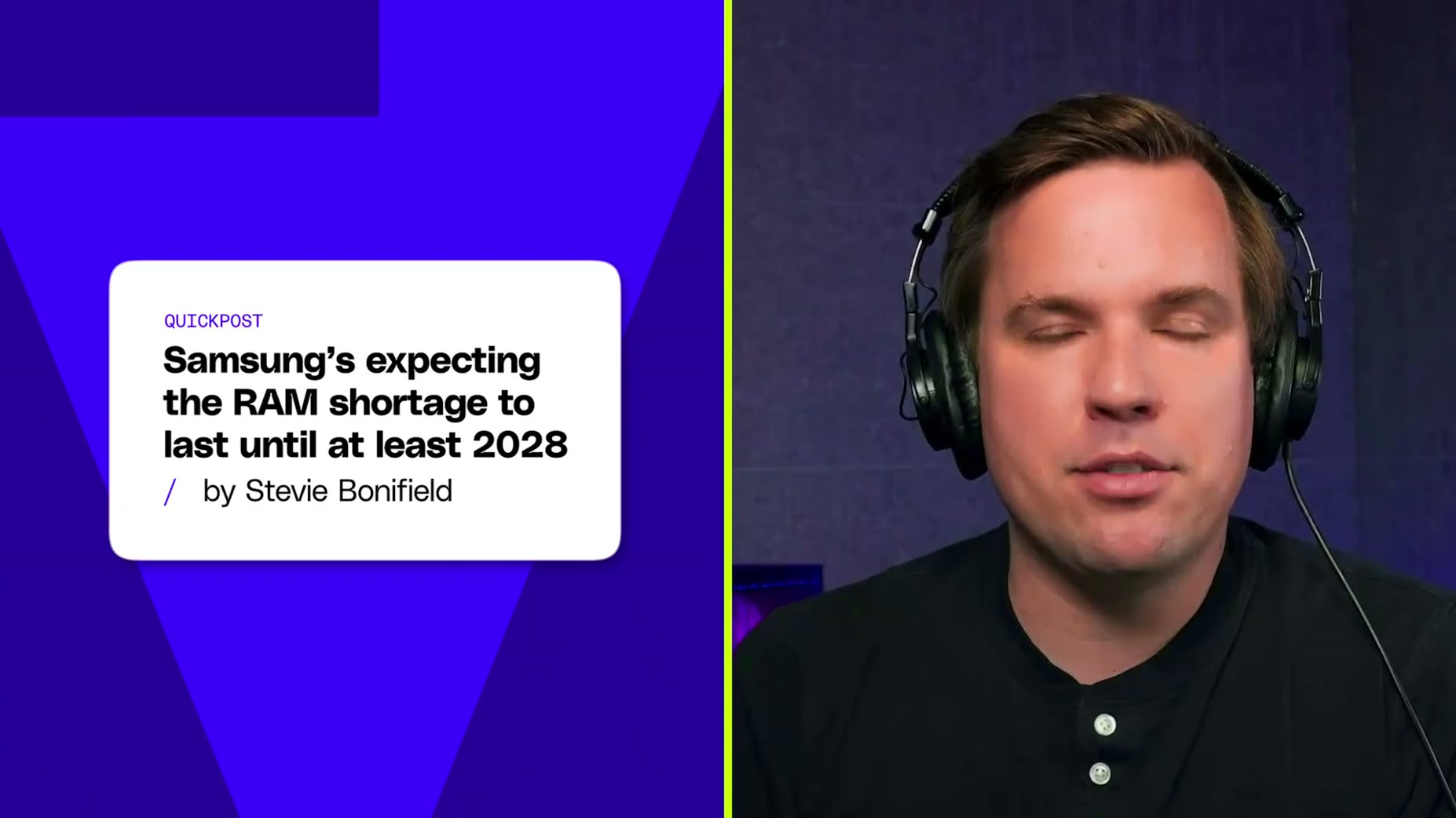
- [01:32] The hosts reported that a Samsung executive said tight supply conditions for RAM are expected to last into 2028, with Samsung's 2027 HBM RAM supply already sold out.
- [31:52] Pebble announced the Index 01, a smart ring with a button, in December 2025.
- [32:07] David Pierce said Eric Migicovsky, the creator of Pebble, first showed him the device at CES the year before as a voice recorder that transcribes speech to a notes app on the phone.
- [32:34] David Pierce said he pre-ordered the Pebble Index for around $75 and waited several months before it arrived this week while he was in Tennessee.
- [33:40] David Pierce said the Index only records when the button is held and pressed to the mouth, unlike always-on listening devices such as what he said Amazon's device is doing.
- [34:28] David Pierce said he used Claude Code to connect the Index to his note-taking app Capacities so that saying a reminder can add it to his daily note, though he said the system sometimes misroutes items to Apple Reminders instead.
- [34:53] David Pierce said the Pebble Index has MCP access for AI integration and a webhook that can link to almost anything, and said it works even better on Android than iOS due to system access differences.
- [35:23] David Pierce called the Pebble Index immediately his favorite gadget ever and said it's delightful.
- [35:30] David Pierce said he is more convinced than ever that smart rings are going to be a big thing, though he is unsure if it will be this one or Sandbar.
- You're getting a bunch for $400, at least.
How this brief was shaped: Discourse (interview / podcast / video essay) · confidence Low
The transcript is a two-part podcast: a quick news rundown on DoorDash and Instacart, then a sustained opinion-driven discussion asking whether Apple's touchscreen MacBook justifies the wait, with the host reflecting on his own reaction and what it means for computing. OCR shows a host talking to camera intercut with product and gift-card graphics and a MacBook demo, matching a talking-heads podcast rather than a tutorial or structured review sheet.
The lens sets this brief's structure, never its facts — every claim is held to the same citation and fact-check standard.