
Stars Aren't Supposed to Be Green or Pink. Both Were Just Found!
What this video is
⚡ a 15-minute video, readable in 60 secondsA new study led by astrophysicist Dr. Mark Hollands overturns the long-held astronomical assumption that green stars are physically impossible, identifying the first confirmed green-hued star along with other unusual colors like pink, purple, and cyan among white dwarfs. These colors arise because dense, chemically altered atmospheres cause absorption that bypasses the normal blackbody color curve. The team analyzed a complete sample of 151 white dwarfs within about 65 light years of Earth to measure how common these exotic colors really are. The findings also reveal that a star's unusual color can act as a forensic record of planets or asteroids it once consumed.
[01:56] A new study by astrophysicist Dr. Mark Hollands and his team found that green stars and other unusual colors actually exist among white dwarfs, overturning the assumption that green stars are physically impossible.
Key takeaways
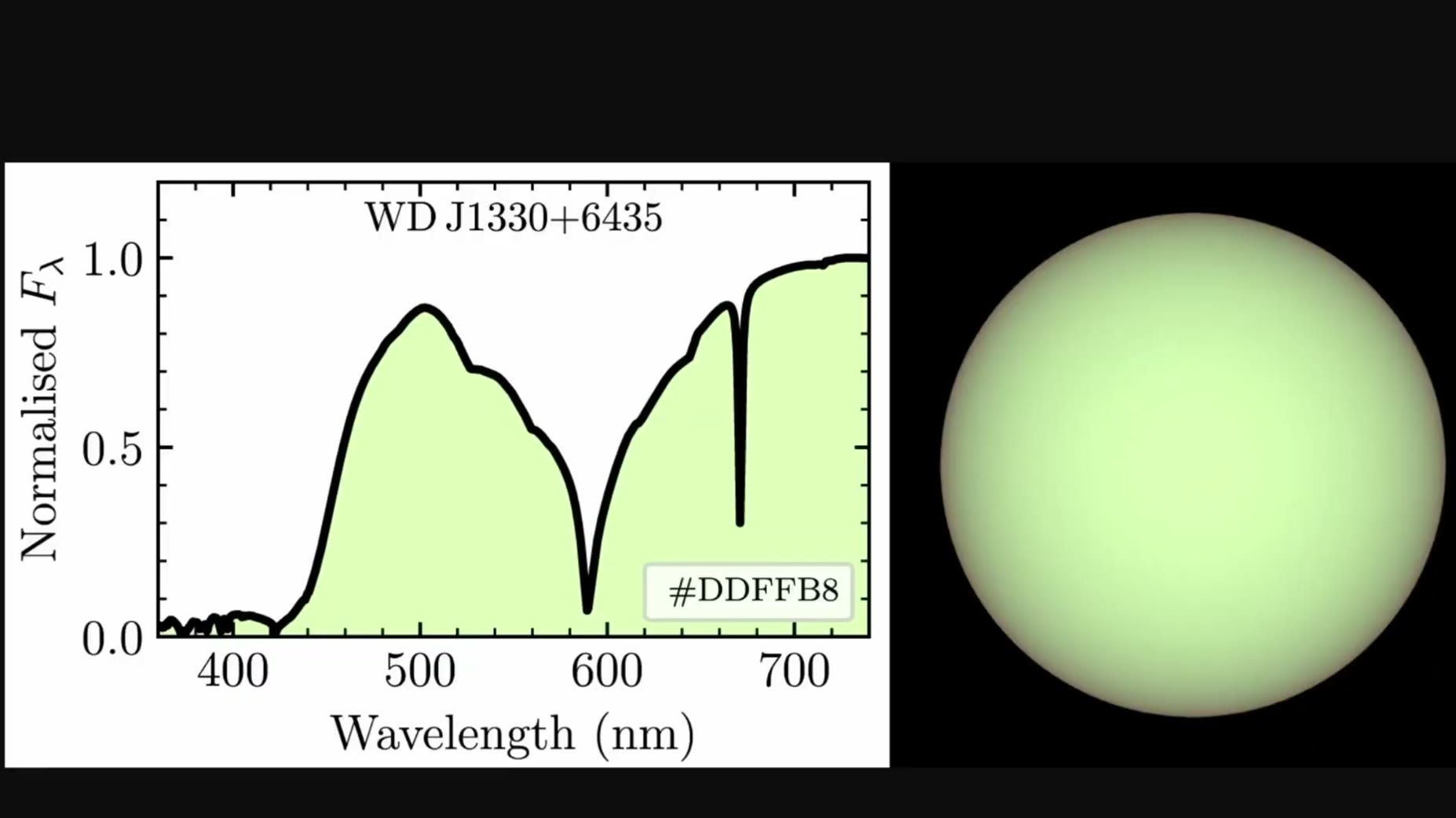
- [02:11] The first confirmed green-hued star identified is the white dwarf WD J1330+6435.
- [06:32] WD J1330+6435 is about 280 light years from Earth with a surface temperature around 4000°C (7200°F), which would normally glow dull orange-yellow.
- [06:56] Scientists believe this white dwarf underwent planetary accretion, consuming a shredded asteroid field or planetesimal that deposited sodium, calcium, and lithium onto its surface.
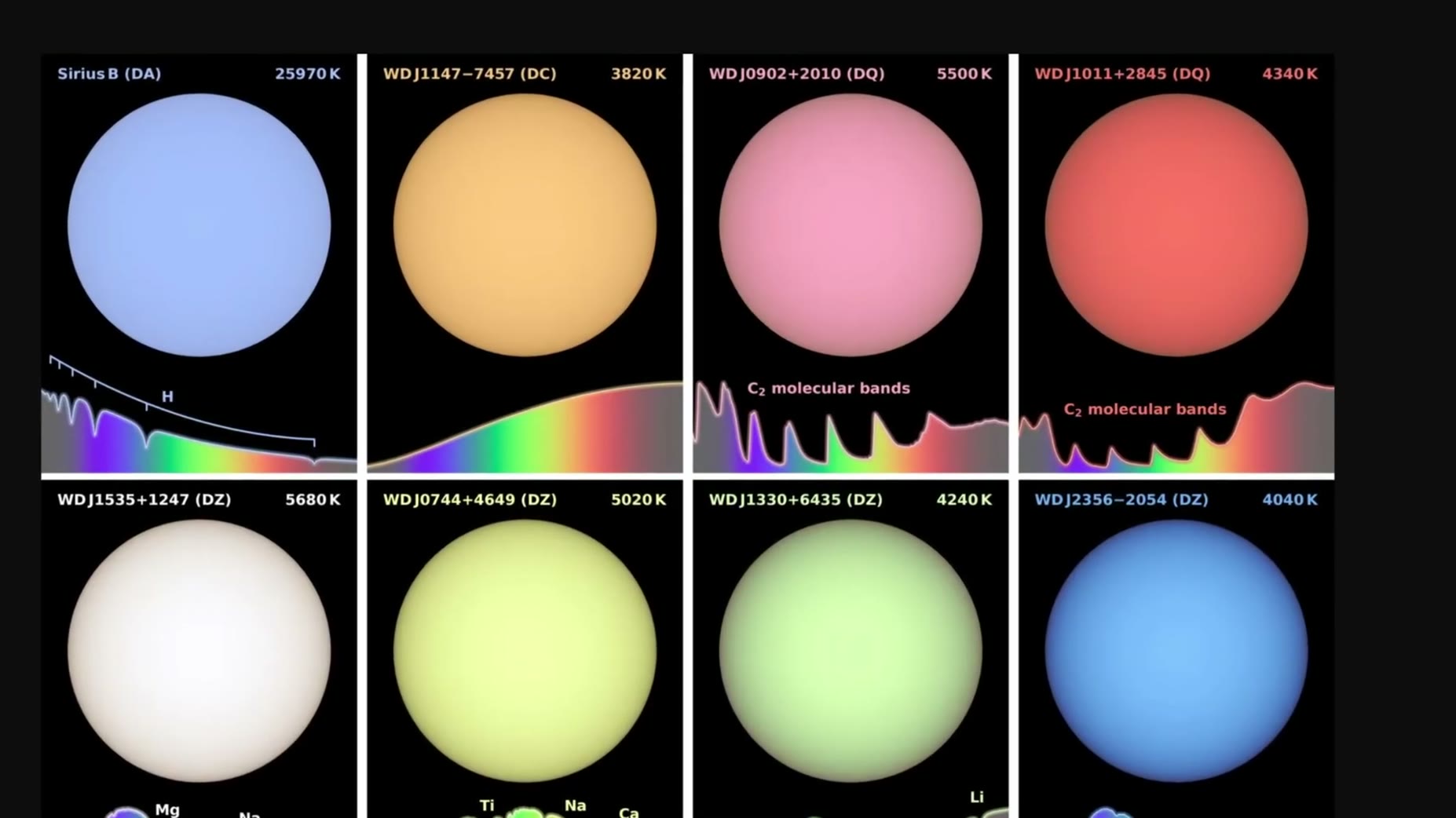
- [07:38] Pressure broadening in the dense atmosphere caused sodium to absorb yellow/orange light and calcium to absorb violet/blue light, leaving only light around 500 nanometers, producing the star's green glow.
+ 7 more takeaways
- [08:15] This is reported as the first time in history an official green star has been confirmed, described as 'not super green, but green enough.'
- [08:28] A Warwick University team found carbon-rich white dwarfs like WD-J0902 produce pink and purple hues from carbon dredged up by deep convection currents.
- [09:05] WD-J1011, about 50 light years away, has carbon molecules blocking almost all light below 600 nanometers, giving it a deep salmon pink color possibly the reddest star ever recorded.
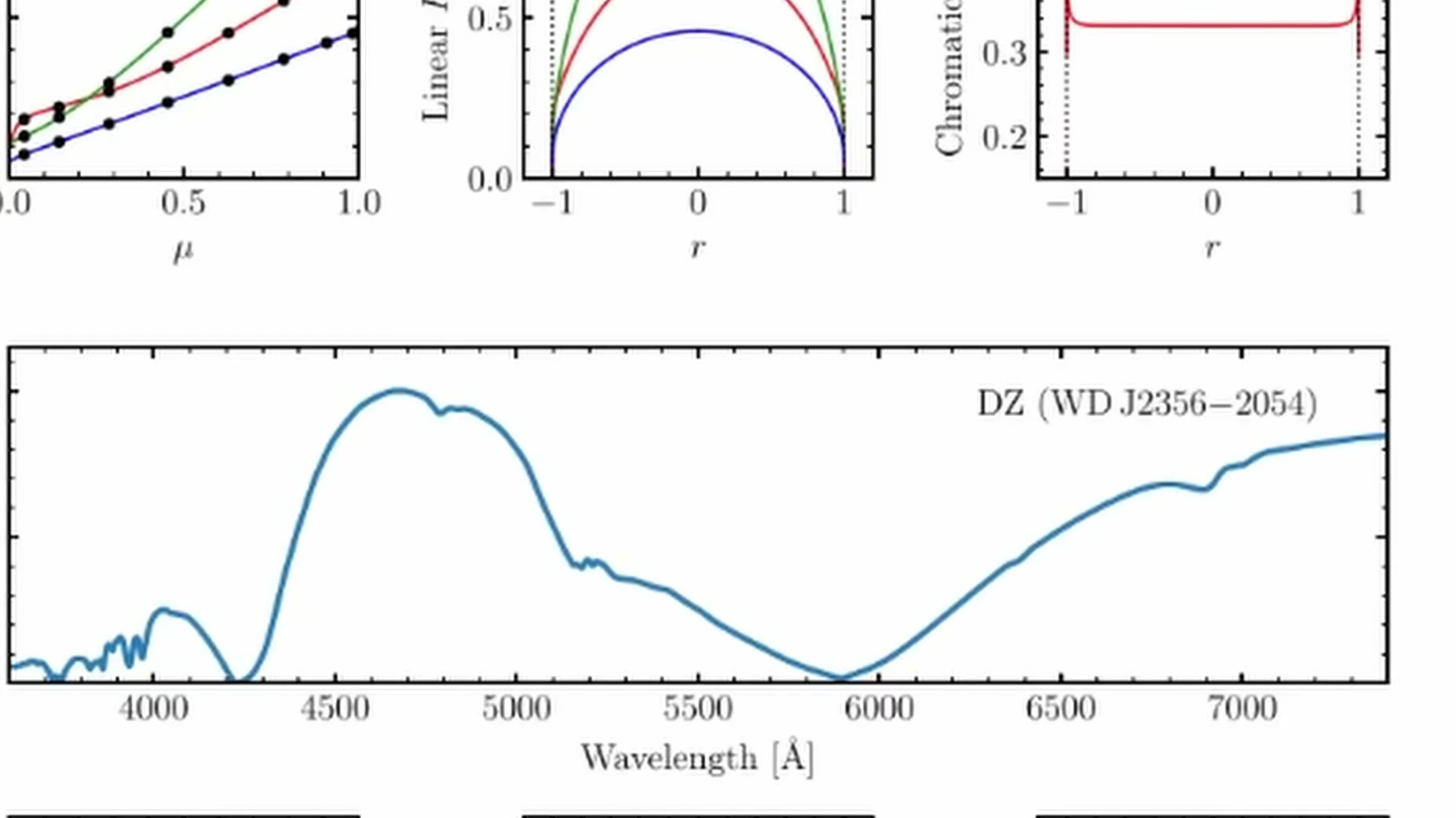
- [09:56] WDJ2356-2054, a cold 4000K white dwarf with a sodium-enriched atmosphere, appears almost entirely blue because its sodium wipes out the middle optical spectrum.
- [10:51] Out of 151 local white dwarfs studied within about 65 light years, exactly 5 (about 3%) showed exotic, non-blackbody colors, while the remaining 146 followed ordinary blackbody emissions.
- [11:24] The finding resolves a textbook misconception that most white dwarfs are blue, when in reality most are simply white, with the blue bias likely from brighter, easier-to-see hot stars.
- [12:04] When a white dwarf consumes a planet or asteroid, it alters the star's color, creating an astronomical forensic lab that can reveal what its former planetary system was like.
Jump to a moment
Their links, sorted & clickable
🏛️ Communities & courses1
Support this channel on Patreon to help me make this a full time jobWas this brief useful?