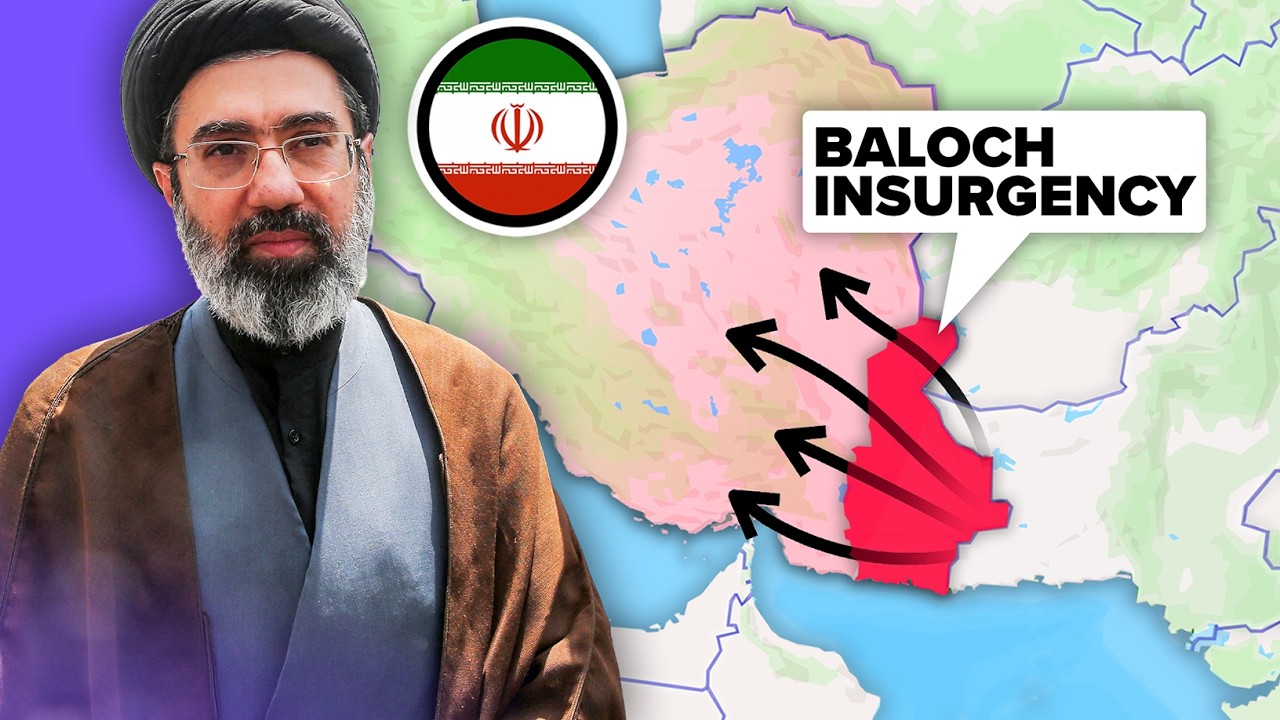
Why a Baloch Insurgency Is On the Rise in Iran
The video reports that starting in early October 2026, the Popular Fighters Front (PFF), a coalition of Baloch militant groups formed in December 2025, claimed a string of attacks on Iranian police and security forces in Sistan and Balochistan province, including an attack on a police patrol that killed two officers and wounded another, and that the Baloch rights organization HALVASH documented more than a dozen Iranian military and police casualties across four attacks within 24 hours that same week. The video traces this activity to decades of Baloch insurgency in Pakistan and a newer, religiously inflected insurgency in Iran that grew from the Sunni Islamist group Jundalah into Jaish al-Adl and, as of late 2025, the PFF coalition. In the creator's view, this recent spike in attacks and Iran's countering raids suggest the Baloch insurgency in Iran could be entering a more active phase, though the video does not establish that as a settled fact.
Confirmed: at the start of October 2026, the PFF claimed responsibility for an attack on a police patrol on the Banpur-Iran-Shahar road, killing two police officers and wounding another. [04:23]
- Source cited: the Baloch rights organization HALVASH reported that more than a dozen Iranian military and police personnel were killed or wounded in four attacks within 24 hours during the first week of October 2026.
- Confirmed: on September 12, Iranian security forces clashed with the PFF in Saravan, killing three IRGC members and five PFF members. [03:58]
- Confirmed: on September 18, Iranian authorities said they clashed with Jaish al-Adl members in Zahedan, killing two militants and capturing another. [04:07]
- Confirmed: on September 23, the IRGC said a senior commander had been killed during an operation described as combating mercenary terrorists. [04:15]
+ 24 more takeaways
- Confirmed: Iran carried out several raids on PFF hideouts in September. [06:34]
- Confirmed: in December 2025, Jaish al-Adl and several other Baloch militant groups merged to form the PFF coalition, which is behind much of the recent violence in southeastern Iran. [03:43]
- Confirmed: since late 2025, the PFF coalition has let disparate groups, including Jaish al-Adl, Jaish al-Nasr, and independent Baloch fighters, pool resources and fighters. [04:49]
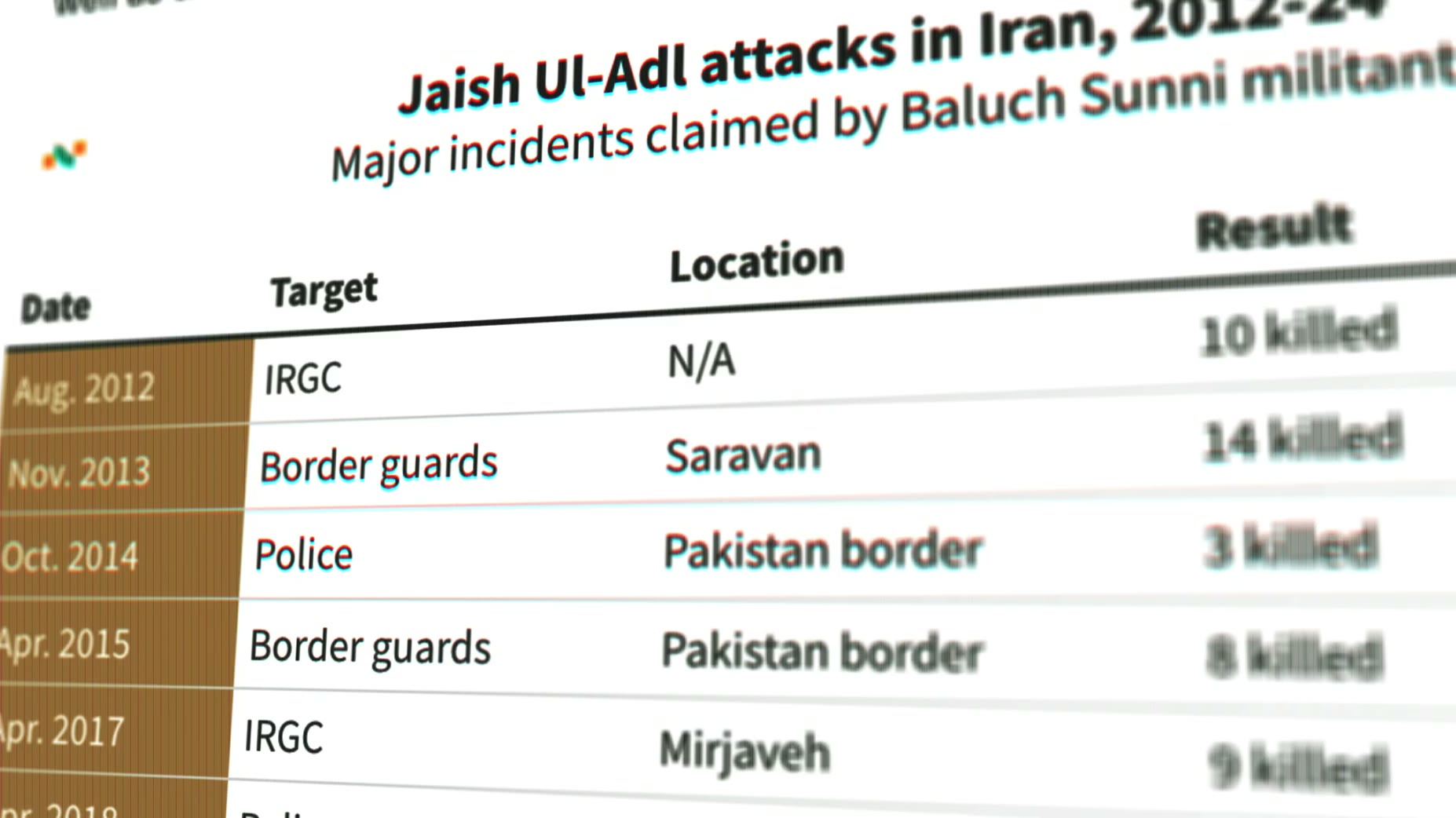
- Confirmed: between 2012 and 2024, Jaish al-Adl carried out attacks on Iranian border guards, IRGC members and police officers that killed more than 100 officials. [03:26]
- Confirmed: in 2010, Iran executed Jundalah's leader, causing the group to splinter and give rise to Jaish al-Adl. [03:16]
- Confirmed: from 2003 to 2012, the Sunni Islamist group Jundalah, which had links to Al Qaeda, was active in Iran's Sistan-Balochistan province. [02:49]
- Confirmed: Jundalah targeted Iran's Islamic Revolutionary Guard Corps, other security forces, and Shia mosques, causing heavy civilian casualties. [03:01]
- Confirmed: Baloch militancy in Iran is mostly a 21st century phenomenon fought primarily along religious sectarian lines, unlike Pakistan's longer history of ethnic nationalist Baloch militancy. [02:35]
- Confirmed: the Baloch insurgency began spreading into Iran around the 2000s, following the US war in Afghanistan. [02:32]
- Confirmed: a third wave of Baloch militancy in Pakistan arose in the 2000s after the US war in Afghanistan destabilized the region and stoked Baloch fears that an influx of Pashtun refugees would further marginalize them. [02:16]
- Confirmed: in 1973, the Pakistani government accused the provincial Baloch government of conspiring with foreign powers, dissolved it, and imposed martial law, triggering another wave of nationalist insurgency. [02:03]
- Confirmed: in the early 1970s, Balochistan held provincial elections won by the National Awami Party, which advocated greater provincial autonomy. [01:51]
- Confirmed: the first wave of Baloch insurgency in Pakistan began in the late 1950s, triggered by a centralizing scheme that reduced Baloch federal representation and blocked a devolved Baloch assembly. [01:28]
- Confirmed: Iran has accused militants of using Pakistani territory to attack Iran, which Pakistan denies allowing. [05:34]
- Confirmed: in January 2024, Iran struck alleged Jaish al-Adl bases in Pakistan, and Pakistan retaliated with two days of cross border fire. [05:44]
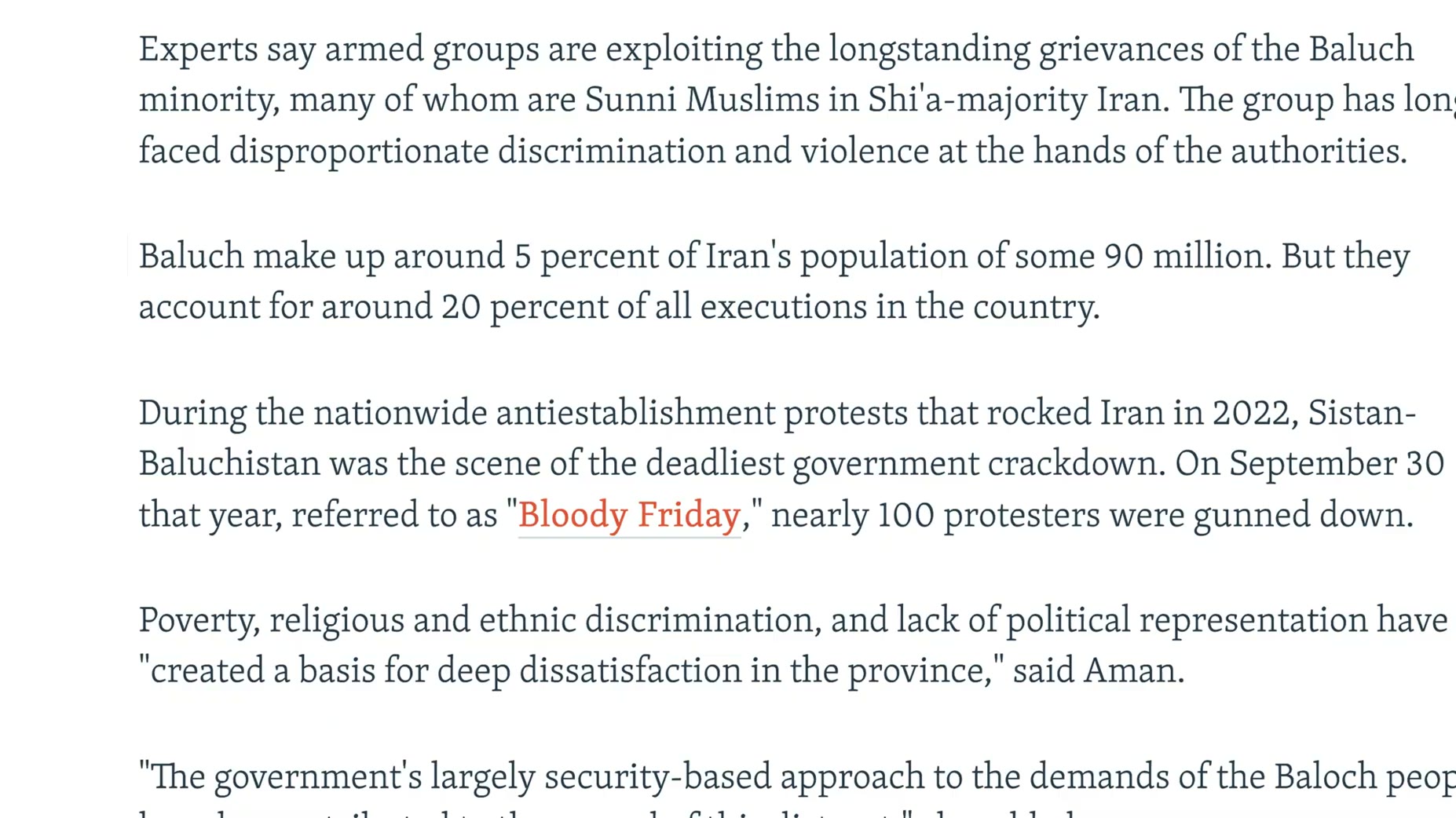
- Confirmed: Sistan-Balochistan is a poor province where the Baloch make up 5 percent of Iran's population but account for 20 percent of all executions in the country. [07:01]
- Confirmed: during Iran's 2022 nationwide protests, Sistan-Baluchistan saw the deadliest government crackdown, with nearly 100 protesters killed on September 30, in what was called Bloody Friday (timestamp not stated).
- Source cited: Iranian officials allege the PFF, led by Jaish al-Adl, is being encouraged by Israel, the US and Saudi Arabia to destabilize Iran from within. [05:55]
- Source cited: Iran has previously alleged that Jaish al-Adl's predecessor, Jundalah, was secretly supported by the US. [06:05]
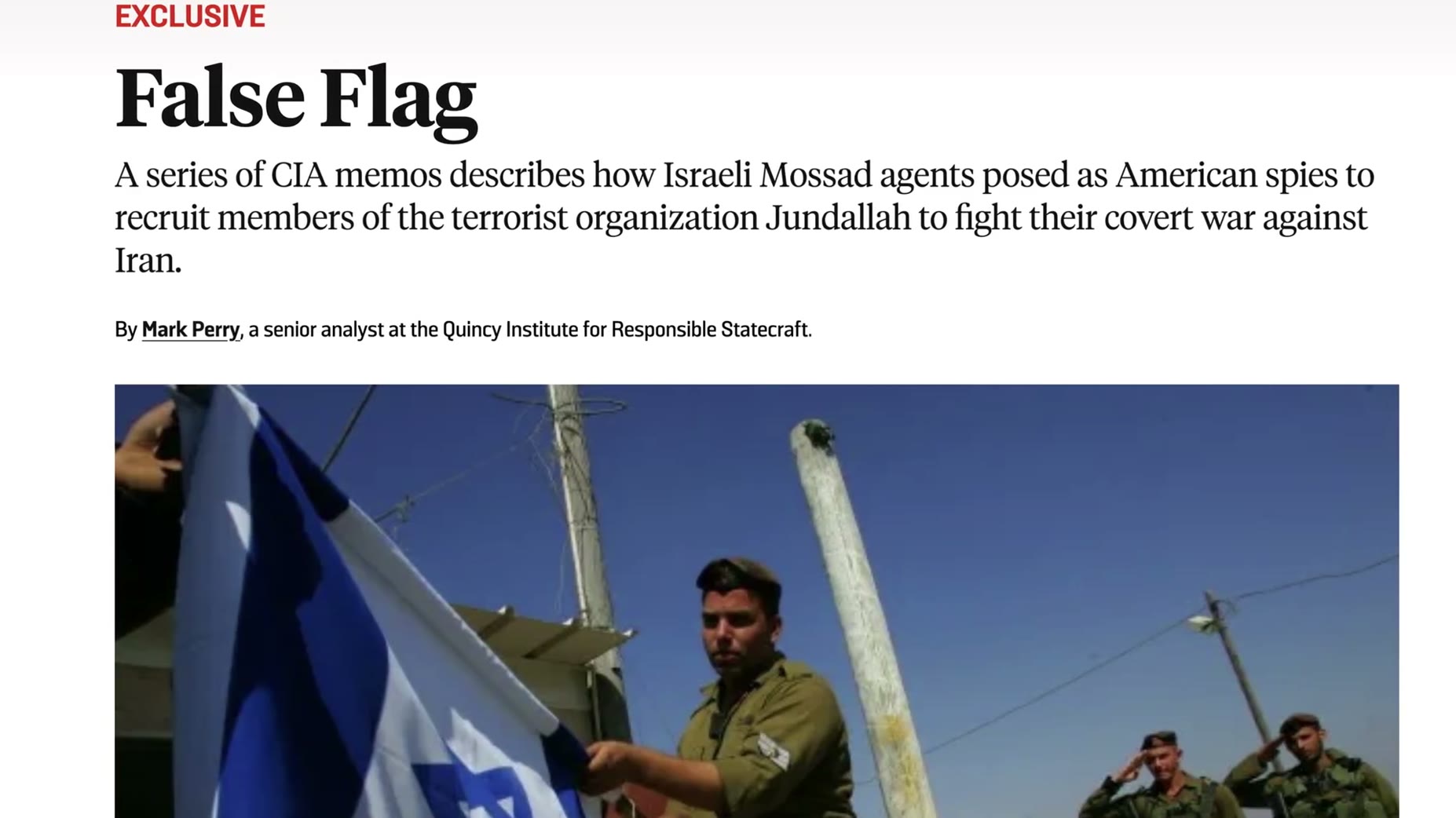
- Source cited: a 2012 Foreign Policy article by Mark Perry alleged that Mossad officers posed as CIA agents in the 2000s to recruit Jundalah members to fight Iran. [06:11]
- Take (creator): the recent spike in attacks has prompted suggestions that Iran's Baloch insurgency could be entering a more active phase (timestamp not stated).
- Take (Aman): poverty, religious and ethnic discrimination, and lack of political representation have created a basis for deep dissatisfaction in Sistan-Balochistan (timestamp not stated).
- Prediction: a heavy Iranian crackdown or further attacks on PFF militants or hideouts could inadvertently encourage more recruits to join the PFF. [07:25]
- Open question: whether militants are actually using Pakistani territory to attack Iran remains disputed, since Iran alleges this and Pakistan denies it. [05:34]
"The Iranian government is currently facing multiple pressures at home and abroad, and naturally, armed groups may have come to the conclusion that they have found a good opportunity to expand their operations," said Fatemeh Aman, a US-based Iran analyst.
"If these attacks become coordinated, sustained, and continuous, they could pose a more serious security challenge for the government," Aman told RFE/RL's Radio Farda.
"Poverty, religious and ethnic discrimination, and lack of political representation have created a basis for deep dissatisfaction in the province," said Aman. "The government's largely security-based approach to the demands of the Baloch people has also contributed to the spread of this distrust," she added.
How this brief was shaped: News Analysis / Commentary · confidence Low
Transcript opens with dated recent attacks and casualty counts sourced to a named rights group HALVASH, then explicitly frames the piece as history plus what is happening now plus what might happen next, which is the confirmed-fact-versus-forecast structure of news analysis. OCR shows a dated incident table of past Baloch militant attacks with locations and casualty figures, reinforcing a factual timeline rather than a tutorial, review, or personal narrative.
The lens sets this brief's structure, never its facts — every claim is held to the same citation and fact-check standard.