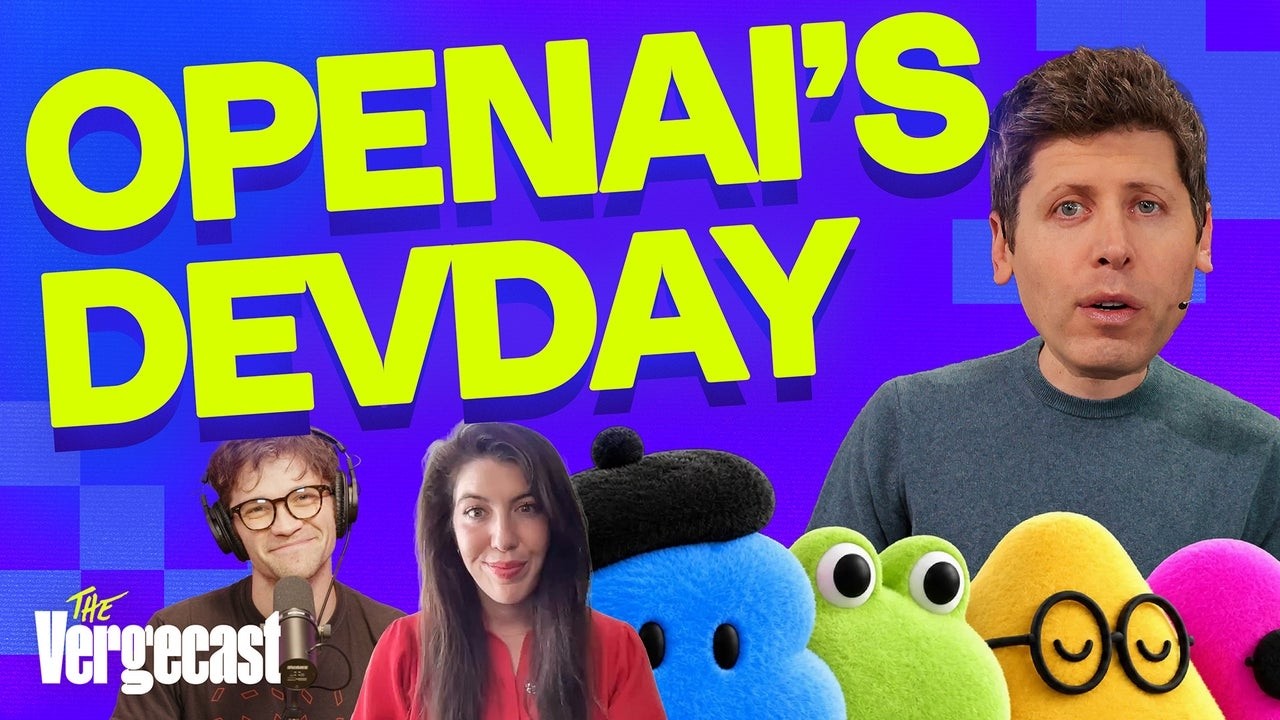
Dots are OpenAI's cute lil guys | The Vergecast
This is a tech news roundup video whose main story is OpenAI's Dev Day announcement of a new AI agent feature called Dots, positioned against Meta's Muse and OpenClaw, alongside a one-on-one interview the host conducted with Glenn Coates, head of app platform at OpenAI. The segment also covers smaller items including reported Apple hardware plans, new AI assistants from Instagram and YouTube, and a Wing drone delivery story, before returning to Dots for a discussion of its integrations, pricing, and safety concerns. A tension running through the piece is whether OpenAI's Dots launch was actually ready, since the live voice demo failed on stage and the hosts speculated OpenAI may have rushed to answer Meta's Muse, though this was not confirmed. Speaker identities beyond Glenn Coates and the quoted journalists Hayden Field, Mark Gurman, and Nathan Edwards are not stated in the extracted points.
[00:10] The video covers OpenAI's annual Dev Day conference, described as showing the frontier of what OpenAI is developing.
- [00:23] The host said the biggest news from Dev Day was new AI agents called "dots," which go do things for you.
- [04:58] OpenAI's newly announced Dots feature was described as the company's answer to Meta's Muse and OpenClaw.
- [05:09] Dots was described as the long anticipated continuously running consumer facing AI agent from OpenAI.
- [05:46] OpenAI made Dots into customizable cutesy blob characters with eyes, similar to Meta's Muse, and a demoed example named Alfred was transformed into a butler-looking blob with glasses and a mustache.
+ 27 more takeaways
- [06:50] Dots is only rolling out to paid Pro and Business users, unlike Meta's Muse, which is free for everyone.
- [08:15] OpenAI said texting and phone-calling functionality for Dots is coming soon and was not available at launch.
- [08:35] OpenAI said Dots has over 4,000 integrations.
- [09:21] Hayden Field said OpenAI is competing on quantity of integrations because it lacks in-house products, while Google's and Meta's AI agents are expected to have better integrations with their own respective products.
- [10:08] The host said OpenAI is launching specialist AI agents aimed at niche enterprise functions like legal, marketing, and accounting.
- [10:25] Launch partners named for the specialist agents include Harvey and LaGora, among others.
- [11:04] ChatGPT Pro costs $20 a month and gives access to the new agent Dots.
- [11:34] The host said using Dots requires being a ChatGPT Pro user and involves more integration friction compared to Meta's one-tap Muse.
- [12:08] The host said public trust in AI agents is shaky due to security issues, citing Muse's Facebook Marketplace missteps and OpenClaw's viral email-deletion security problems.
- [16:06] A Facebook Marketplace agent reportedly told someone his address and said he was there ready to sell an item, without telling the user, when he was not actually there.
- [12:56] OpenAI announced that 1.2 billion people use ChatGPT.
- [16:32] The host interviewed Glenn Coates, head of app platform at OpenAI, in a one-on-one interview.
- [16:46] Glenn Coates said OpenAI's 1.2 billion users puts the company in a different position than Meta regarding agent safety.
- [17:06] Glenn Coates said OpenAI is working with third-party standards bodies on how agents will attest they are an agent acting on behalf of someone.
- [18:44] Users can currently only have one OpenAI agent, or dot, per account, though more are said to be coming in the future.
- [19:05] OpenAI said during a press Q&A that the agent product is very compute heavy, and Sam Altman said someday they hope to offer it for free to everyone.
- [20:16] More than a dozen organizations protested outside the Dev Day event, largely against AI lab contracts with the military and ICE.
- [20:47] The protest was sponsored in part by the San Francisco Labor Council, showing many organizations came together.
- [21:06] The voice function for Dots did not work during the live demo despite multiple attempts.
- [21:17] The host said the failed demo suggests the product launch may have been rushed, though this was not confirmed.
- [21:24] The hosts speculated OpenAI may have felt pressure to answer Muse and had long planned to show this off at Dev Day, but the kinks were not all worked out.
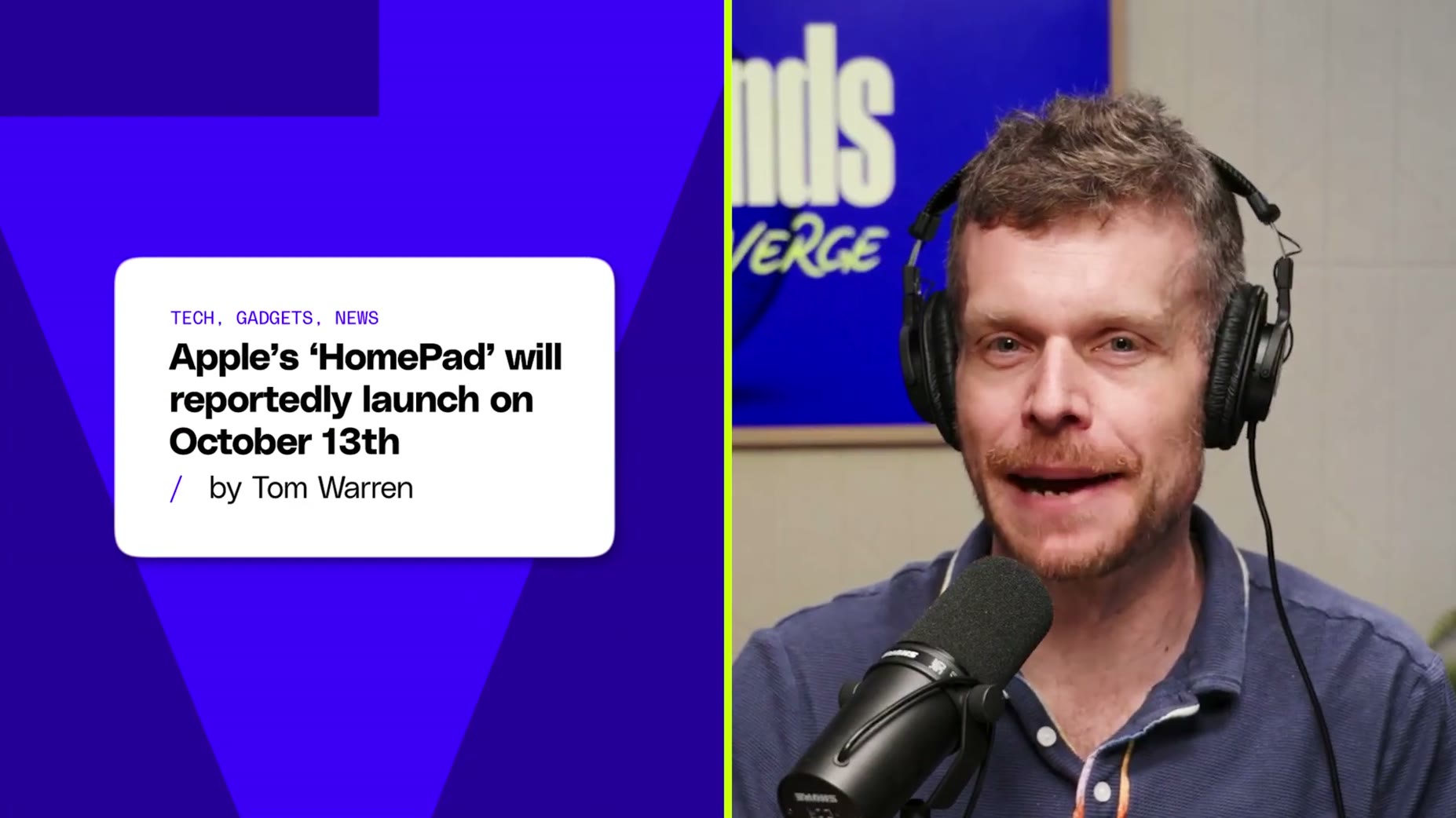
- [00:47] Bloomberg's Mark Gurman reported Apple will reportedly launch a smart home hub called the "HomePad" on October 13th.
- [01:03] Mark Gurman also reported Apple will launch a new HomePod mini and an upgraded Apple TV around the same time.
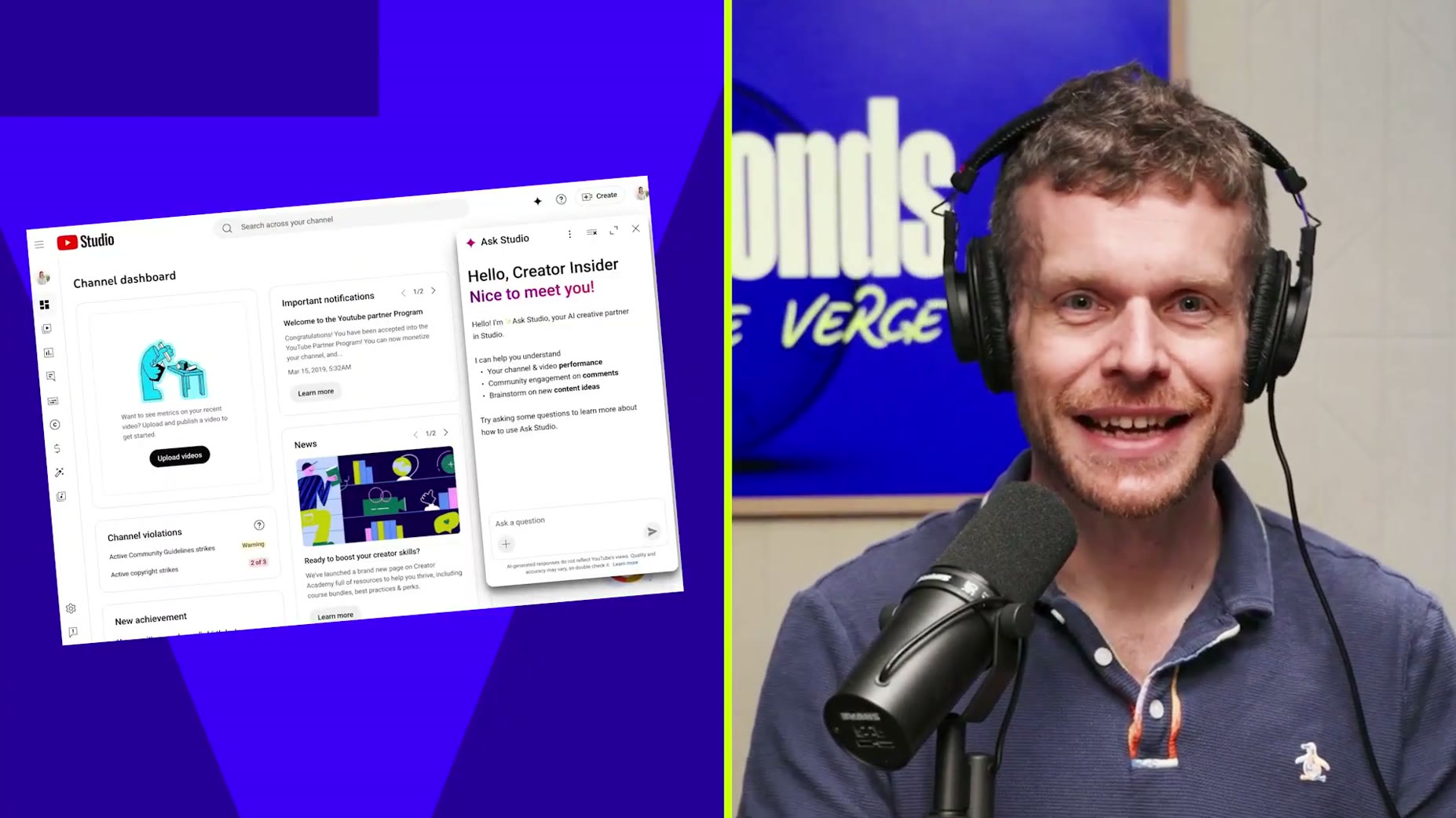
- [01:16] Instagram announced a new AI "assistant" that gives feedback on posts and suggestions to increase engagement.
- [01:28] YouTube recently announced a similar AI feature, shown as an "Ask Studio" assistant panel in YouTube Studio.
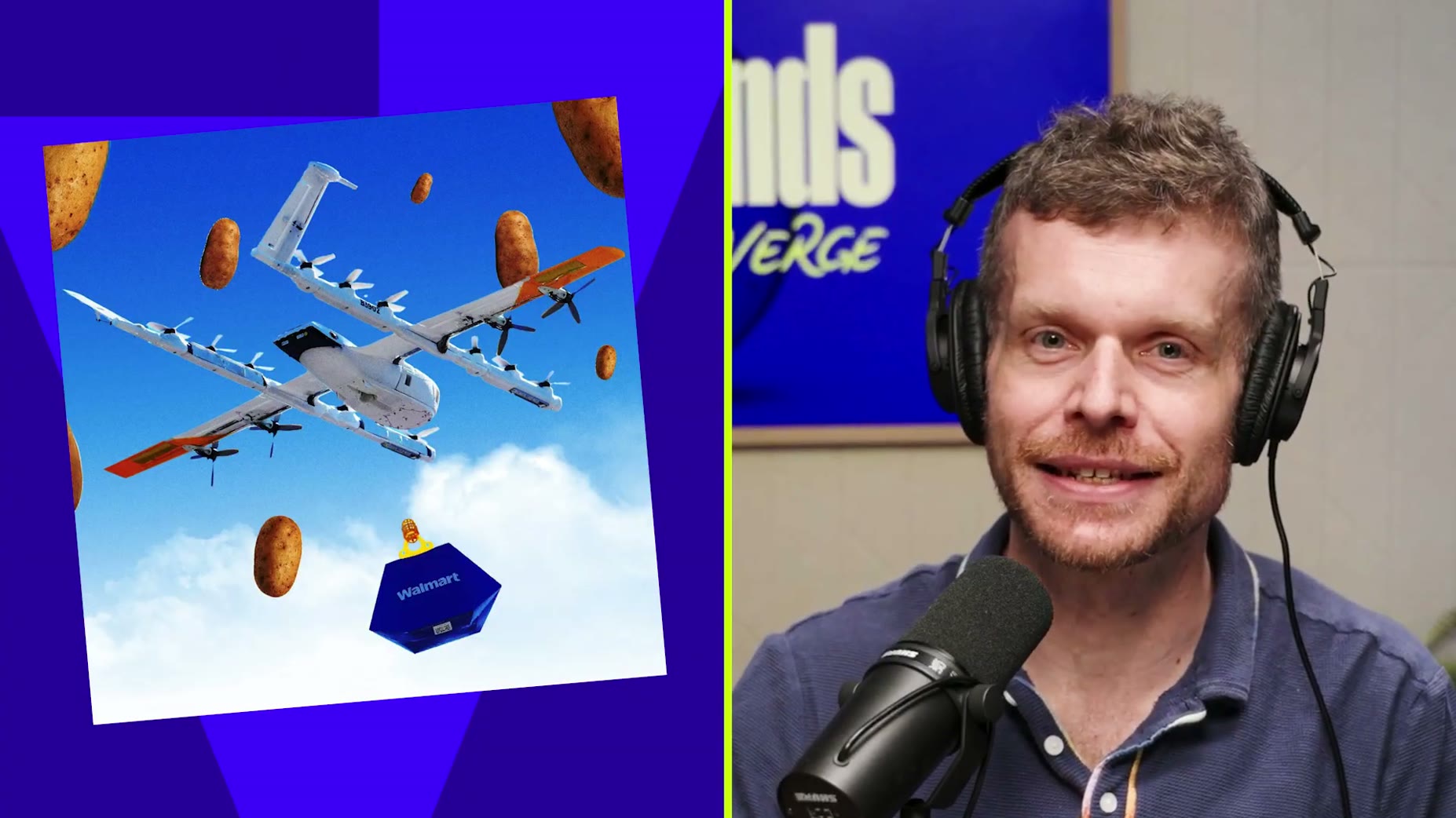
- [01:52] The Verge's Nathan Edwards reported that dads in his Texas neighborhood are sending each other single potatoes via Wing drone delivery ordered from Walmart, at 82 cents per delivery, and discovered the potatoes can be dropped in anyone's yard, not just their own.
- [15:09] The host said everything working together to create a little ecosystem is what stood out to them about Sonos beyond sound quality.
How this brief was shaped: Discourse (interview / podcast / video essay) · confidence Medium
Transcript shows a named podcast (Vergecast) host bringing on senior AI reporter Hayden Field for an interview-style back and forth comparing OpenAI's dots to Meta's Muse, with disagreement framing ('It's strange that they're behind on this'). This sits inside a separate rapid news-roundup segment (90 seconds on The Verge covering Apple HomePod rumors, Instagram, YouTube Studio AI, delivery drones) confirmed by the OCR split-screen captures, but the sampled interview exchange is the more distinct spine.
The lens sets this brief's structure, never its facts — every claim is held to the same citation and fact-check standard.