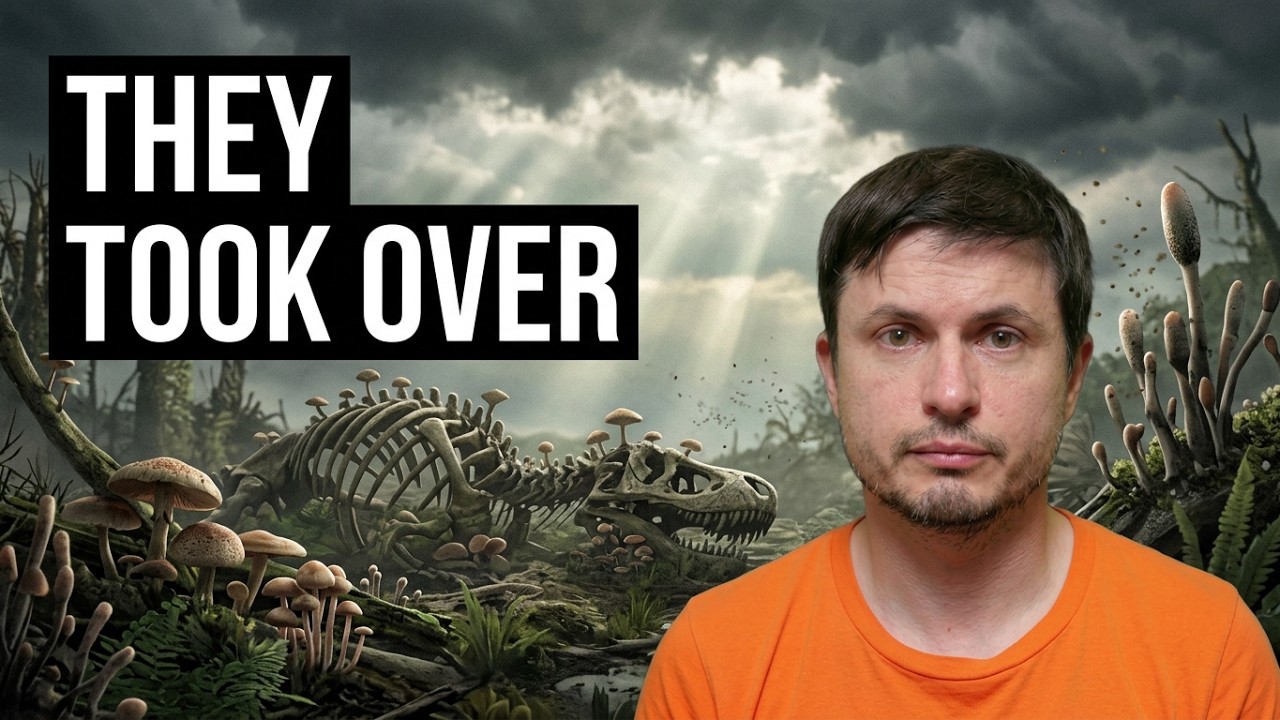
What Really Ruled Earth Right After Dinosaurs Went Extinct
This video (speaker's identity, credentials, and setting are not stated) covers the paleobiology and mycology around how fungi responded to the Cretaceous-Paleogene (K-Pg) mass extinction 66 million years ago. The organizing idea is the newly discovered giant fungal lineage nicknamed D-Rex (Dianjunus rex), found in Yunnan, China, which the video uses alongside fungal spore studies to argue that a quiet global surge of fungal life, not just the asteroid impact itself, shaped the post-extinction world. It also covers a contested hypothesis about why mammals survived better than dinosaurs, explicitly flagged as not widely accepted. The narrator closes by framing the D-Rex discovery as underscoring how interconnected Earth's climate, geology, and biology are.
Concept [00:12]: Fungi have repeatedly reshaped Earth's biosphere, often stepping in after a planetary cataclysm, according to the narrator.
- Concept [00:23]: The K-Pg mass extinction 66 million years ago that killed non-avian dinosaurs is usually pictured as an asteroid impact causing firestorms, climate cooling, volcanoes, and tsunamis.
- Concept [00:43]: The narrator states recent studies, especially from 2026, suggest the aftermath of that extinction was dominated by a quiet global explosion of fungal life.
- Named discovery [00:57]: A giant prehistoric fungal lineage discovered in China has been nicknamed D-Rex.
- Concept [01:18]: Microscopic evidence shows Earth experienced multiple global fungal surges, mostly clustered around the Cretaceous-Paleogene boundary.
+ 40 more takeaways
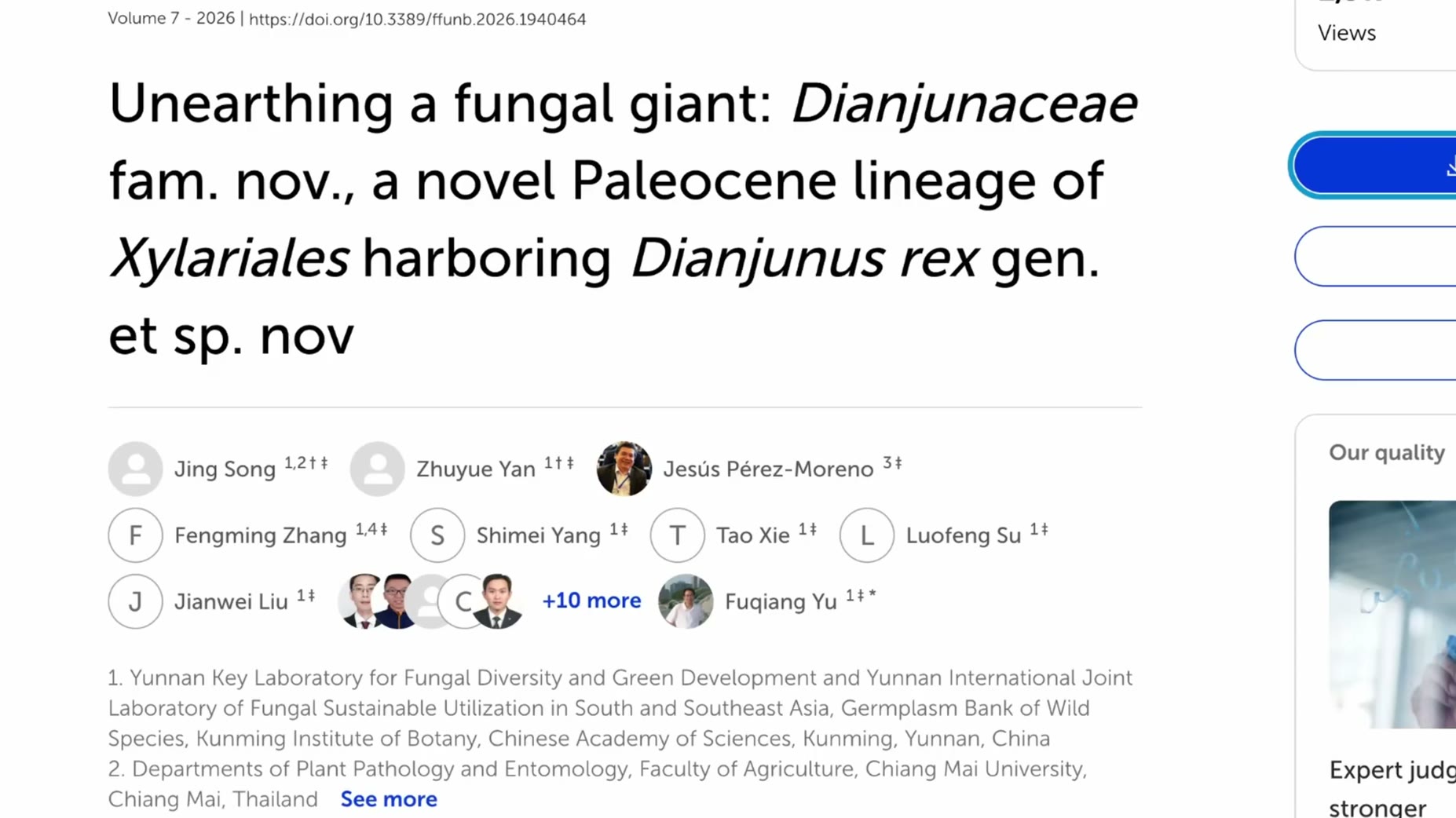
- Named study [01:52]: The discovery is published as 'Unearthing a fungal giant: Dianjunaceae fam. nov., a novel Paleocene lineage of Xylariales harboring Dianjunus rex gen. et sp. nov.' in Frontiers in Fungal Biology.
- Named study [01:59]: Scientists from the Kunming Institute of Botany conducted fieldwork in Yunnan province, China, and accidentally discovered the large upright fungus growing from the roots of Chinese cork oak trees (Quercus variabilis).
- Concept [02:19]: The new species, D-rex (Dianjunus rex), is named after the ancient Dian kingdom of Yunnan and is notable mainly for its size.
- Mechanism/feature [02:34]: D-rex produces massive finger-like fruiting bodies called stromata that reach up to 50 centimeters (20 inches) in height.
- Mechanism/feature [02:34]: Those stromata weigh up to 2.2 kilograms (5 pounds) individually.
- Comparative example [02:47]: This makes D-rex the largest fruiting body ever documented within the phylum Ascomycota, a fungal group of 64,000 species that includes truffles.
- Mechanism [03:18]: Detailed DNA sequencing of four genetic loci plus full genomic analysis showed D-rex doesn't fit into any known fungal family.
- Concept [03:30]: It is now classified in its own new family, Dianjunaceae, within the order Xylariales.
- Named finding [03:38]: Using a molecular clock technique, researchers calculated this family originated almost exactly 65 million years ago, about 1 million years after the Cretaceous-Paleogene mass extinction.
- Mechanism [04:08]: Genomic analysis suggests D-rex has approximately 200 specialized genes paired with high cell wall building capacity, enabling rapid digestion of plant biomass and channeling carbon into its massive fungal structures.
- Background [04:43]: The narrator states an asteroid about 10 km (6 miles) across struck the Yucatan Peninsula, forming the Chicxulub Crater, triggering megatsunamis and blocking sunlight for years to a decade, contributing to a collapse that wiped out roughly 75% of plant and animal species including non-avian dinosaurs.
- Mechanism [06:05]: The collapse of photosynthesis and die-off of herbivores and carnivores created, in the narrator's framing, the ultimate environment for saprotrophs, organisms that feed on dead organic matter.
- Mechanism [06:22]: Because fungi don't depend on sunlight and act as nature's primary recyclers, the dark, cold impact winter turned the planet's surface into what the narrator calls a massive global compost heap.
- Named study [06:41]: A 2004 study in New Zealand found a sudden spike in fungal microfossils right at the K-Pg boundary layer, but it was unclear whether this was a localized or global event.
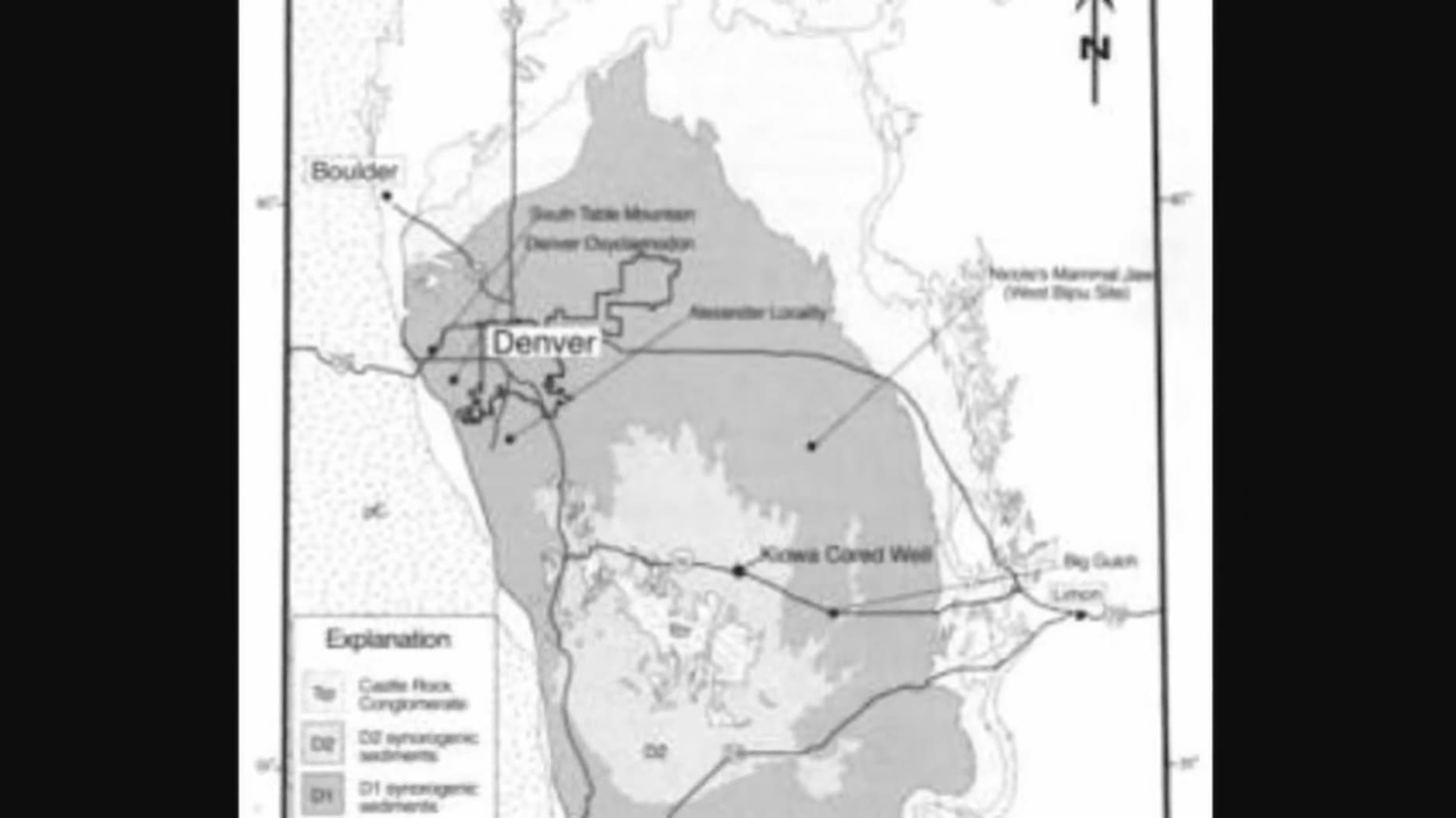
- Named study [07:00]: A study published in May 2026 in the Proceedings of the National Academy of Sciences by Rosanna Baker and Dr. Arturo Casadevall used old sediment samples from the Denver Museum of Nature and Science, taken from Colorado and North Dakota.
- Named study finding [07:33]: That team counted microscopic fungal spores against plant-derived pollen across thousands to millions of years and found fungal spores surged to 50% of total organic microfossils right at the impact boundary, described as the first direct North American evidence that fungi took over after the asteroid strike.
- Named study finding [08:15]: The same study found an extended fungal bloom 30,000 to 10,000 years before the impact, which the researchers attribute to a global cooling event from the Deccan Traps volcanic eruptions in India.
- Synthesis [08:40]: This indicates global ecosystems were already under stress, with vegetation die-off, thousands of years before the asteroid delivered what the narrator calls the final blow.
- Concept [08:56]: The narrator frames the mass extinction as not just the asteroid strike but a combination of volcanic eruption and the strike happening around the same time.
- Named study finding [09:05]: The team also discovered a third, much shorter fungal bloom lasting approximately 2,000 years in the early Paleocene epoch.
- Named study finding [09:15]: This third fungal bloom occurred approximately 10,000 years after the impact, which the researchers point to as a secondary wave of ecological instability during recovery.
- Concept [09:25]: The researchers are described as highlighting that fungi almost always thrive when everyone else is struggling.
- Mechanism [09:40]: After the impact, when sunlight was blocked and photosynthesis stopped, fungi performed decomposition of rotting wood, leaves, and animal remains.
- Mechanism [09:52]: Fungi broke down complex organic compounds like lignin and cellulose, releasing nitrogen, phosphorus, and carbon back into the soil and atmosphere.
- Mechanism/example [10:23]: As sunlight returned, pioneering plants like ferns thrived in the fungus-enriched soil, while the newly discovered mushroom lineage specialized in breaking down timber and diversified across tropical and temperate forests during the Paleocene.
- Named model [11:21]: The Fungal Infection Mammalian Selection Hypothesis, originally proposed by Arturo Casadevall in 2005 and expanded in 2026, asks why small mammals thrived in the post-impact world while most other species disappeared.
- Mechanism [12:08]: Most environmental fungi grow best between 20-30 Celsius (68-86 Fahrenheit) but struggle to survive above 37 Celsius (98 Fahrenheit).
- Mechanism [12:21]: Mammals maintain a constant body temperature above 36 Celsius, up to 40 Celsius in some cases, which the hypothesis frames as a thermal barrier against fungal infection.
- Comparative example [13:08]: Quite a lot of fossilized dinosaur eggshells have been discovered to contain fungal infections.
- Comparative example [13:14]: Mammals give live birth, shielding embryos from environmental spore damage, unlike egg-laying dinosaurs.
- Comparative example [13:25]: Mammals breathe using flexible lungs and alveoli, while birds and non-avian dinosaurs used rigid lungs ventilated by thin-walled air sacs.
- Mechanism, presented without cited evidence [13:42]: The hypothesis speculates that the dinosaur air sac system may have let them inhale fungal spores that infected and killed them.
- Caveat [13:53]: The narrator states this hypothesis is not widely accepted and many paleontologists see problems with it.
- Counter-evidence [14:18]: Some dinosaurs, potentially including T. rex, were warm-blooded, which would have protected them from fungal infection too, and birds (avian dinosaurs) survived despite having the same air sac system.
- Synthesis [14:49]: In 2026, researchers are said to have clarified that fungi did not single-handedly exterminate dinosaurs, but acted within an ecosystem already devastated and weakened.
- Mechanism [15:05]: Massive clouds of inhaled fungal spores may have acted as secondary stressors that further handicapped large animals including dinosaurs while giving tiny mammals a boost, as framed by the narrator.
- Why it matters [15:21]: The narrator says fungal microfossils are incredible markers of planetary disasters, showing spikes in fungal growth in the geological record after volcanoes or asteroid impacts.
- Comparative/current example [15:49]: As global temperatures rise today, fungi are under strong evolutionary selection pressure and many are adapting to higher ambient temperatures, per the narrator.
- Named example [16:12]: Candida auris, a human fungal pathogen, has started adapting to survive at human body temperatures as a result of global warming and affects hospital patients.
- Why it matters [16:48]: The narrator closes by saying the discovery of the largest fungus in a long time, D-Rex, underscores how interconnected Earth's climate, geology, and biology are.

How this brief was shaped: Lecture / Educational Explainer · confidence Medium
Transcript is a single narrator systematically explaining fungal evolution tied to mass extinctions, citing 2026 studies and a named paper, with OCR showing an academic paper title and author affiliations rather than code, specs, or a product.
The lens sets this brief's structure, never its facts — every claim is held to the same citation and fact-check standard.