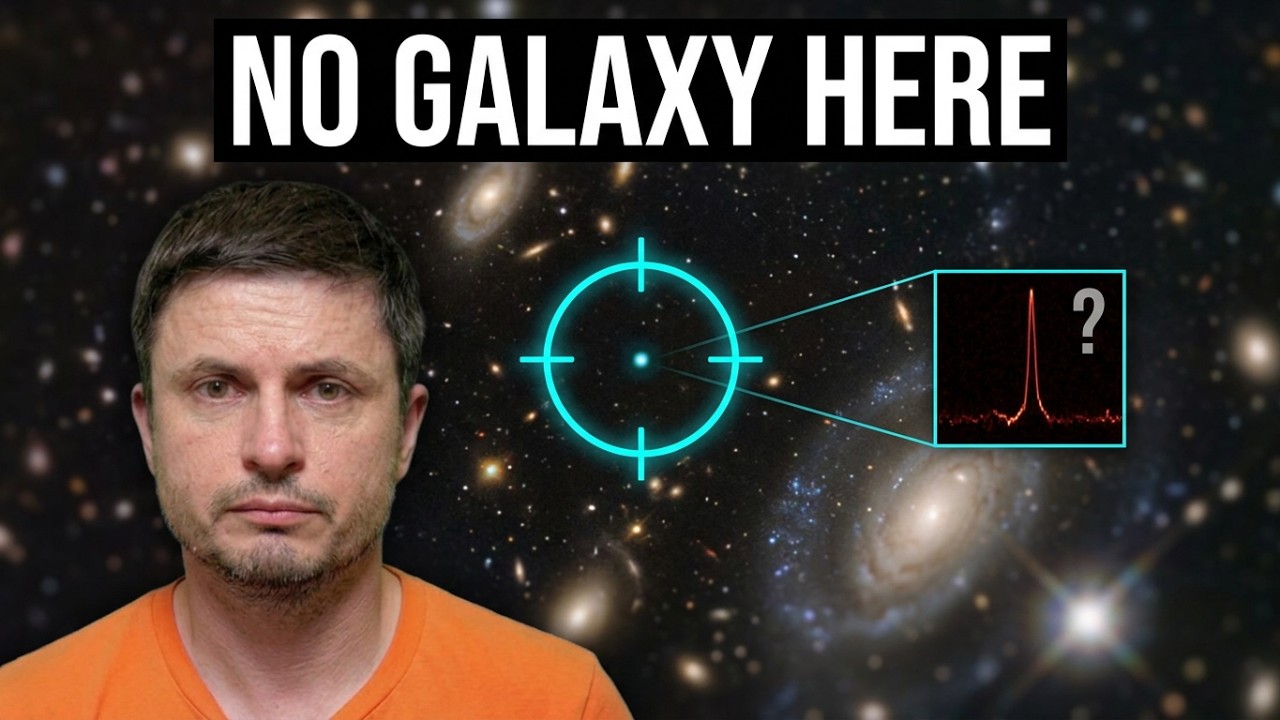
Strange Isolated Signal Discovered by JWST Defies Explanation
What this video is
⚡ a 16-minute video, readable in 60 secondsA University of Minnesota-led team used JWST to find an unexplained, isolated emission line signal at 1.6 micrometers in Hubble Ultra Deep Field data, with no source object visible at that spot in an earlier 2022 image. Several candidate explanations, including a distant dwarf galaxy and a tidal disruption event, each conflict with features of the data, leaving the signal officially unexplained as of 2026. The video also surveys separate recent astronomical anomalies, including a newly identified class of long-period transients and one of the most distant supernovae ever observed. Astronomers plan to use JWST's Integral Field Unit to study the mystery signal's exact location further.
A University of Minnesota team led by Mason Huberty found an unexplained bright signal in Hubble Ultra Deep Field data using JWST [00:54]
Key takeaways
- The signal is an isolated spike of light with no detectable source object, in a patch of sky already observed for hundreds of hours [01:26]
- Researchers used a technique called MOCS (multi-object coronagraphy for slitless spectroscopy), opening nearly 90% of the instrument's micro-shutters to scan blank sky [03:01]
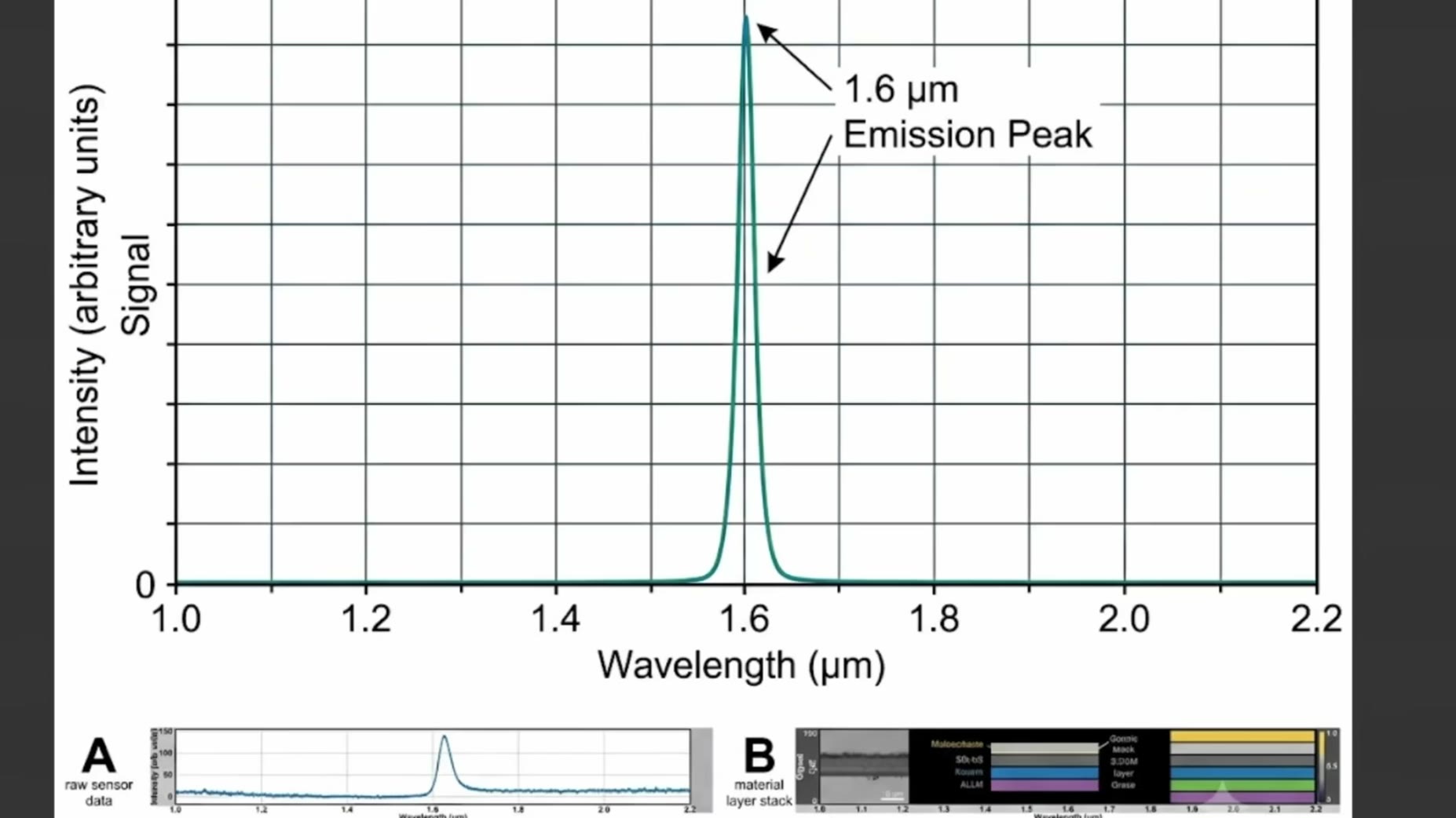
- JWST detected a single sharp emission line at 1.6 micrometers in two separate observations taken 88 days apart, in August and November 2023 [03:28]
- A single emission line without a second line to compare is nearly impossible to identify because cosmic redshift makes its origin ambiguous [04:02]
+ 7 more takeaways
- JWST imaged the same spot in October 2022, about a year earlier, and detected no light there at all, with no prior star or galaxy [04:56]
- One candidate explanation is an ultra-distant dwarf galaxy at redshift approximately 12.2 emitting Lyman-alpha light, though neutral hydrogen should block this and the brightness ratio exceeds standard model predictions [05:44]
- As of 2026 the signal remains fully unexplained, described as one of the most mysterious astronomical signals [08:45]
- A newly discovered class of long-period transients includes an object that blinks roughly every 44 minutes, far slower than normal pulsars [11:06]
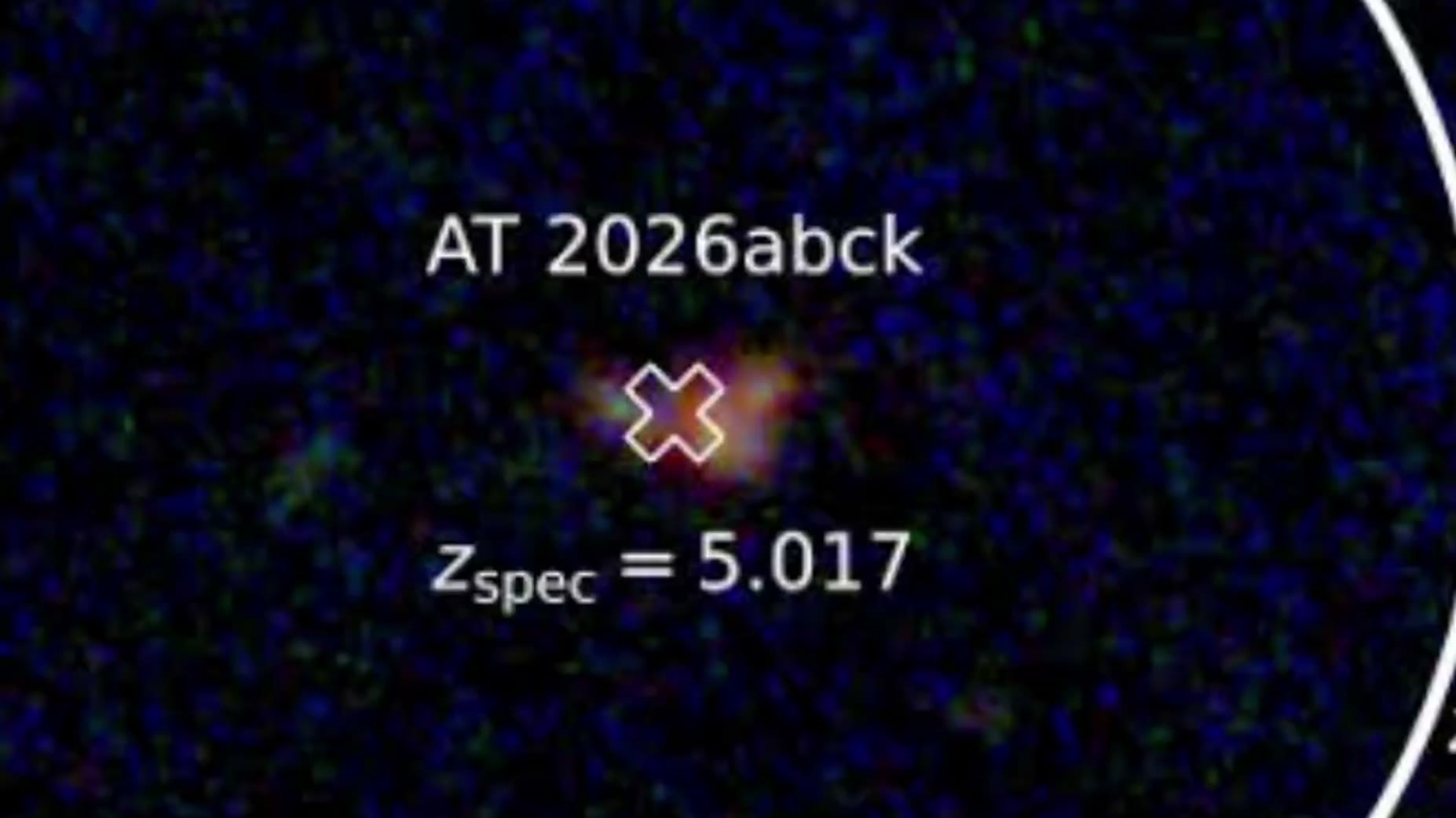
- A separate supernova, AT2026abck, with redshift (Zspec/Zphot) around 1.30-5.017, is one of the most distant ever observed, from a star that collapsed at least 12 billion years ago [12:02]
- The AT2026abck supernova went from invisible to blazing bright in just 71 days, observed in real time [12:21]
- Astronomers plan to use JWST's Integral Field Unit, which gives detailed per-pixel observation, to study the exact location of the mystery emission line and its neighboring galaxies [13:54]

Jump to a moment
Their links, sorted & clickable
🏛️ Communities & courses1
Support this channel on Patreon to help me make this a full time jobWas this brief useful?