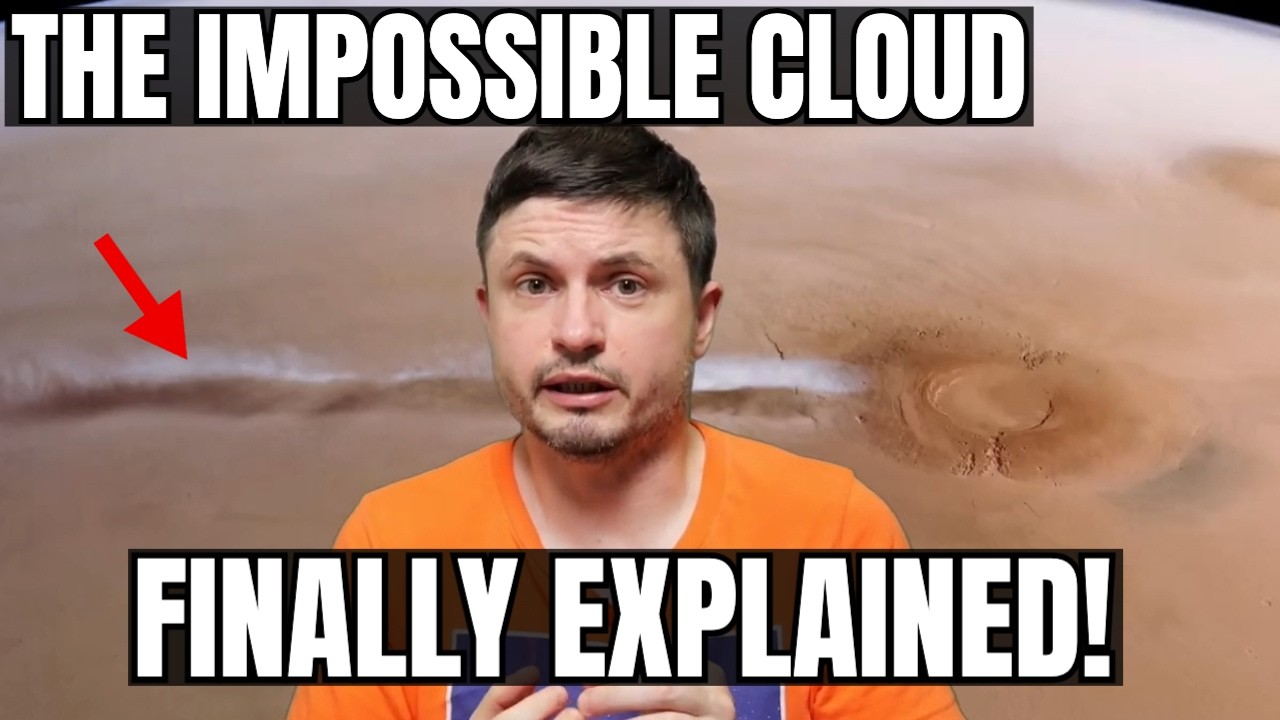
Why This 1,800km Cloud on Mars Shouldn’t Exist
What this video is
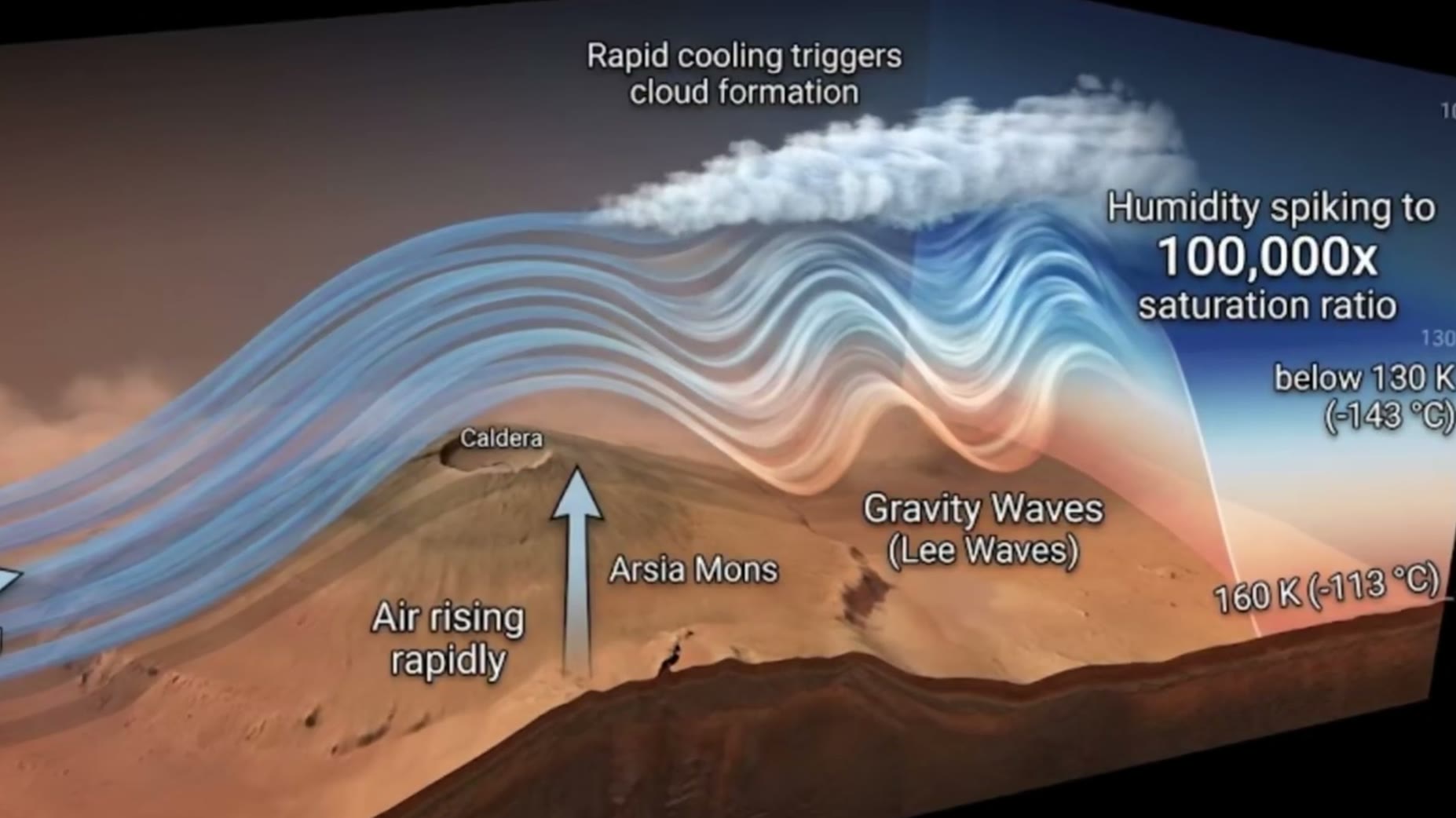
⚡ a 14-minute video, readable in 60 secondsOn Mars, a massive elongated cloud forms daily over the volcano Arsia Mons during the Martian southern spring and summer, stretching up to 1800 km long before vanishing within hours. No atmospheric simulation could explain how such a cloud should exist, until a new study proposed that it forms through homogeneous nucleation, a process long theorized but never before confirmed in real atmospheric conditions. The mechanism involves extreme, rapid cooling as moist air is forced up the volcano's slope, triggering spontaneous ice crystal formation without any dust seed. The discovery also raises the possibility that similar cloud formation could occur in Earth's upper atmosphere.
[00:16] Every morning during Martian southern spring and summer, a massive bright white cloud emerges over the volcano Arsia Mons.
Key takeaways
- [00:48] The cloud stretches up to 1800 km long, nearly twice the length of the UK, but vanishes by late morning after only a few hours.
- [01:16] Every atmospheric simulation has failed to recreate the cloud; standard physics suggested it shouldn't exist.
- [01:35] A new study by Jorge Hernandez-Bernal and co-authors, published in Nature Geoscience, proposes an explanation for the phenomenon.
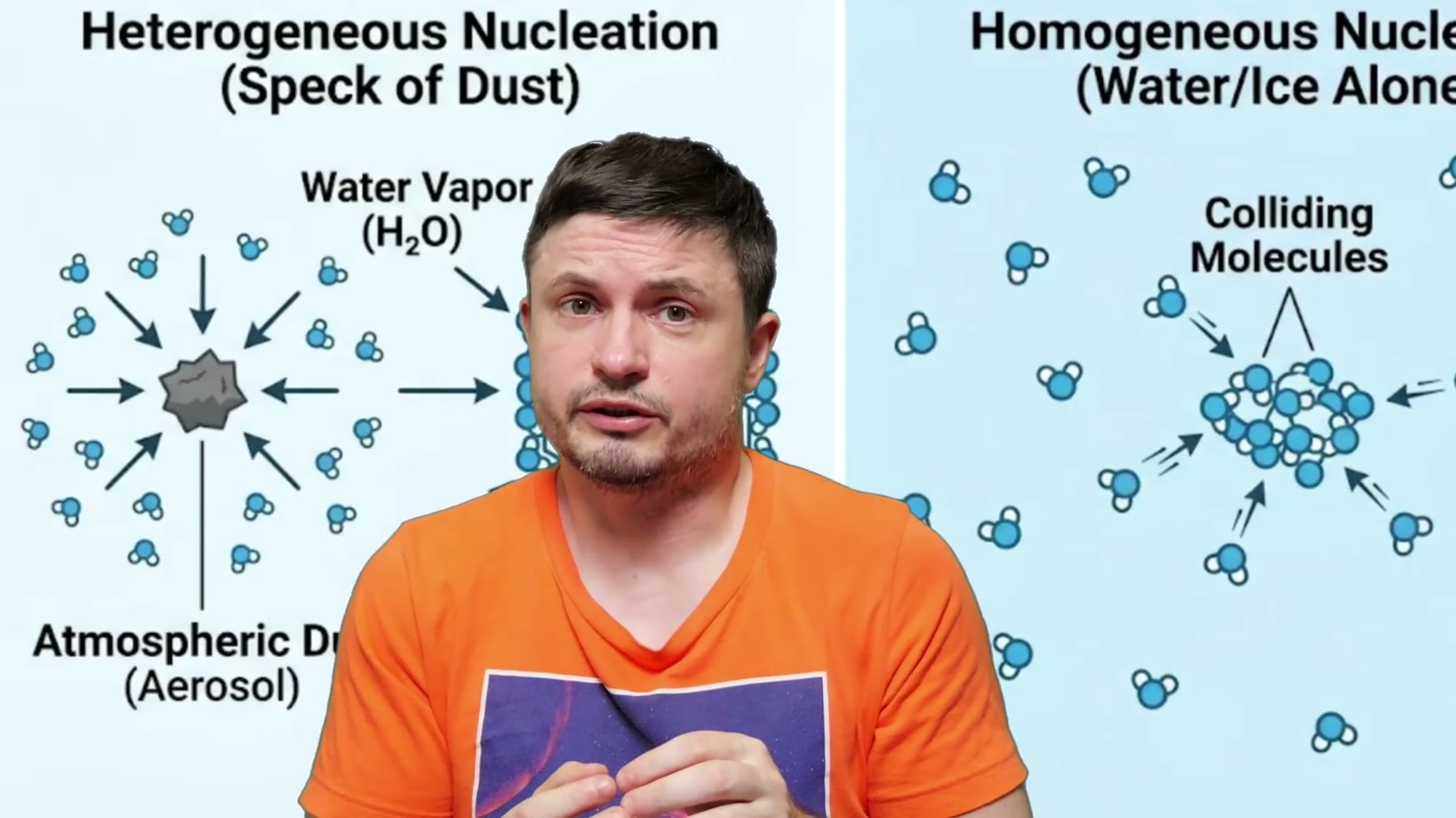
- [01:48] The proposed mechanism is homogeneous nucleation, a process theorized but never before confirmed to occur in real atmospheric conditions.
+ 6 more takeaways
- [05:11] Homogeneous nucleation needs no dust seed but requires humidity at least 100,000 times higher than normal, unlike standard heterogeneous nucleation.
- [07:53] As moist air rushes up the volcano's steep slope, temperatures plunge below 130 Kelvin (-143°C) almost instantly.
- [08:28] Water vapor molecules collide directly with each other, spontaneously forming hundreds of microscopic ice crystals per cubic centimeter.
- [10:03] The Mars observations provide strong evidence that this cloud-forming process could also occur in Earth's upper atmosphere (mesosphere), long debated by scientists.
- [11:52] Mars also has unique glowing carbon dioxide clouds forming up to 100 km altitude, since CO2 makes up 95% of its atmosphere.
- [12:31] Strong Martian dust storms send dust into space, where it becomes visible from Earth as the zodiacal light.
Jump to a moment
Their links, sorted & clickable
🏛️ Communities & courses1
Support this channel on Patreon to help me make this a full time jobWas this brief useful?