Cloud gaming works — but it's not winning
This episode of The Verge Cast, a Monday November 2, 2026 edition hosted by David Pierce, opens with a rapid news-brief segment (SpaceX's reported interest in Boost Mobile, Anthropic's IPO financials, a supermarket refrigeration cyberattack) before the host brings on a guest, Sean Hollister, for an extended conversation on the history and present-day limits of cloud and game streaming technology. The discussion traces services from Gaikai and OnLive through PlayStation Now, Google Stadia, GeForce Now, and Amazon Luna, and centers on whether cloud gaming can go mainstream given network latency, GPU cost and availability (including competition from AI data centers for the same hardware), and business friction over platform fees and publisher streaming rights, with the approaching release of GTA 6 treated as a test case for the industry. The episode closes with a separate discussion of a papal address by Pope Leo on AI's purpose and the idea that machines are tools rather than persons. No sustained disagreement between the host and guest is evident in the extracted material; the exchange is largely exploratory and historical rather than adversarial.
The episode's main segment is a conversation between host David Pierce and guest Sean Hollister about the history and current limits of cloud and game streaming technology, spanning Gaikai and OnLive through GeForce Now, Google Stadia, PlayStation Now, and Amazon Luna [03:49].
- Sean Hollister explained that cloud gaming streams compressed frames similarly to Netflix or YouTube but also sends the user's input back to the server, making end-to-end latency the key performance measure [03:49].
- Sean Hollister said he beat the Sekiro boss Genichiro via cloud gaming on GeForce Now and is proud of it despite network issues [04:34].
- Sean Hollister said end-to-end latency on cloud gaming can feel like playing on a local computer even though the game runs on a remote server [05:01].
- Sean Hollister said a sudden bandwidth drop caused by someone else on the network, such as a large download, can disrupt cloud gaming performance [05:06].
+ 59 more takeaways
- Sean Hollister said he has covered cloud gaming technology for about 16 years, since around 2010 [07:19].
- Sean Hollister said Gaikai and OnLive were early cloud gaming services, with Gaikai trying to stream games in a web browser [07:28].
- Sean Hollister said Sony bought Gaikai's technologies, patents, and engineering and turned it into PlayStation Now [07:42].
- Sean Hollister said OnLive had to demonstrate working cloud gaming at E3 and CES using strong internet connections because people were skeptical it could work [08:24].
- Sean Hollister said NVIDIA's GeForce Now has gotten progressively better, especially on its paid ultimate tier, compared to its free trial or lower tiers [10:30].
- Sean Hollister said that in 2010, Gaikai let users click a button in a web browser and immediately play Mass Effect with no patching or disk insertion [12:34].
- Sean Hollister said when Google Stadia launched, the idea was that someone would see a banner ad for a game, click it, and play the game in their browser with about an hour to try it before buying [12:52].
- Sean Hollister said that in most current online games like Fortnite, graphics are still rendered locally by the player's own graphics card, with only things like other players' positions tracked in the cloud [13:26].
- Sean Hollister said Microsoft Flight Simulator streams its world environments because the map is too large to store on a local hard drive or SSD [14:01].
- Sean Hollister said Jade Raymond, who moved from Ubisoft to Google, and Hideo Kojima were reportedly working on games built only for cloud streaming, but underinvestment and Gaikai's early shutdown meant such a game never shipped, a claim stated without further evidence given [14:34].
- Sean Hollister said cloud gaming lag today is mainly caused by unreliable network hops such as wireless connections, peering relationships, and ISP routing, rather than insufficient bandwidth or internet speed [16:00].
- Sean Hollister said DSL and cellular connections remain problematic for cloud gaming [16:09].
- Sean Hollister said ISP peering is largely worked out for major providers and is not currently a big worry [16:52].
- Sean Hollister said any missed network hop between the user and the server is a potential cause of degraded cloud gaming performance [16:55].
- Sean Hollister compared cloud gaming to Netflix, noting Netflix caches video copies closer to users, even on cell phone towers, for faster delivery [17:30].
- Sean Hollister said a cloud gaming server running games at 60 to 120 frames per second is far more expensive to run than a server streaming video [18:01].
- Sean Hollister said 25 to 35 megabits per second is enough for 4K video streaming [18:16].
- Sean Hollister said a basic 1080p cloud game stream needs only about 5 megabits per second [18:16].
- Sean Hollister said parking under a 5G tower gave him a decent cloud gaming connection, but the same connection from home was less reliable due to obstacles like passing cars [18:31].
- Sean Hollister said Google tried Stadia and it basically went out of business, while Amazon's Luna has changed its approach every couple of years [20:05].
- Sean Hollister said OnLive fizzled out early on, though its patents reportedly live on and were bought by Sony [21:03].
- Host David Pierce noted that if a game needs a full GPU's worth of power, running it in the cloud still requires that same GPU power on a server somewhere [21:29].
- A speaker said GPU power can be split, for example a 5080 in the cloud could serve two gamers who each only need RTX 3060-level performance [21:56].
- A speaker said AI data centers are currently buying up GPUs, competing with cloud gaming services for the same hardware [22:14].
- A speaker said that at any given time, 99% of existing games can run on old hardware, comparing it to how a Steam Deck can't run the newest titles but handles a long tail of older games [22:53].
- Sean Hollister speculated that decommissioned AI data center GPUs could eventually be repurposed to run that long tail of older games as a cloud gaming service [23:52].
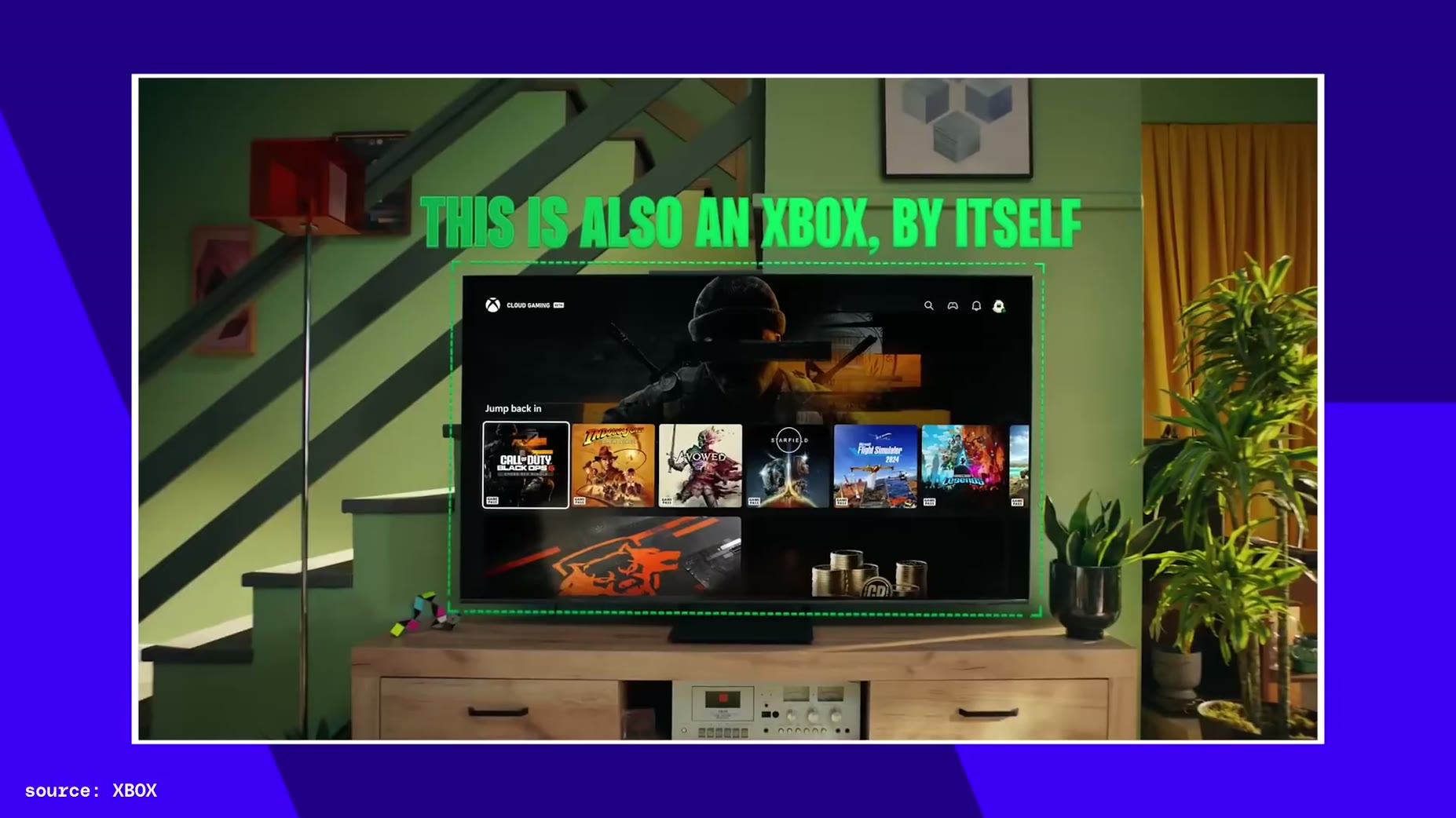
- A speaker said Microsoft has a cloud service in Azure, owns games, owns distribution, and owns Xbox and Activision Blizzard, yet hasn't successfully reinvented gaming around streaming [25:29].
- A speaker said Microsoft's acquisition of Activision Blizzard King, which includes Candy Crush, was meant to build a vertical stack gaming empire owning both software and hardware [26:40].
- A speaker said that as part of getting merger approval for the Activision Blizzard deal, Microsoft made a legally binding commitment to bring Call of Duty to other platforms, including phones, under a 'your phone is an Xbox' vision [27:11].
- A speaker said Microsoft bet it could make 'your phone is an Xbox' a reality, but Google Play and Apple App Store fees block bypassing their cut [27:26].
- A speaker said Apple blocks a store-within-a-store that would let Xbox stream and sell games, since games are the App Store's biggest source of revenue [28:01].
- A speaker said Google now must allow stores within its store after Epic Games, maker of Fortnite, sued Google and a judge forced the change, a fairly recent development [28:28].
- A speaker said Microsoft has also decided it wants a physical Xbox console with exclusive games to sell, based on promises made to publishers it invested in [29:10].
- A speaker said NVIDIA's GeForce Now originally let users log into their own Steam or Epic accounts on a rented cloud PC and install whatever they liked [30:35].
- A speaker said game publishers told NVIDIA during the GeForce Now beta that NVIDIA lacked streaming rights, forcing NVIDIA to get permission [31:19].
- A speaker said Valve's default Steam publisher agreement now grants Valve streaming rights so that home streaming doesn't expose Valve to legal liability [31:48].
- A speaker said people are already buying PlayStation 5 Pro consoles, which went from $700 to $900, and paying $1,200 for them on eBay ahead of GTA 6 [33:38].
- A speaker said there are $1,800 handheld game systems that readers were told not to buy, yet they are selling out [33:54].
- The host suggested cloud gaming services are expected to pitch themselves around GTA 6, though they may not be able to stream it to PC [34:27].
- A speaker said GTA 5 Online has been a cash cow for the company for years and is still generating revenue to this day [35:06].
- No explicit point of disagreement between host David Pierce and guest Sean Hollister was stated in the extracted material.
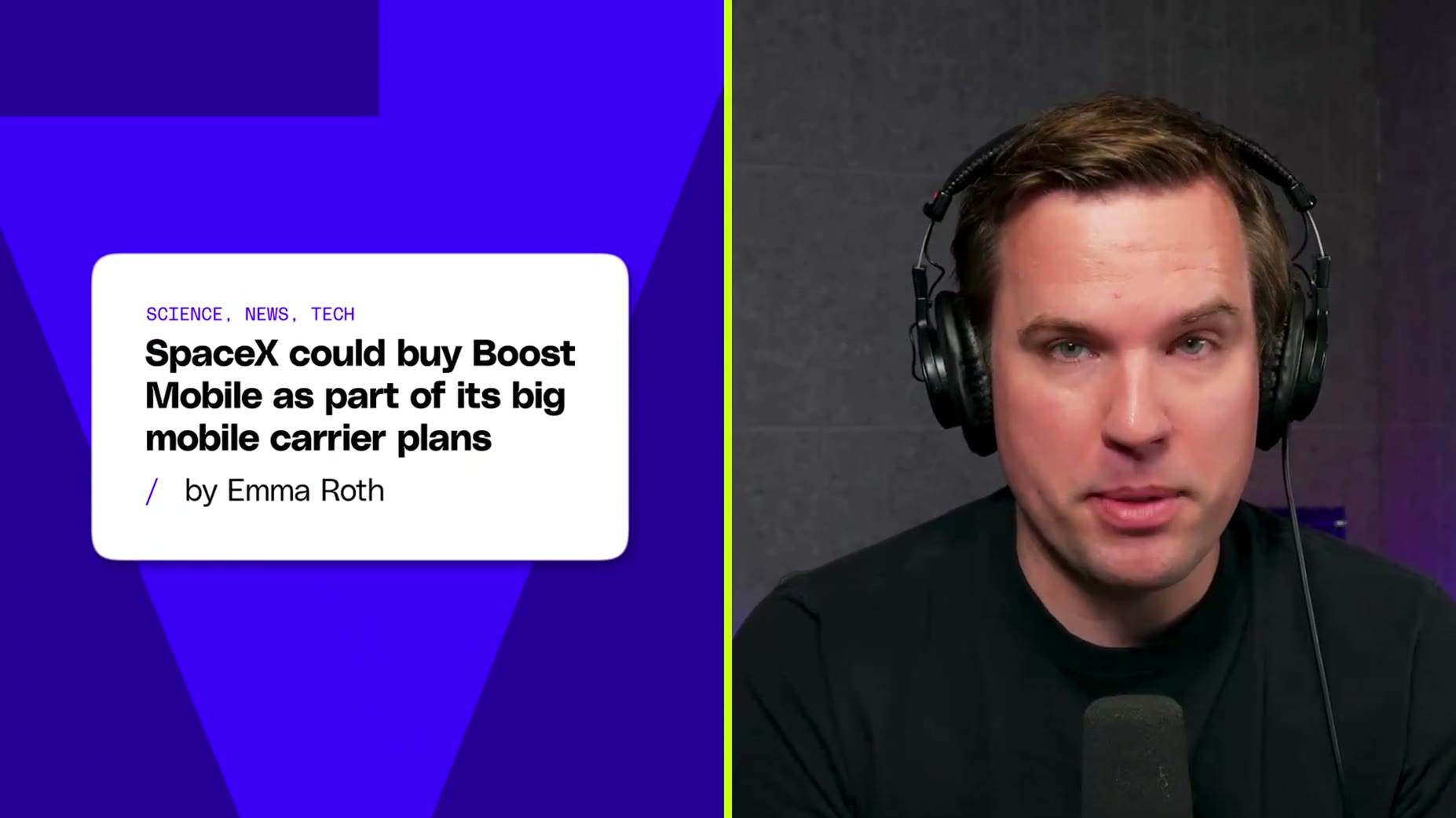
- Separate from the main segment, the episode's 90 Seconds on the Verge news brief reported that The Washington Post said SpaceX is looking at buying Boost Mobile to expand into mobile carrier services, though Boost currently runs on T-Mobile and AT&T networks [01:00].
- The news brief reported SpaceX is also buying spectrum and is reportedly in talks to use 80,000 cell sites around the US [01:21].
- The news brief reported Anthropic's updated S-1 IPO filing shows it earned $33.24 billion through September 30, up 1,206% from last year, with $17 billion of that in the last quarter alone [01:37].
- The news brief reported Anthropic lost $23.29 billion in that same period [01:49].
- The news brief reported Anthropic has committed to spend nearly $900 billion on compute and infrastructure, including almost $70 billion in the next 12 months [01:57].
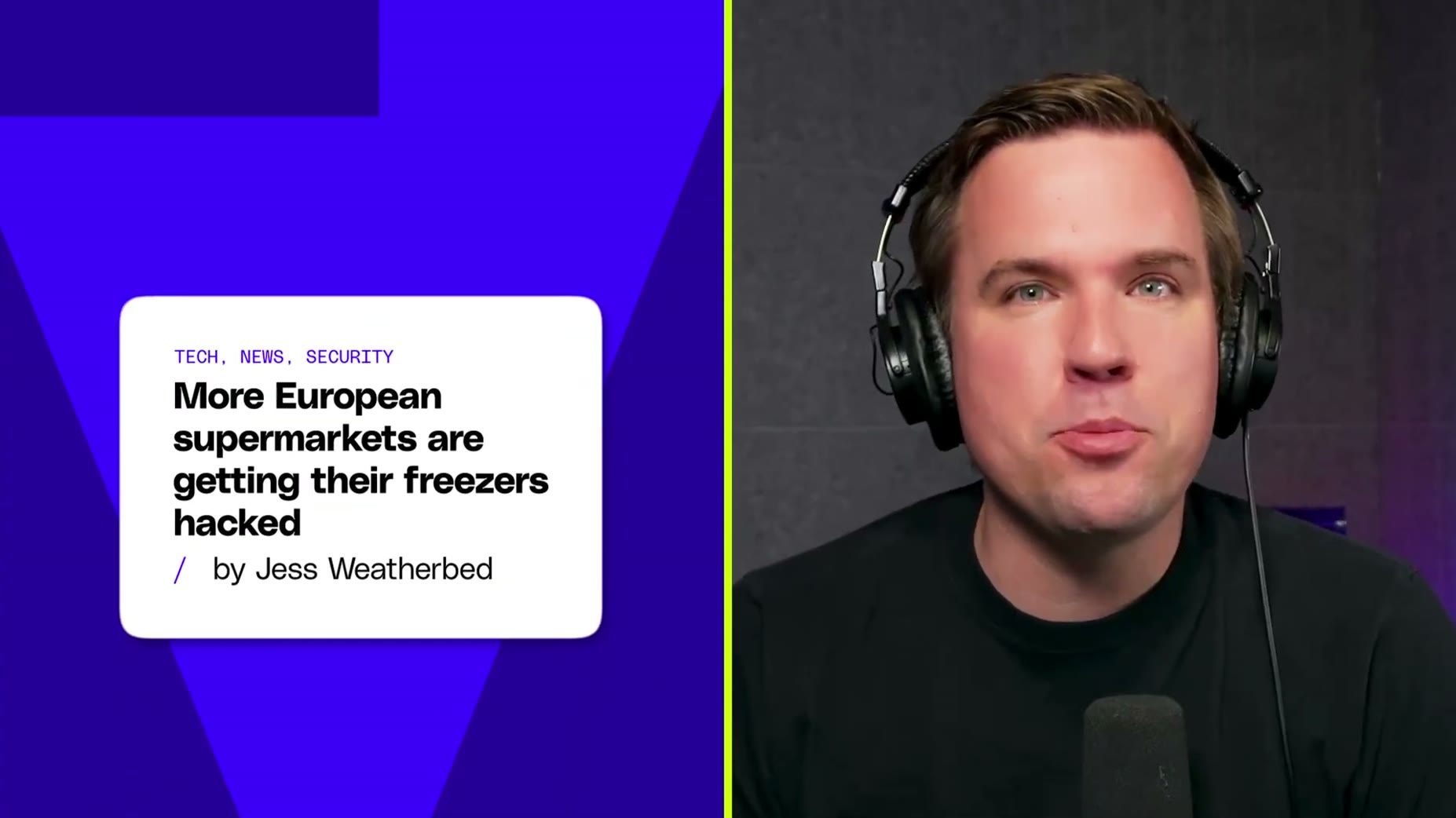
- The news brief reported European supermarkets have reported cyberattacks on industrial fridges and freezers [02:08].
- The news brief reported one such freezer was hacked to raise its temperature to 122 degrees Fahrenheit [02:19].
- A sponsor segment describes Jira by Atlassian as connecting context across Jira, Confluence, Slack, GitHub and more, and integrating with agents like Claude, Cursor, and GitHub Copilot via Atlassian MCP [00:04].
- The Jira sponsor message was repeated later in the episode, describing it as pulling context from Slack, Confluence, GitHub and more via Atlassian's teamwork graph [36:19].
- Later in the episode, separate from the main cloud gaming segment, it is reported that Pope Leo wrote in a papal address last week that the future of AI is not predetermined and depends on human choices, so people have a responsibility to guide, change, and when necessary reject its applications [37:38].
- Pope Leo's address states the decisive question is not what AI can do but what purpose it serves [38:16].
- Pope Leo also wrote that machines are tools, not persons, a point the host strongly endorsed [38:55].
- The hosts referenced a prior conversation with Kevin Roos about Silicon Valley people believing computers deserve the same consideration as people, noted via TikTok comments on a clip [39:07].
- A speaker said Pope Leo has religious reasons not to believe computers deserve the same consideration as people [39:28].
- A speaker argued that treating machines, software, and AI as tools rather than persons is correct [39:34].
- A speaker stated the default assumption should be that AI systems are tools, not persons, until proven otherwise, a position stated without further evidence given [39:43].
- A speaker praised Pope Leo for navigating AI without fear, worry, or dismissiveness while considering what it means to be a person in an AI-filled world [39:49].
- No verbatim quotations were included in the extracted points, so quotable lines tied to a specific speaker and timestamp cannot be faithfully reproduced; not stated.
How this brief was shaped: Discourse (interview / podcast / video essay) · confidence Low
Transcript opens with a sponsor read and a 90-seconds news brief then shifts into host David Pearce framing a thesis, what is going on with game streaming and can GTA6 fix it, followed by opinionated discussion comparing cloud gaming services like GeForce Now. OCR only shows a generic Vergecast show-open montage, an unrelated cell tower photo, and a game box art collage with gameplay screenshots that do not map to any structured spec sheet, code, or step list.
The lens sets this brief's structure, never its facts — every claim is held to the same citation and fact-check standard.