A New Organism With a Tiny Genome Lives Like a Vampire
What this video is
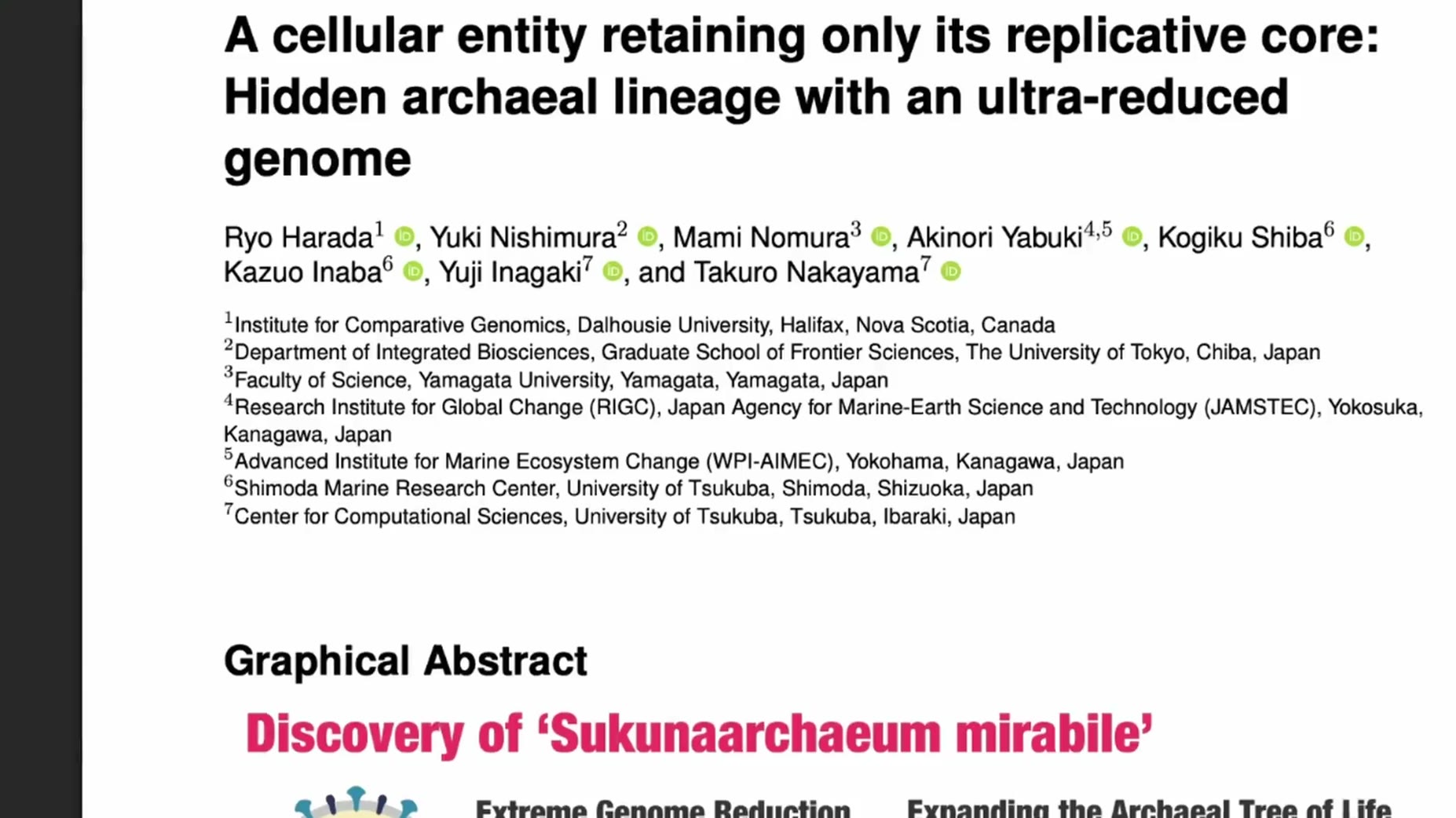
⚡ a 14-minute video, readable in 60 secondsResearchers led by scientists from Dalhousie University discovered Candidatus Sukunaarchaeum mirabile, an archaea with the smallest genome ever recorded for a cellular organism, found incidentally while studying marine plankton near Shimoda, Japan. Its genome is so stripped down it has lost nearly all metabolic genes, yet unlike a virus it still retains its own machinery to copy DNA and build proteins. The discovery raises questions about whether it is a parasite or symbiont, and researchers now believe it represents a wider, previously unnoticed group they call the Sukuna clade. The finding blurs the boundary between viruses and living cells and offers a window into how free-living microbes can evolve into organelles.
Discovery of Candidatus Sukunaarchaeum mirabile reported by a team led by scientists from Dalhousie University [00:38]
Key takeaways
- Its genome lacks virtually all standard metabolic pathways, so it cannot make its own nutrients, energy, or cell components [01:23]
- It was found incidentally while researchers collected single-cell marine plankton (Citeristes regius) off Shimoda, Japan, not while searching for record-breaking microbes [02:17]
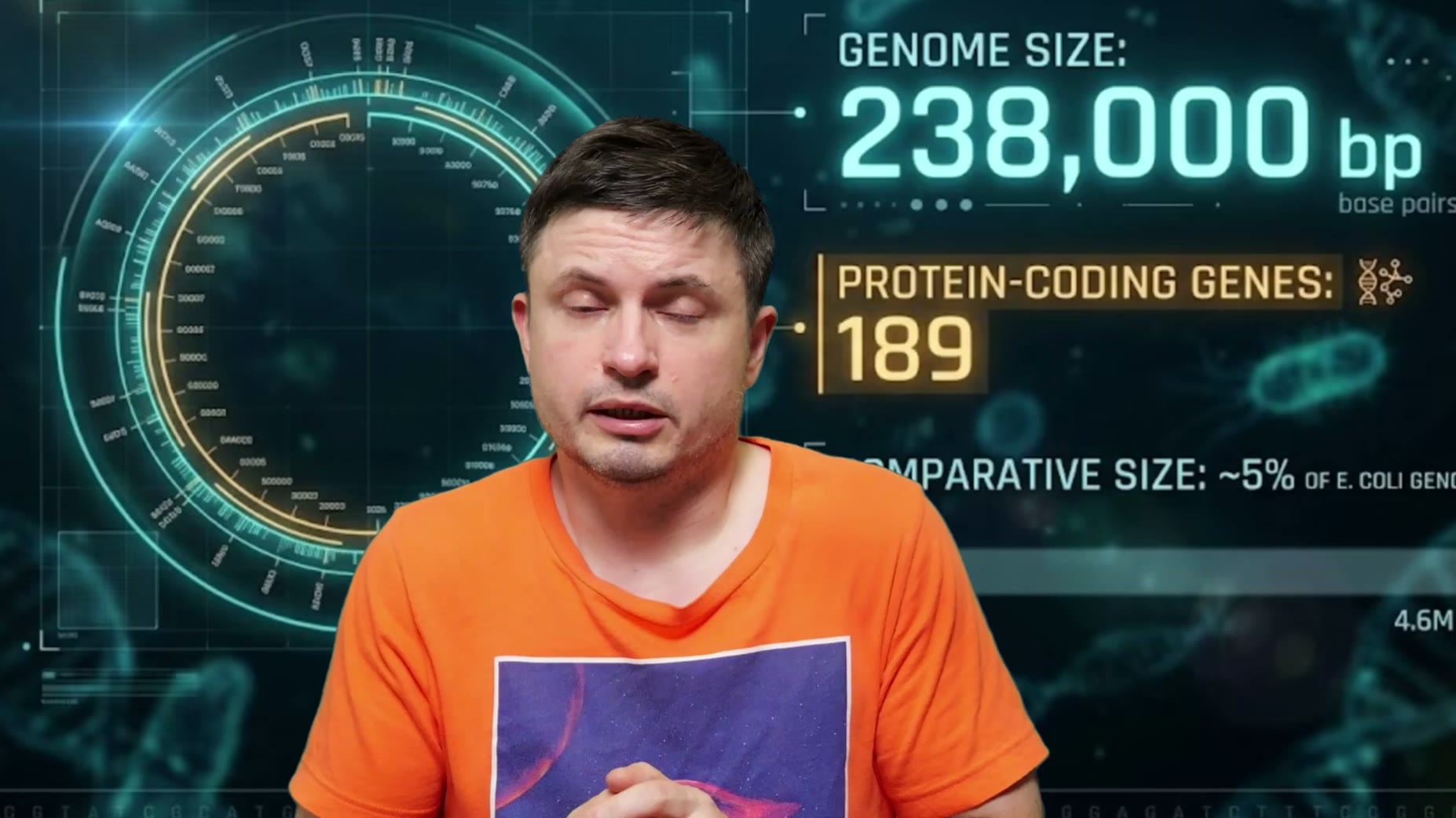
- The organism's circular genome is about 238,000 base pairs with 189-190 protein-coding genes [02:47]
- For comparison, E. coli has 4-5 million base pairs while the previous smallest known bacterial genome was about 500,000 base pairs [02:59]
+ 7 more takeaways
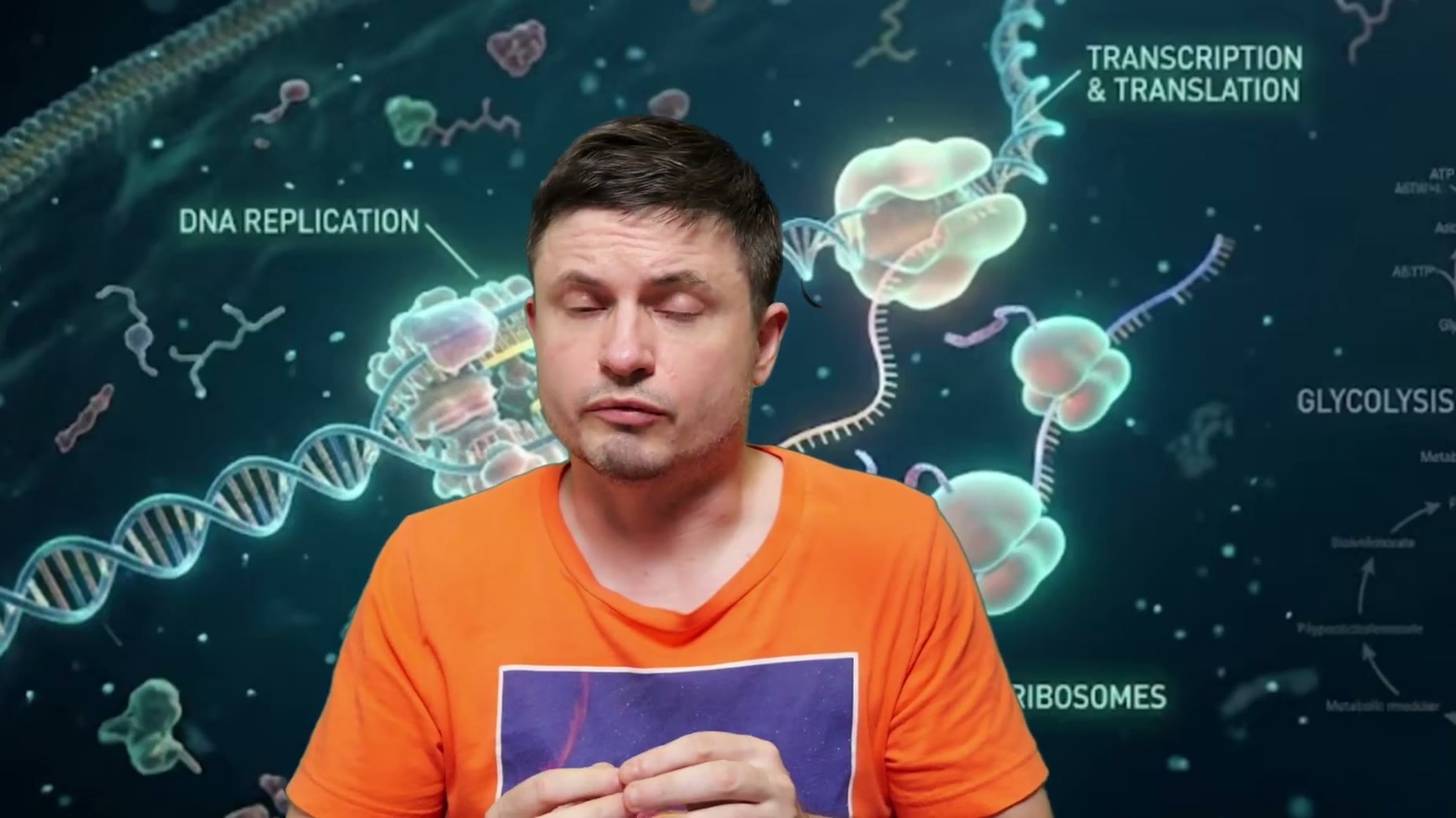
- Over 50% of its 189 genes are devoted to genetic information processing (DNA copying, transcription, translation), while every metabolism gene is missing [04:31]
- If confirmed as an obligate parasite, it would be only the second reduced-genome microbe known to adopt a parasitic lifestyle [06:34]
- Roughly 25% of its genes encode just 8 exceptionally large proteins, the biggest at 4,756 amino acids [07:04]
- AlphaFold modeling showed these giant proteins resemble molecular hooks or invasion tools used by other parasites to latch onto hosts [07:47]
- Genetic matches suggest a broader, previously unnoticed 'Sukuna clade' of similar organisms beyond this single case [08:53]
- The organism blurs the line between virus and living cell, sharing viral-like traits but retaining its own ribosomes and protein-making machinery [10:27]
- Over the past 1.5 billion years, free-living bacteria entering host cells have similarly shed genes and evolved into organelles like mitochondria and chloroplasts [11:33]
Jump to a moment
Their links, sorted & clickable
🏛️ Communities & courses1
Support this channel on Patreon to help me make this a full time jobWas this brief useful?