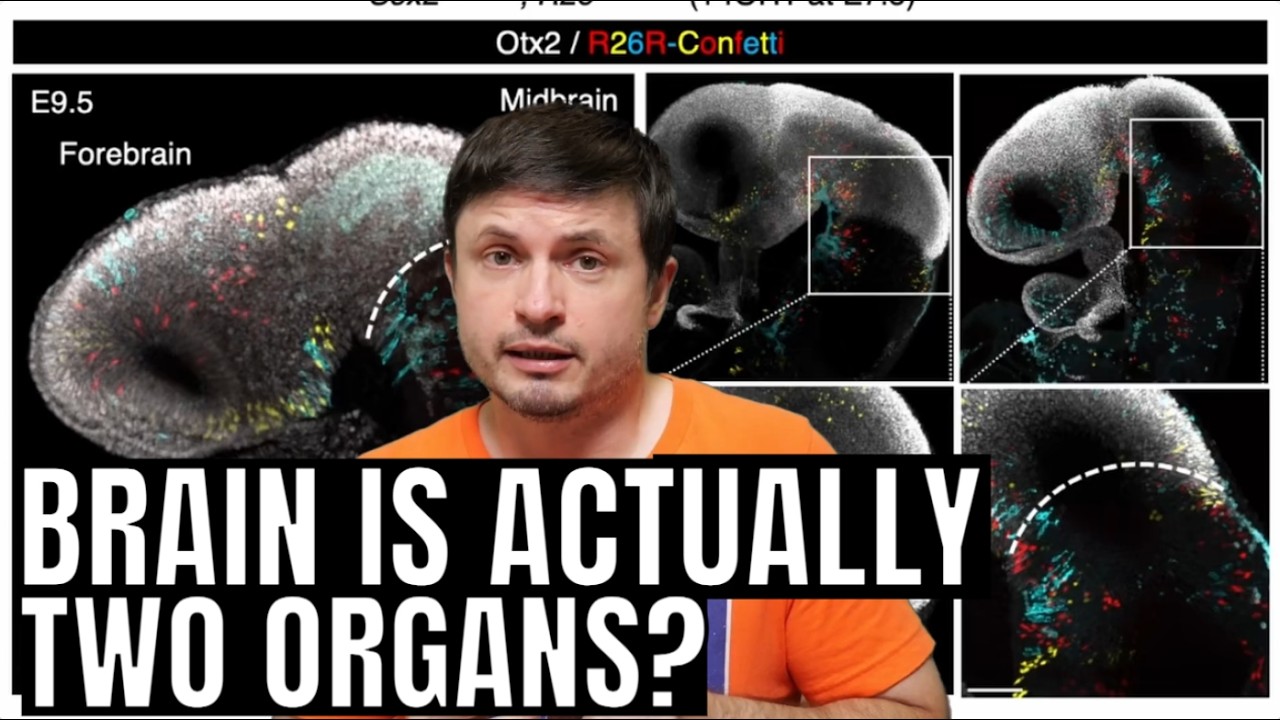
The Human Brain Turned Out to Be Two Separate Organs
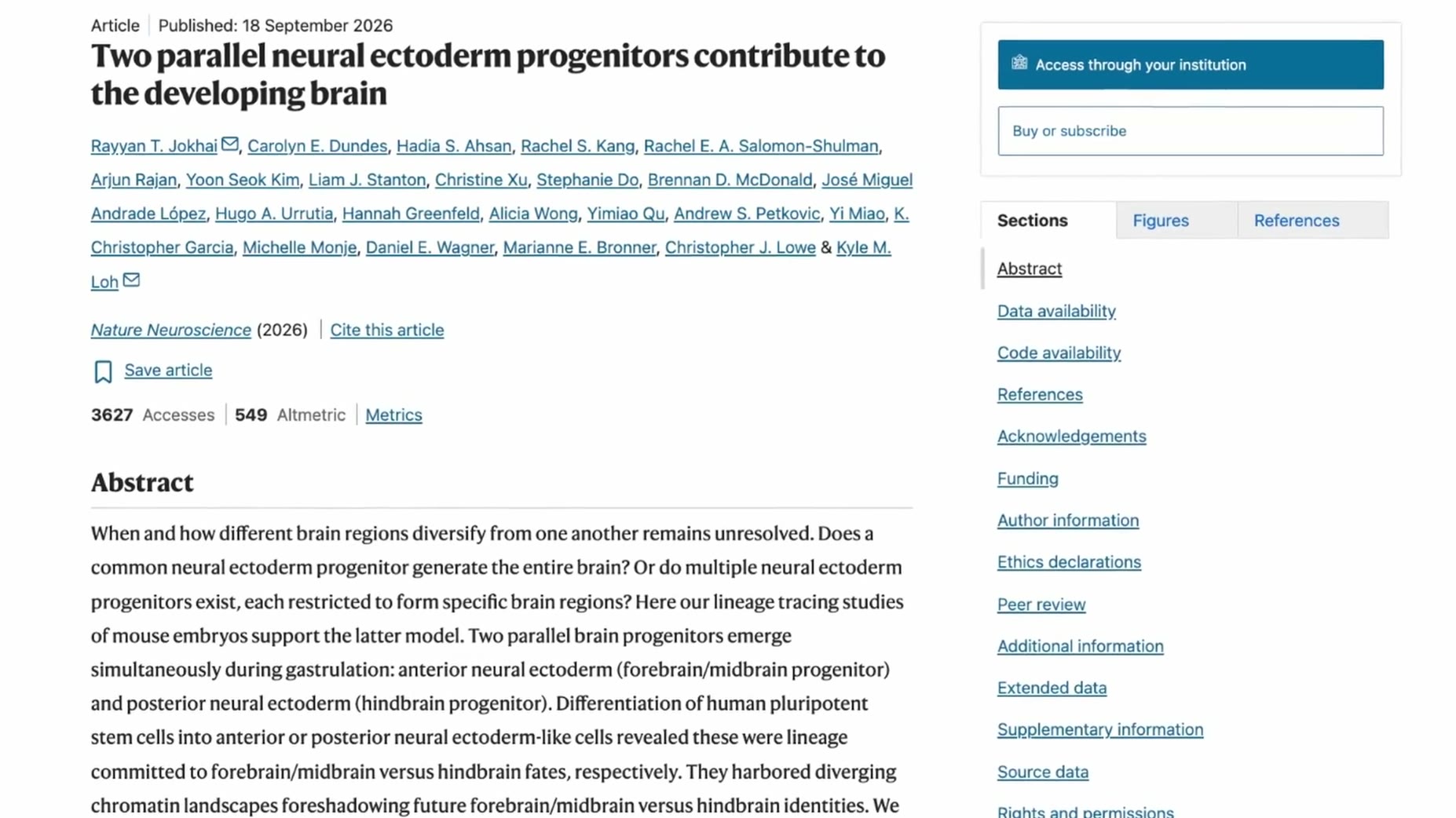
The source claims the human brain is not one unified organ but a composite of two separate, ancient neural systems, the forebrain/midbrain and the hindbrain, that form side by side from the earliest days of embryonic development and only appear as a single structure. The proposed mechanism is that two progenitor cell lineages, anterior neural ectoderm (marked by the gene OTX2) and posterior neural ectoderm (marked by the gene GBX2), arise simultaneously during gastrulation, never cross into each other's fates, and carry distinct chromatin signatures from the start. This rests on a named published study, 'Two parallel neural ectoderm progenitors contribute to the developing brain' (Nature Neuroscience, 2026, led by Rayyan T. Jokhai with Kyle M. Loh and colleagues), using mouse embryo lineage tracing and human stem cell differentiation. The piece blends that established study with host framing (calling it an overturning of a century-old model), uncited supporting facts (brain weight, neuron counts, HARs genetics), and speculative extrapolation into deep evolutionary history and medical applications like ALS and GLP-1 drugs that are not shown to come from the cited paper itself.
Claim: The brain is not one unified organ but a composite of two separate ancient neural systems that develop side by side and only appear as one. [01:08]
- Claim: The piece restates at the close that the brain is a composite structure built from two ancient neural systems likely emerging over 550 million years ago. [14:23]
- Background: For over a century, neuroscientists, psychiatrists, psychologists and medical doctors agreed the brain forms a single unified object. [00:08]
- Background: The classical view held this unified brain forms from one pool of master neural progenitor stem cells giving rise to every brain region. [00:29]
- Host framing: The host says a new study 'overturns this centuries-old model'; this is the host's characterization, not a quoted claim from the paper. [00:54]
+ 41 more takeaways
- Study cited: 'Two parallel neural ectoderm progenitors contribute to the developing brain,' Nature Neuroscience, 2026, lead author Rayyan T. Jokhai, senior authors including Kyle M. Loh, Christopher J. Lowe, Marianne E. Bronner, and Daniel E. Wagner. Evidence class: PUBLISHED. [00:55]
- Mechanism: Mouse embryo lineage tracing shows anterior neural ectoderm (forebrain/midbrain progenitor) and posterior neural ectoderm (hindbrain progenitor) emerge simultaneously during gastrulation. Evidence class: PUBLISHED. [00:55]
- Mechanism: Differentiating human pluripotent stem cells into ANE-like or PNE-like cells showed they were lineage-committed to forebrain/midbrain or hindbrain fates respectively. Evidence class: PUBLISHED. [00:55]
- Mechanism: The two progenitor populations harbored diverging chromatin landscapes foreshadowing their future forebrain/midbrain versus hindbrain identities. Evidence class: PUBLISHED. [00:55]
- Mechanism: One system creates the forebrain and midbrain, responsible for conscious thought, language, abstract reasoning, mathematics, and complex decision-making. [01:30]
- Mechanism: A second, independent system creates the hindbrain (brainstem), controlling automatic functions such as breathing, sleeping, heart rate, and swallowing. [01:43]
- Term: Gastrulation is defined as occurring within the first week of development (mice, days 5 to 7), when unspecialized stem cells begin forming the body's basic tissue layers. [02:20]
- Open question (prior assumption): Biologists long assumed stem cells form a uniform neural progenitor pool that only later decides front, middle, or back brain fate; the source says this was disproven. [02:38]
- Study cited: Stanford researchers tracking individual cell lineages found the embryo generates two distinct parallel lineages, ANE and PNE, at the same time during gastrulation. Evidence class: PUBLISHED. [02:56]
- Term/Mechanism: ANE cells turn on the gene OTX2 and become responsible for the forebrain and midbrain. Evidence class: PUBLISHED. [03:19]
- Term/Mechanism: PNE cells turn on the gene GBX2 and become the hindbrain. Evidence class: PUBLISHED. [03:29]
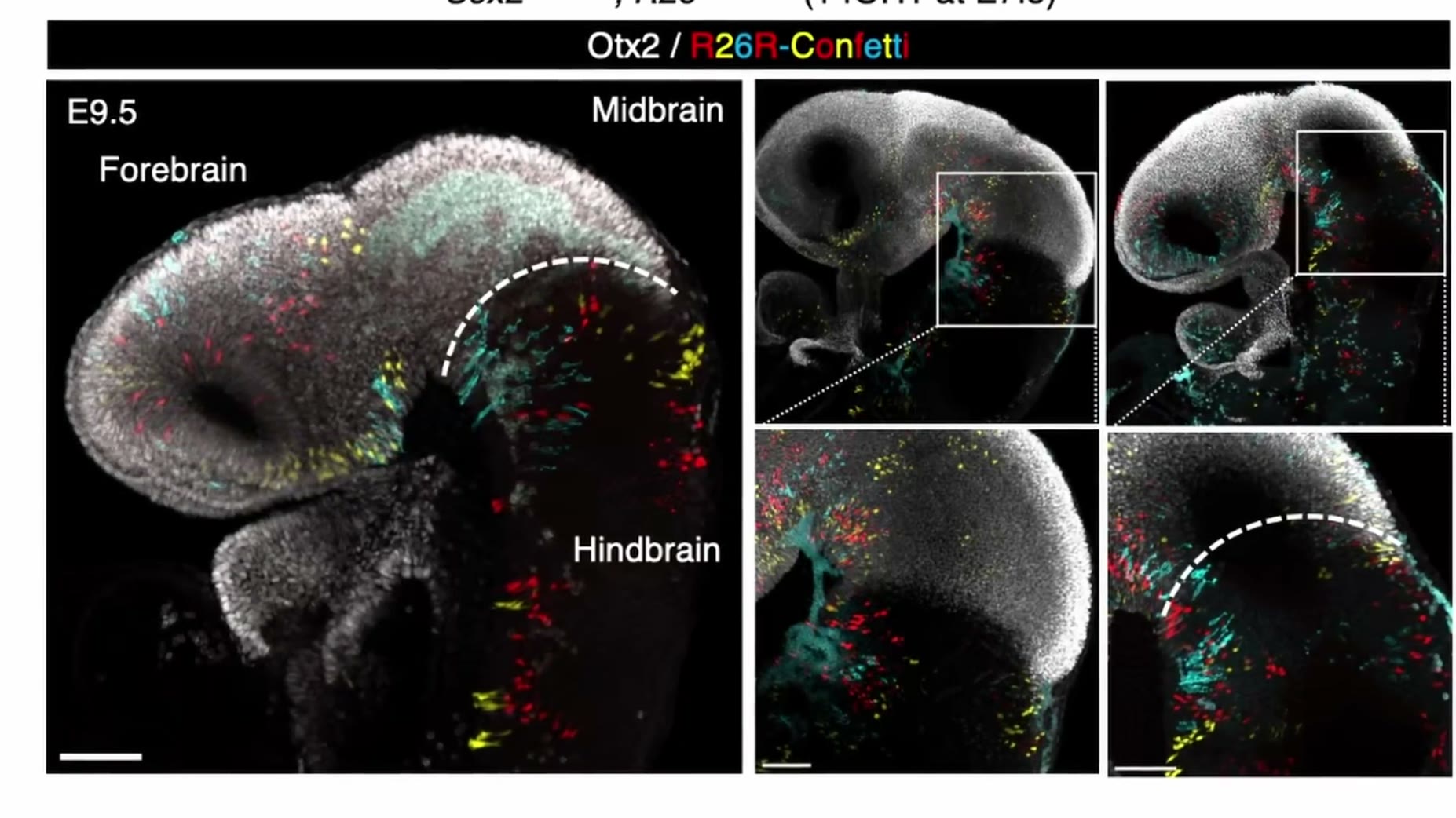
- Mechanism: Fluorescent lineage tracing showed OTX2 cells never formed hindbrain tissue and GBX2 cells never formed forebrain or midbrain tissue, making the lineages mutually exclusive from day one. Evidence class: PUBLISHED. [03:35]
- Mechanism: Examining epigenetics showed DNA activity was hardwired to differ between the two lineages. Evidence class: PUBLISHED. [04:01]
- Term: Mutagens that change DNA sequence include oxidizing agents, alkylating agents, and high-energy radiation such as ultraviolet light and x-rays. [04:13]
- Study cited: Scientists bathed posterior hindbrain progenitors in chemical signals that normally produce forebrain tissue, attempting to change their identity. Evidence class: PUBLISHED. [04:48]
- Finding: The posterior hindbrain cells stayed locked into the hindbrain pathway, and anterior cells likewise refused to become posterior cells. Evidence class: PUBLISHED. [04:56]
- Claim: This anterior/posterior split occurs extremely early, before anything else becomes active, implying the brain contains two genetically distinct organs producing two separate neuronal tissues. [05:14]
- Claim: The source states this potentially resolves a 20-year-old mystery that stumped stem cell researchers. [05:34]
- Open question (prior puzzle): In prior studies, attempts to grow human stem cells and brain organoids into hindbrain motor neurons instead produced forebrain and midbrain neurons almost every time. [05:59]
- Claim: The source says the earlier conclusion, that researchers hadn't found the right chemical mix, was wrong, because it is genetically impossible to force forebrain progenitor cells into hindbrain motor neurons. [06:07]
- Finding: Within days, researchers created posterior neural ectoderms and active human hindbrain neurons in a dish using the correct progenitor and chemical mixture. Evidence class: PUBLISHED. [06:46]
- Finding: These neurons showed spontaneous electrical action potentials and expressed genes responsible for facial movements and swallowing. Evidence class: PUBLISHED. [06:56]
- Study cited: Analyzing chickens, zebrafish, and worms showed every species used the same dual-progenitor OTX2/GBX2 technique in early development. Evidence class: PUBLISHED. [07:15]
- Claim: This suggests the brain's two-part blueprint is at least 550 to maybe 600 million years old. Evidence class: PUBLISHED extrapolation from the comparative data. [07:37]
- Analogy: Jellyfish, which diverged from our ancestors about 600 million years ago, possess two separate nerve nets at opposite ends of their bodies, offered as an evolutionary parallel. Evidence class: ANALOGY. [07:46]
- Speculation (transition point): The source states these two neural systems were physically brought together and locked inside the skull as one composite organ, moving from the study's findings into an untested evolutionary narrative. Evidence class: SPECULATION. [07:58]
- Study cited: A separate 'brain atlas' study focused on different types of brain cells, distinct from the Jokhai et al. study. Evidence class: PUBLISHED. [08:44]
- Study cited: Using RNA sequencing in a major NIH Brain Initiative release, scientists found the human brain contains at least 3000 individual cell types, each with a specific function. Evidence class: PUBLISHED. [09:04]
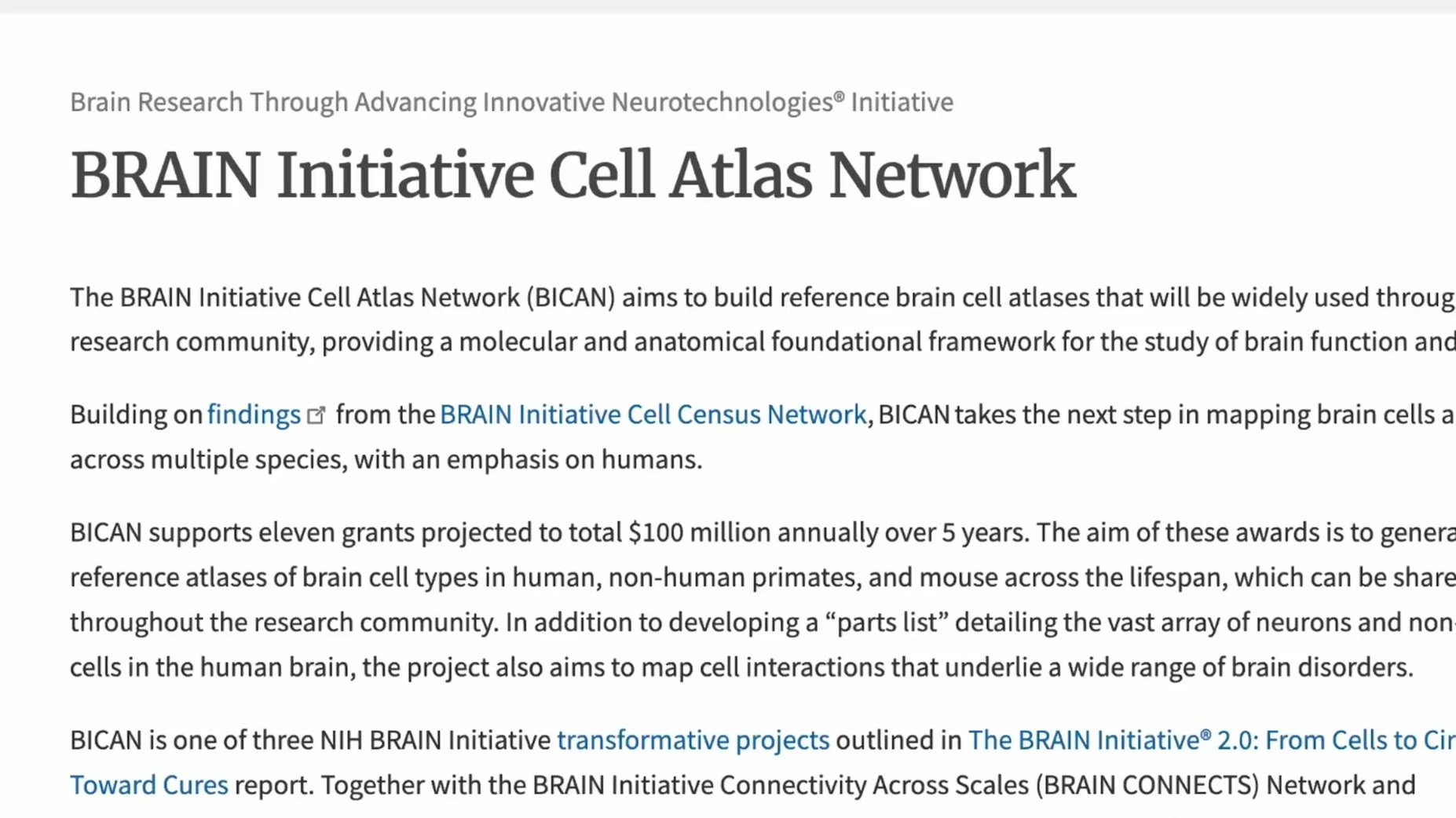
- Study cited: The BRAIN Initiative Cell Atlas Network (BICAN) supports eleven grants projected to total $100 million annually over 5 years to build reference brain cell atlases across human, non-human primate, and mouse. Evidence class: PUBLISHED. [09:40]
- Term: HARs (human accelerated regions) are described as non-coding DNA regions that function as developmental gene enhancers, acting like timers. Evidence class: uncited, no specific study named. [10:07]
- Mechanism: HARs are said to extend neural stem cell development, delaying brain maturation and letting the brain produce billions more cells. Evidence class: uncited, no specific study named. [10:26]
- Fact cited: The human brain is about 1.2 to 1.4 kg (2.6 to 3.1 lbs) and contains 86 billion neurons, about 20 times a chimp's and 430 times a rat's. Evidence class: uncited, no specific study named. [10:53]
- Fact cited: The brain receives about 15% of the body's blood output and 20% of all oxygen, while consuming 60% of all glucose for energy. Evidence class: uncited, no specific study named. [11:14]
- Claim: ALS seems to only affect specific parts of the brain such as the brainstem, where motor neurons degenerate and patients lose muscle control, which can become fatal. Evidence class: uncited, no specific study named. [11:49]
- Limitation: Studying these disorders was historically difficult because the brainstem cannot safely be removed from a patient to study directly. [12:12]
- Limitation: Prior to this study, efforts to grow hindbrain neurons in a petri dish all failed, with stem cells becoming other neuron types instead of motor neurons. [12:28]
- Claim: The study reveals scientists previously did not realize there are two separate progenitor neuron cells. Evidence class: PUBLISHED. [12:48]
- Speculation: Understanding the signaling pathway could let scientists turn a patient's skin sample into a motor neuron in a dish for targeted medicine or slowing disease progression. Evidence class: SPECULATION. [12:56]
- Speculation: The hindbrain contains circuits that sense metabolic signals and regulate hunger, and semaglutide/GLP-1 weight loss medications are said to target these brainstem circuits, not shown as part of the cited study. Evidence class: SPECULATION. [13:33]
- Open question: The narrator states additional studies and stem cell research will likely reveal more about the importance of this discovery. [14:43]
- Context: An on-screen label reads 'Forebrain Otx2/R26R-Confetti Midbrain,' referencing a genetic labeling technique (Confetti) applied to forebrain and midbrain tissue. [15:09]
How this brief was shaped: Neuroscience / Mind Science · confidence High
Transcript centers on a specific Nature Neuroscience study with a named Stanford researcher, describing a brain mechanism (two separate neural ectoderm lineages, OTX2 vs GBX2 gene expression, epigenetic divergence) and OCR confirms the actual paper abstract on screen, matching the claim-plus-mechanism-plus-source-grading shape.
The lens sets this brief's structure, never its facts — every claim is held to the same citation and fact-check standard.