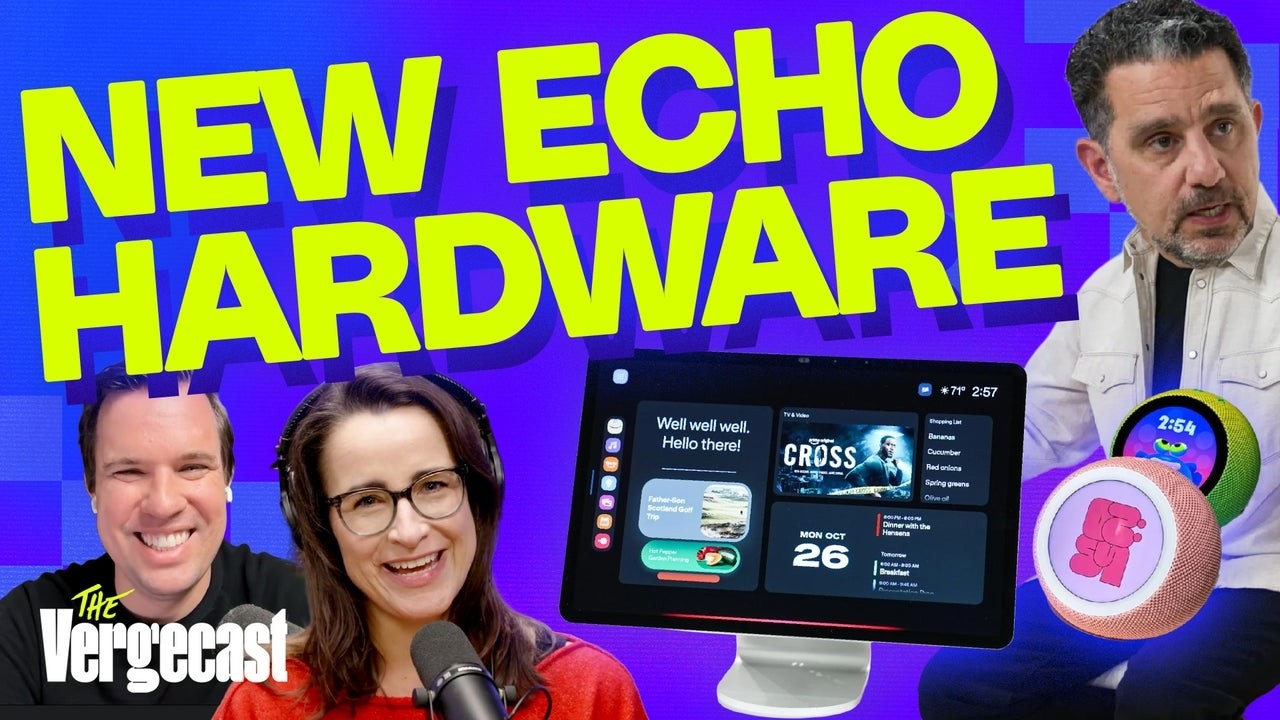
Amazon built the Trojan Horse for your smart home | The Vergecast
This episode of The Verge Cast is a news roundup turned deeper discussion of Amazon's new wave of Echo hardware (Echo Show 16, Echo Studio, Echo Dot, Echo Time, and a new photo frame), alongside briefer mentions of Apple's new touchscreen MacBook Pro and Virgin Galactic's Apeiron spaceship. The host (named David in the points) and guest Jen Tuohy walk through specs, pricing, and new software features like Alexa Cards and Visual ID, with Jen Tuohy framing the Echo Show 16 as Amazon finally understanding what people want from a smart home hub. The discussion's center of gravity is whether Amazon's pivot from cheap, ad-supported hardware to pricier, premium devices with new sensors and cameras is a smart strategic move or simply too expensive, a tension the speakers raise repeatedly without reaching a final verdict.
[01:02] The episode centers on Amazon's new wave of Echo hardware and a shift in its smart home hub strategy, discussed alongside Apple's new MacBook Pro.
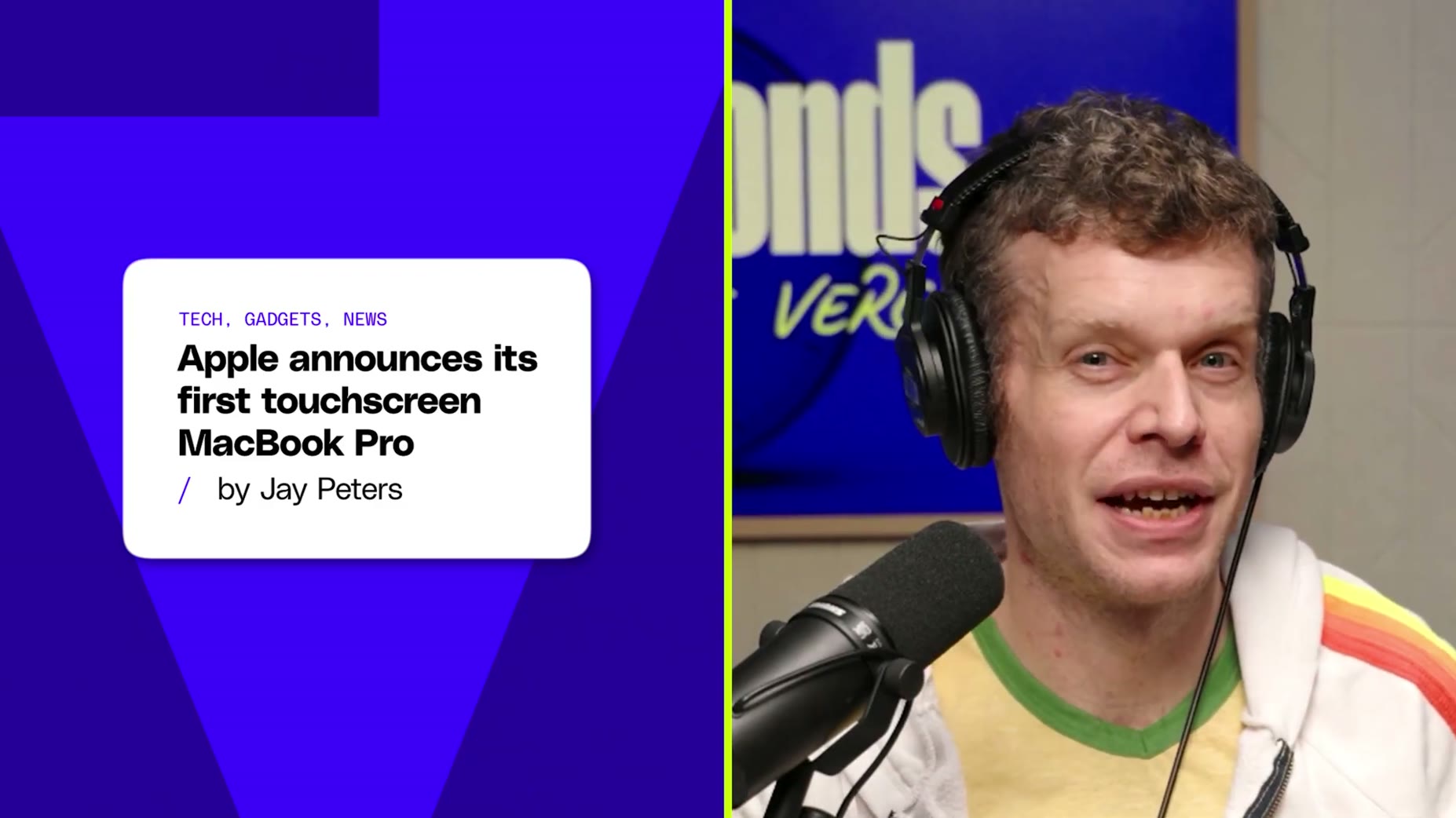
- [00:29] Apple announced its first touchscreen MacBook Pro.
- [00:36] The new MacBook Pro has an OLED display and starts at $2,899.
- [00:42] The glowing Apple logo is back on the new MacBook Pro.
- [00:47] The MacBook Pro's default wallpaper resembles a cracked iPhone Duo screen made of white vertical lines.
+ 56 more takeaways
- [01:06] Amazon also announced a studio speaker with a camera, an alarm clock, updated Echo Dots, and a digital photo frame that Amazon says only displays photos.
- [01:27] Virgin Galactic unveiled its next commercial spaceflight ship, named Apeiron after the ancient Greek word for boundless.
- [01:33] The name Apeiron won a public vote against Horizon, Explorer, and Ascent.
- [02:34] Jen Tuohy called the Echo Show 16 the most interesting and important Echo device launched in a long time.
- [03:36] Panos Panay, who came from Microsoft, is credited as the tablet hardware influence that pushed the Echo Show 16 toward a more tablet like design.
- [03:58] Jen Tuohy said the device is close to being a Pixel tablet but less expensive.
- [04:17] The Echo Show 16 is a 16 inch smart display with a thin speaker behind it resembling a small iMac, with a NanoMatte screen option.
- [05:31] Jen Tuohy said the device functions as a Fire TV, a smart home hub, a smart home dashboard, and a calendar, and can be wall mounted or placed on a counter.
- [06:21] A new UI feature lets users pick one of four fixed screens (calendar, smart home manager, photos, or Fire TV) instead of a rotating screen of suggestions and ads.
- [07:14] A host said Amazon has finally figured out what people actually want in their house with this device, stated without evidence given.
- [08:25] The hosts said Amazon's past approach of showing ads when the device was not in use was the wrong answer.
- [08:58] Panos reportedly said multiple times at the event that this customization is what people have been asking for.
- [09:19] Users can still choose the old rotating screen of suggestions and ads if they prefer it, and ads remain only if that option is chosen.
- [10:23] A new feature called Alexa Cards creates a card for every subject discussed with Alexa Plus, which a host compared to a ChatGPT sidebar of past conversations.
- [12:23] A host said the Echo Show 16's NanoMatte screen looks really nice but makes the device expensive, calling it the first time they had seen a NanoMatte display.
- [12:34] The Alexa device with the NanoMatte display costs $570, or $100 off if pre-ordered, which a host called too much.
- [12:37] The Alexa device's base version starts at $400.
- [12:47] The non-NanoMatte display version is given in the source as $4.99 with a pre-order price of $3.99, which appears to be a transcription error for $499 and $399.
- [13:13] A host said Apple's device offers personal context integration that Amazon is striving for but hasn't achieved.
- [13:38] The hosts said Apple's Home View device functions essentially as an accessory to the iPhone, giving Apple personal context and bringing in a bunch of apps.
- [14:04] A host called the CarPlay integration "a stupid bad idea," though they said it helps bootstrap Home View through the iPhone.
- [14:29] The Amazon device runs a MediaTek processor rather than one of Amazon's own AZ chips.
- [16:32] An ad for Idera by Palo Alto Networks stated that in 2026, non-human identities with system access outnumber human identities 109 to 1.
- [17:05] The Idera ad said the product unifies control by replacing siloed IAM, PAM, and governance tools with a single control plane across human, machine, and AI identities.
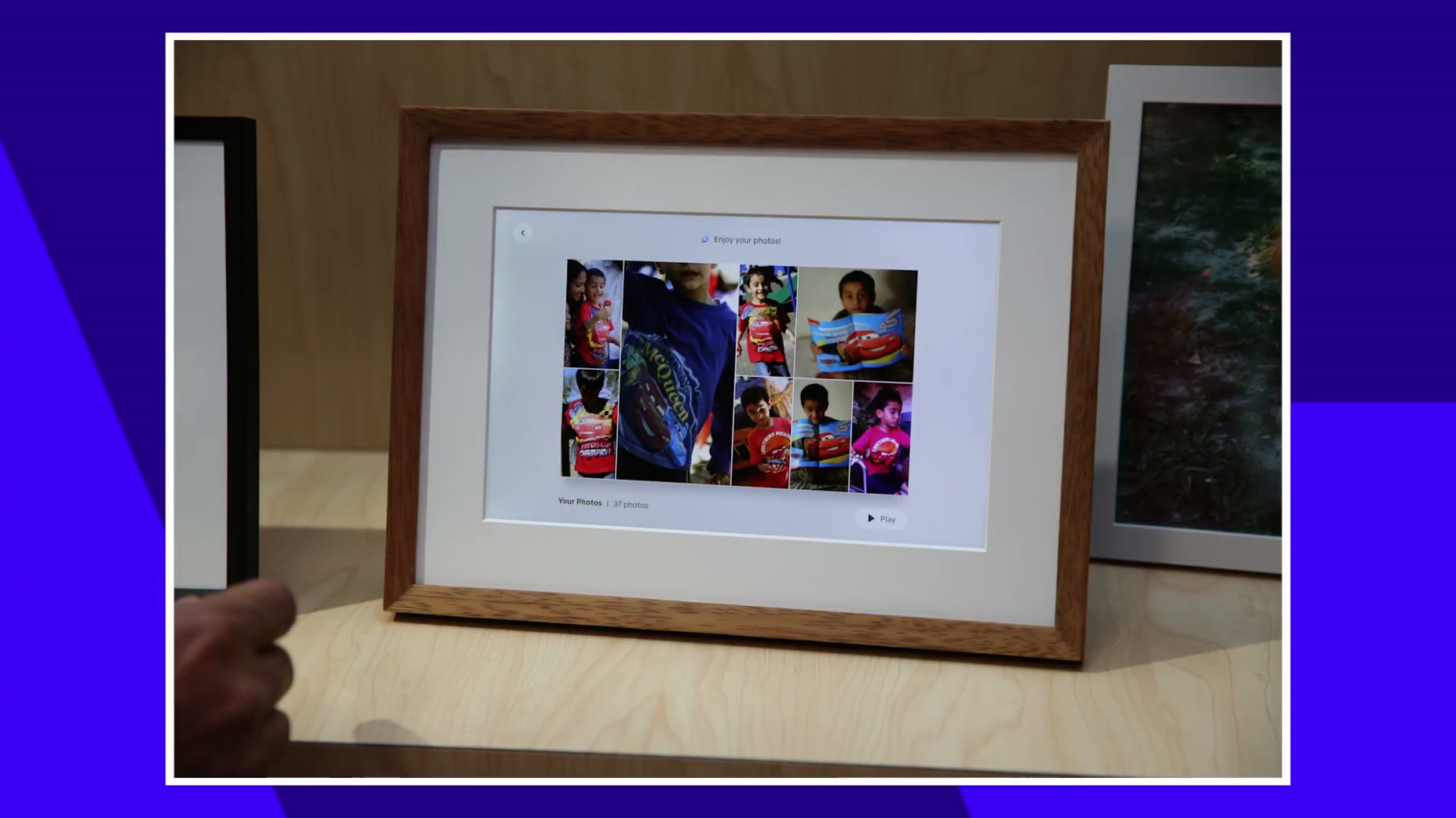
- [18:18] Amazon announced a new digital photo frame device as part of its Echo lineup.
- [19:08] The Echo photo frame lets users ask to see pictures like a trip to Japan last year, surfacing that album using place, context, and metadata.
- [19:21] The photo frame uses face recognition, requiring users to flag and tag people they know so it can show pictures of specific people on request.
- [19:55] The photo frame includes a voice memo feature so uploaded photos can have an attached spoken message play when viewed.
- [21:09] Amazon Prime subscribers get unlimited photo storage, and the hosts recommended using it as a free secondary backup for photos.
- [21:36] If a user has an iPhone and opens the Alexa app once a month, it can automatically pull in everything from their Photos app.
- [21:57] A host said Alexa's algorithm pairs two portrait photos side by side across a user's timeline, like a photo of a son in kindergarten next to him in college.
- [22:50] The Echo Show has no camera but does have microphones and speakers for voice memos and music, and the microphone can be muted.
- [23:05] A host described the Echo Show as "a $200 Trojan horse," marking a move away from cheap Amazon Echo displays.
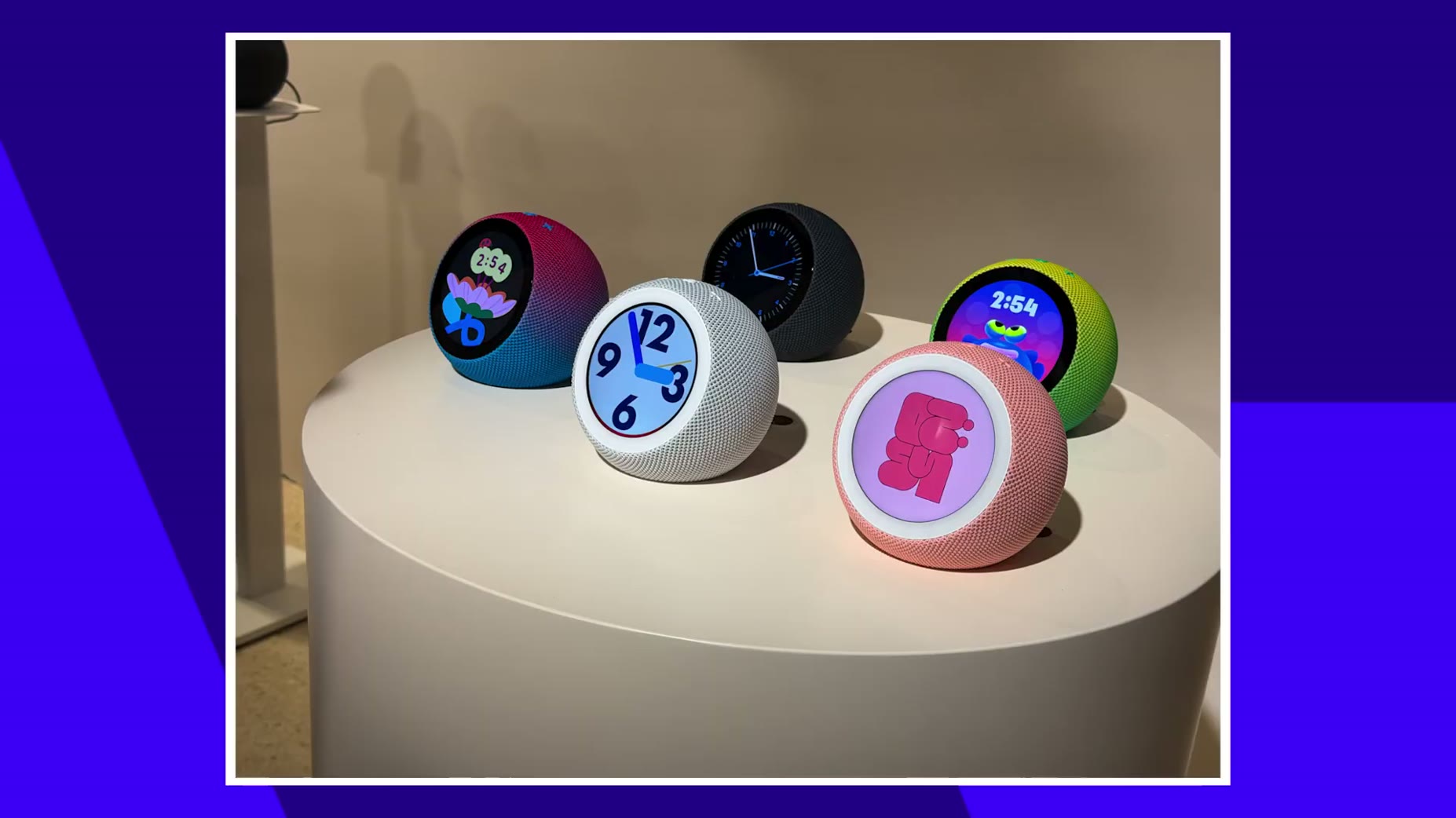
- [23:36] The new Echo Time looks like an Echo Dot merged with an Echo Spot, has a 3.5 inch touchscreen clock face, and comes in colors including pale pink and vibrant kids-themed options with no camera.
- [24:34] The Echo Time's smart alarm uses onboard ultrasound sensing and a transducer to read breathing patterns and micro movements, waking the user during their lightest sleep stage within 30 minutes of the set alarm.
- [25:28] The Echo Time's screen dims blue light at night and brightens like a sunrise at alarm time, and as a Zigbee/Matter smart home hub it can sync connected smart bulbs to brighten simultaneously.
- [27:17] The Echo Studio now has an option with a home camera built in, the first Echo speaker ever to include a camera.
- [27:33] The camera is 13 megapixel, and the Echo Studio otherwise keeps the same sound as before.
- [27:40] Adding the camera brings Visual ID to the Echo Studio, a feature previously only on Show devices that recognizes who approaches and surfaces personal content like calendar, saved recipes, favorite movies, or emailed content.
- [28:27] The hosts said the demoed killer use case was video calling, with Panos calling his parents using the Echo Studio's camera sitting on a TV console while the Fire TV screen displayed the call.
- [29:10] The Echo Studio with camera costs $250, and a version without the camera is also available for those uncomfortable with it.
- [29:31] The camera can double as a pet cam or a way to check on kids, and the hosts pitched it as an accessibility option since Alexa can identify held-up objects for people with low vision.
- [30:43] The hosts predicted this will appeal to a small number of people who will find it very useful, joking that many of those people will be Amazon employees.
- [31:17] The hosts framed this as a strategic shift for Amazon, moving from cheap, disposable hardware given away freely toward expensive, high-end hardware as a different way into the home.
- [32:52] A host said Alexa Plus now offers natural conversational ability compared to the specific nomenclature required before, a change Amazon made roughly a year ago.
- [33:01] The new hardware uses Amazon's OmniSense technology, announced last year, with every device containing the same sensors for presence, humidity, and temperature.
- [33:23] Both new speakers, the Studio and the Dot, use OmniSense in a new advanced surround sound system that locates where people are in the room relative to the speakers.
- [33:45] Beamforming microphones lock in on a user's location to improve listening, addressing a top complaint that Echo devices don't listen properly.
- [34:28] The Echo Dot now costs $100, up from its previous $50 price, which a host tied to broader cost increases from RAM and chip prices.
- [35:56] David said the Echo Frame photo frame solves a distinct problem from speakers and expects to give several away as gifts, especially to grandparents.
- [36:34] David called the new Echo Show's $600 price "a really high bar," though he thinks the $400 intro price will work for some people.
- [36:48] David anticipated a future debate about Echo Show versus Google Home View on the right way to approach the smart home.
- No explicit disagreement between speakers is stated in the extracted points; the host and Jen Tuohy both praised Amazon's design direction while separately and repeatedly flagging the new devices as too expensive.
- [39:00] A host said the third season of the podcast Shell Game is about AI slop, and noted Spotify just removed 50 million AI-generated songs from its platform.
- [39:37] A host said many companies are betting that people will ultimately be fine with slop even if it is worse and less creative, raising the question of whether someone would watch Grok's version of The Odyssey instead of paying for Christopher Nolan's version, stated without evidence given.
- But yeah, as you say, it's the Trojan horse, I would say, because it's $200, so we have definitely moved away from cheap Amazon.
How this brief was shaped: Discourse (interview / podcast / video essay) · confidence Low
Transcript is The Verge Cast podcast with host David Pierce teasing a discussion of Amazon smart home hardware, followed by a rapid multi-item news roundup (90 Seconds on the Verge) covering the Apple touchscreen MacBook Pro and Amazon Echo lineup, then a detailed two-voice discussion of the Alexa Plus cards feature. This is a multi-speaker podcast exchange rather than a single confirmed-event story, so discourse fits best with the news segment as a secondary trait. The OCR sample shows an unrelated 3D modeling software UI that does not match the audio content, so it was discounted.
The lens sets this brief's structure, never its facts — every claim is held to the same citation and fact-check standard.