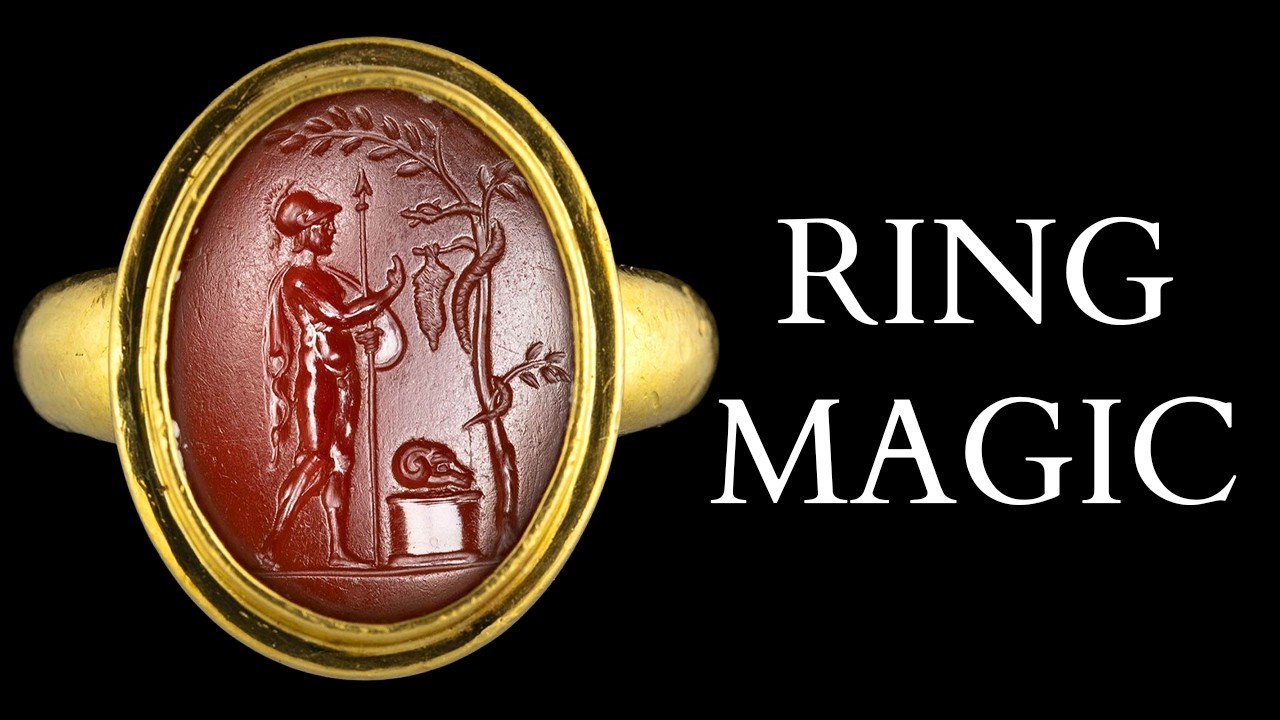
How did Ring Magic Work?
This Esoterica episode is presented solely by host Dr. Justin Sledge, with no guest; no other speaker identities are stated. The episode examines the Annulorum Experimenta (Experiment of the Rings), a medieval magical text on the production of power rings that has long been attributed to the scholar Peter of Abano. Its center of gravity is separating documented fact about Abano's life, scholarly output, and heresy trials from the legendary sorcerer reputation that grew up around him, and then testing whether he actually wrote the ring-magic text credited to him. The host raises this authorship question early and returns to it at the end, leaning toward doubt based on the text's likely origin elsewhere, without declaring the matter settled.
The host, Dr. Justin Sledge, frames the episode around the Annulorum Experimenta, which he describes as one of the best insights into how magical rings were thought to be made in the medieval period, at [00:24].
- The host states the Annulorum Experimenta is a textbook on ring magic allegedly written by one of the greatest necromancers of the Middle Ages, at [00:29].
- The host explicitly questions whether Peter of Abano even composed the text attributed to him, at [00:53], a question he revisits later in the episode.
- The host identifies himself as Dr. Justin Sledge, presenter of Esoterica, at [01:50].
- The host states Peter of Abano is sometimes called the Second Aristotle and was one of the greatest scholars of the later Middle Ages, at [02:23].
+ 49 more takeaways
- The host says Abano's legendary sorcerer reputation stems from his reliance on astrology, including producing astrological amulets and elucidating planetary intelligences described as angels, at [02:49].
- The host gives Abano's dates as c. 1257 to c. 1316 and lists his documented works, including study of black magic texts like the Key of Solomon, translation of Ibn Ezra's astrological works, a work on physiognomy, translations of Alexander of Aphrodisias and Galen, and the 1303 Conciliator on the astrolabe and the eighth sphere's motion, at [02:52].
- The host notes Abano also wrote the Lucidator around 1310, a commentary on the Problems of Aristotle, at [03:32].
- The host says Abano produced additions to the Arabic astrologer Masue's works, to Dioscorides' De Materia Medica, a translation of Pseudo-Hippocrates, and a work on Geomancy, at [03:40].
- The host states Abano wrote a monumental work on poisons titled De Venenis, at [03:51].
- The host says De Venenis helped secure Abano's reputation as a sorcerer, at [04:02].
- The host notes that alleged necromantic works attributed to Abano mostly survive only in manuscript, some never printed, and virtually none with modern editions, at [03:54].
- The host states that giving an overall portrait of Abano's thought is extremely difficult, though recent scholarship on his astrological and medical theories is improving understanding of him, at [04:07].
- The host says suspicion of heresy led to Abano being repeatedly put on trial during his lifetime, at [04:42].
- The host presents conflicting accounts of the trial outcome: in some a pope intervened and canceled proceedings, in others charges were dropped, and in another telling he died mid-trial and was convicted posthumously, with his body disinterred and bones burned by the Inquisition, at [04:50-05:04].
- The host states recent scholarship shows Abano's family inherited his land after his death, which indicates he had not been convicted of heresy, at [05:06].
- The host reasons that a heresy conviction would have required Inquisitional confiscation of property, which did not occur, at [05:14].
- The host notes the Heptameron, also titled The Elucidation of Necromancy, became the most infamous magical text associated with Abano, at [05:37].
- The host states this episode focuses instead on the Annulorum Experimenta, at [05:54].
- The host explains that in medieval Latin, 'experimenta' retained the sense of something to be tested, at [06:10].
- The host says 'experimenta' was a stock term for what would now be called magical spells, citing examples like a love experiment, raising the dead, or becoming invisible, at [06:16].
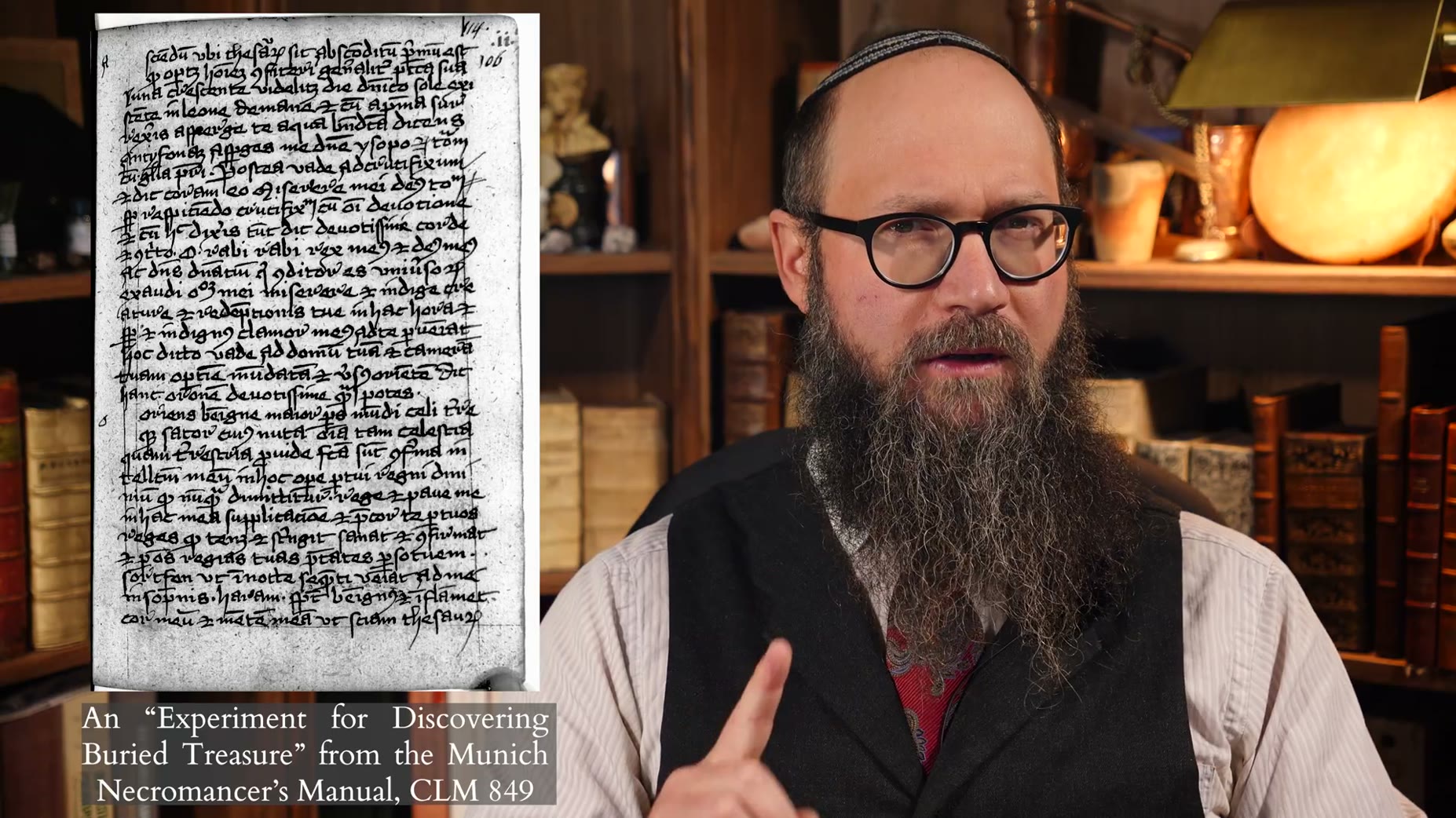
- The host cites an 'Experiment for Discovering Buried Treasure' found in the Munich Necromancer's Manual, CLM 849, at [06:28].
- The host states the experiment of the ring survives in about half a dozen manuscripts, the oldest being a 15th century Paris manuscript, though the text itself is probably older, at [06:46].
- The host identifies the oldest manuscript as held at the BnF, Departement des Manuscrits, Latin 7337.
- The host says the experiment first enters recorded history in the necromantic bibliography of Trithemius, first published in 1508, at [06:56].
- The Trithemius bibliography lists the Elucidarium Necromantiae as attributed to Petrus de Apono, a physician of Padua and author of the Conciliator, per the host's reading.
- The host quotes Trithemius as saying the work has 'no manifest communion with demons' but is still 'greatly to be feared,' at [07:03].
- The host explains the magic described is astral magic, specifically lunar magic drawing on the forces of the heavens, at [07:24-07:25].
- The host lists the angels of the moon named in the text as Gabriel, Michael, and Samael, at [07:34].
- The host notes that not all of the experiments produce rings; most use astrological timing based on the moon's transit through the 12 degrees of the zodiac, plus incantations, names, symbols, and suffumigations, mostly to produce illusions, at [07:42].
- The host states this is primarily illusion magic, at [08:01].
- The host walks through an example ritual to conjure soldiers doing battle, which must be performed in the moon's second mansion, Aries, fitting its martial theme, at [08:13].
- The host describes the ritual as requiring a gold ring inscribed with the names of four spirits, Analim, Alibiat, Estade, Boad, and Bartifari, written in a man's blood on virgin parchment and stored in the ring's hollow, at [08:23-08:33].
- The host says the ring is taken at dawn to a battlefield and suffumigated with the teeth of a dead man before an incantation beseeches the four spirits to produce the appearance of soldiers, at [08:40-08:49].
- The host notes the ring must afterward be stored wrapped in black-dyed muslin and kept clean, at [09:09].
- The host states that of the 39 experiments in the text, 35 produce rings, at [09:49].
- The host says the remaining experiments involve copper coins wrapped in linen, silver boxes with various ingredients, and one requiring powdered human remains in a glass jar, at [09:52].
- The host notes significant variation between manuscripts, especially in the names of the spirits, which he says is typical for this kind of volume, at [10:10].
- The host lists ring powers including making a river appear in the air, making dogs chase a deer, freeing a person from chains, divining a duel's outcome, inducing healing or sickness, conjuring a banquet table, and making food appear as worms, which he compares to the saxophonist in The Lost Boys, at [10:34].
- The host lists further ring powers including making an elephant carry a castle, conjuring a dragon, making a castle appear, and making a village appear on fire, at [11:02].
- The host lists additional effects including inducing fear, desire, and nakedness tied to erotic binding magic, returning spent money to its owner, conjuring a demon that answers questions, and conjuring a dancing party, which he compares to the Abramelin ritual's monkeys that play music, at [11:18].
- The host lists more powers including making enemies love you, making a horse appear, and making ants retrieve or appear as treasure, at [11:45].
- The host notes that the specific treasure-finding ring experiment does not use a sigil, at [11:59].
- The host suggests the ring magic in this text represents the wide range of contemporary necromantic magic narrowed to a single focus, comparing its feel to Final Fantasy, at [12:04-12:12].
- The host states the text's origins likely lie in the astral image magic of the Islamicate world, at [12:22].
- The host notes that few if any of the spirits in the text bear Arabic-sounding names or scripts, making the text's milieu hard to place, at [12:34].
- The host says the grimoire's spirits are basically unattested elsewhere, like an isolated population used only for this ring magic, at [12:43].
- The host concludes it is uncertain whether Peter of Abano actually composed the text, and that given its likely origin in the magical environment that produced texts like the Picatrix, it is unlikely he did, at [12:55].
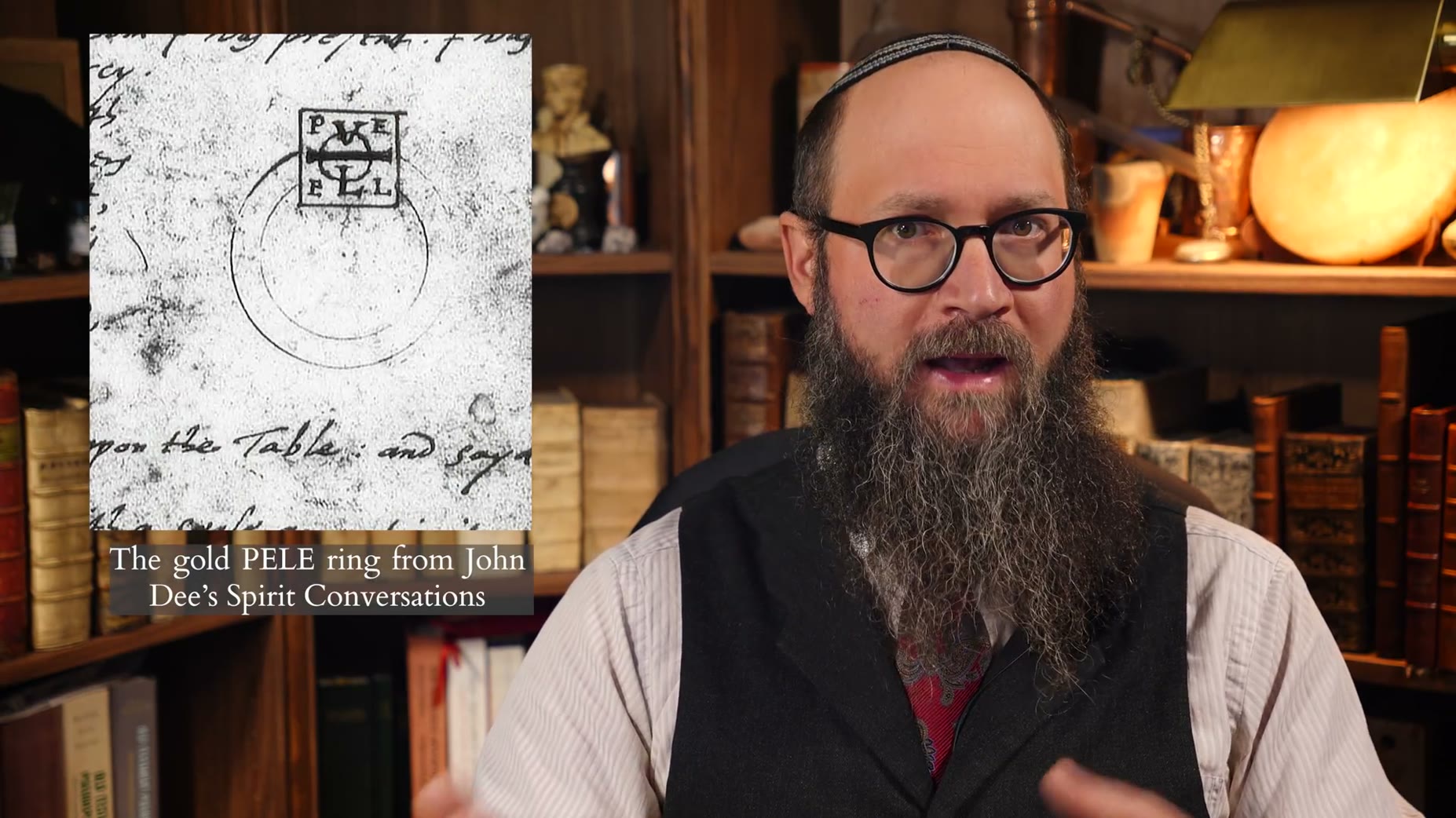
- The host mentions a golden Pele ring from John Dee's Spirit Conversations as a point of comparison, noting the Annulorum Experimenta stands out for its near-singular focus on ring magic, at [14:16].
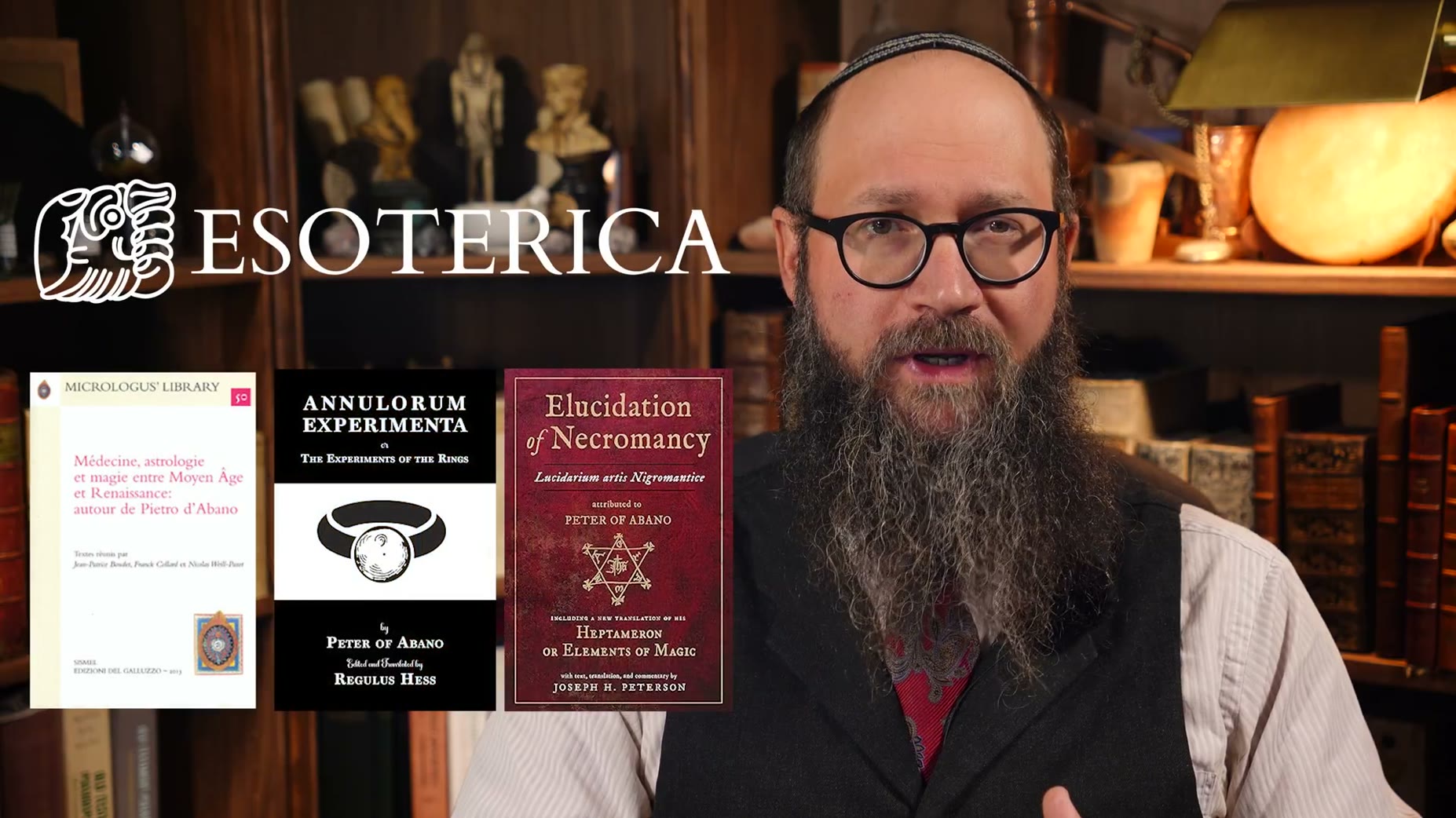
- The host identifies the standard academic edition of the Annulorum Experimenta as by Boudet, in the Micrologus Library volume on medicine, astrology, and magic around Pietro d'Abano, at [14:38].
- The host notes that collected volume is mostly in French aside from the critical Latin text itself, at [14:44].
- The host praises a facing-Latin edition with critical notes and cross-manuscript comparisons produced by Regulus Hess through Haitian Press as affordable and wonderful, at [15:03].
- The host's one complaint about the Regulus Hess edition is that its translation uses a faux early modern English style with thees and thous, which he finds a little distracting, at [15:22].
- The host says he is not done with magic rings or magic in general and has more texts and content planned, at [15:39].
How this brief was shaped: Discourse (interview / podcast / video essay) · confidence Low
The narrator poses an open historical question, whether Peter of Abano really wrote the ring-magic text, and weighs legend against evidence rather than simply teaching settled material, which is an argumentative spine. OCR shows dense Latin manuscript text about disputed authorship of occult works, reinforcing that the video is investigating a contested claim rather than running a university-style lecture.
The lens sets this brief's structure, never its facts — every claim is held to the same citation and fact-check standard.