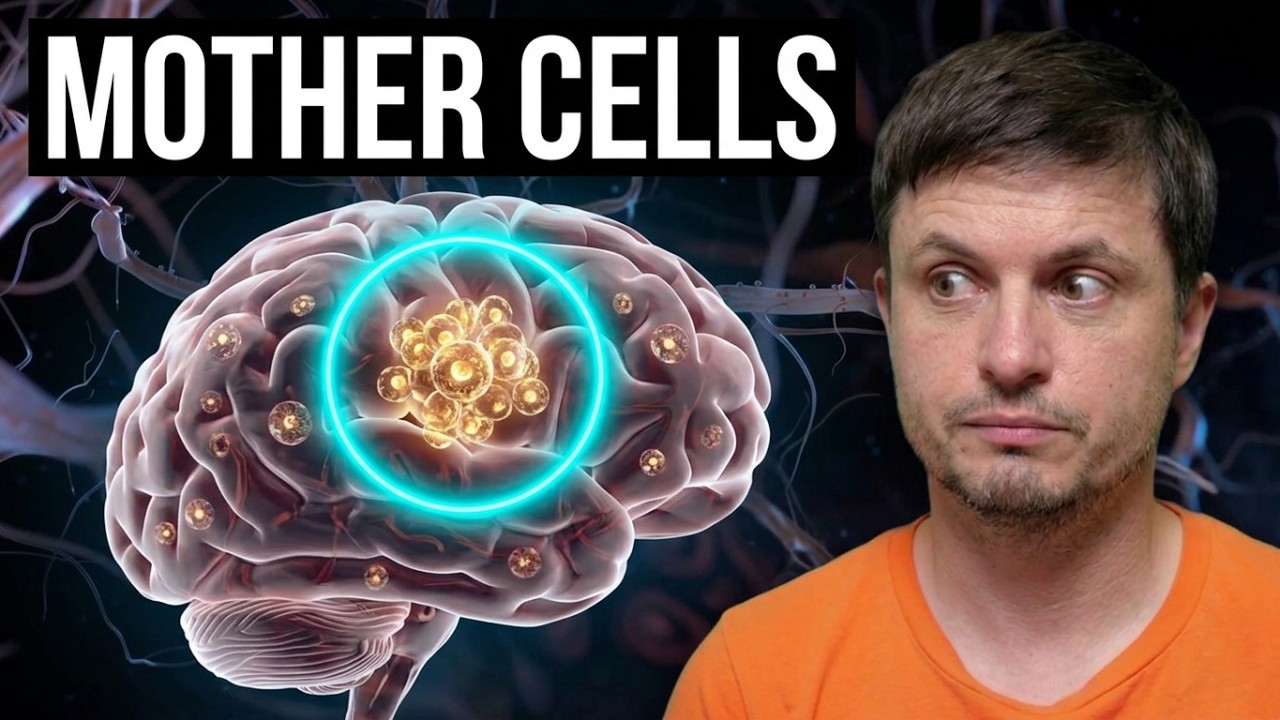
Scientists Found Your Mother's Cells Inside Your Brain (and Other Body Parts)
This video claims that human brains and bodies are genetic mosaics containing small populations of a mother's own cells (and in some cases a grandmother's cells), which cross the placenta during fetal development, migrate into organs and the brain, and can persist and function there for decades, a phenomenon the video calls maternal microchimerism (MMC). The proposed mechanism includes placental crossing and bloodstream migration, a gradual decline in cell numbers possibly via apoptosis, immune tolerance maintained by lower gene activity in the foreign cells, and later in the video a reverse exchange where fetal cells persist in the mother and are monitored by natural killer cells using KIR receptors. The evidence is mixed: some claims cite named sources, a detection algorithm called Selector introduced in May 2026, a Cincinnati Children's Hospital study, and a Journal of Reproductive Immunology paper from Oslo University Hospital researchers, while other claims rest on uncited 'recent studies,' an unnamed 2021 finding, and repeated hedging language like 'seem to suggest.' Toward the end the host shifts from reporting these findings into his own philosophical framing that 'we are not biological islands' and that discoveries 'overwrite our understanding of human individuality,' an interpretive leap the source itself does not claim is scientifically established.
Claim (00:08): Standard biology textbooks teach every cell in the body contains identical DNA, half from the mother and half from the father.
- Claim (00:25): Recent high-precision genomic studies suggest this textbook picture is incomplete. Evidence class: PUBLISHED (unnamed, uncited studies).
- Claim (00:33): Every human brain and many parts of the body are a genetic mosaic.
- Mechanism (00:41): The body carries functional cells originally from an entirely different person, often the mother.
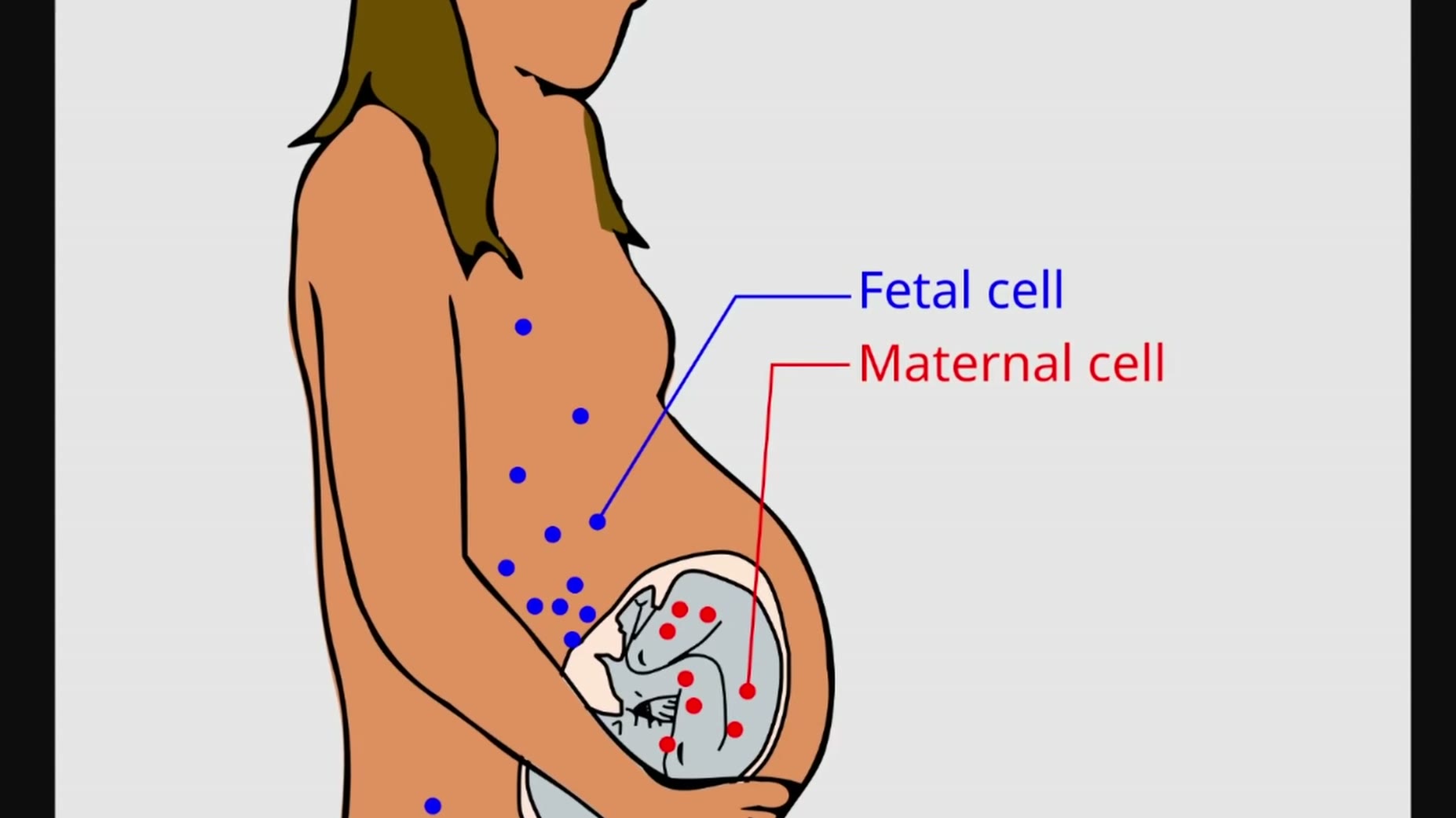
- Mechanism (00:54): Maternal cells cross the placenta during fetal development, enter the bloodstream, migrate into organs, and end up in the brain.
+ 57 more takeaways
- Term (01:08): This phenomenon is called microchimerism; the maternal version is called MMC (Maternal Microchimerism).
- Study cited (01:32): Microchimerism has long been studied mostly in rats, showing mothers transfer functional cells (not just DNA) that persist in offspring for many years. Evidence class: PUBLISHED (unnamed rat studies).
- Quantified fact (02:04): Microchimeric cells are usually about one in every million cells in a typical body.
- Quantified fact (02:09): Because a body can contain trillions of cells, a grown mouse might contain millions of integrated maternal cells.
- Claim (02:24): The key finding of the most recent study is that maternal cells are not passive. Evidence class: PUBLISHED (study not named).
- Mechanism (02:30): The maternal cells seem to actively integrate, transform, and become functional, mimicking a normal cell.
- Method (02:49): Researchers expanded the study from mice to humans to test how long the cells persist.
- Method (02:56): Researchers collected brain tissue from young patients and combined it with public genetic datasets spanning fetuses at 22 weeks up to individuals in their 80s and 90s.
- Quantified fact (03:16): Maternal cells were detected in all human beings studied, including in brains across the entire human lifespan.
- Quantified fact (03:26): Approximately 70% of all tested human brains contained maternal cells in neurons.
- Claim (03:38): Maternal microchimerism seems to be a universal human feature beginning early in fetal development and lasting decades or a lifetime. Evidence class: PUBLISHED, but hedged with 'seems to be'.
- Quantified fact (04:32): The total number of maternal cells in the brain seems to decline over time.
- Speculation (04:40): This decline might be driven by apoptosis, programmed cell death that removes older cells during healthy tissue maintenance.
- Term (04:40): Apoptosis is defined as programmed cell death.
- Mechanism (05:08): Maternal cells seem to integrate more frequently as neurons, specifically upper layer projection neurons in cortical circuits.
- Mechanism (05:18): In older brains, maternal cells are dominated by microglia or perivascular macrophage profiles (immune cells).
- Finding (05:35): Maternal nuclei generally had much lower transcript levels than the host's own cells.
- Speculation (05:49): Researchers believe this lower genetic activity may be a protective mechanism preventing foreign cells from triggering cellular stress or immune rejection.
- Quantified fact (06:13): Maternal cells in a child occur at roughly 1 in 100,000 to 1 in 1 million cells.
- Term (06:22): Historically, detecting these rare cells required knowing the exact genetic differences between mother and child via HLA (human leukocyte antigen) surface proteins.
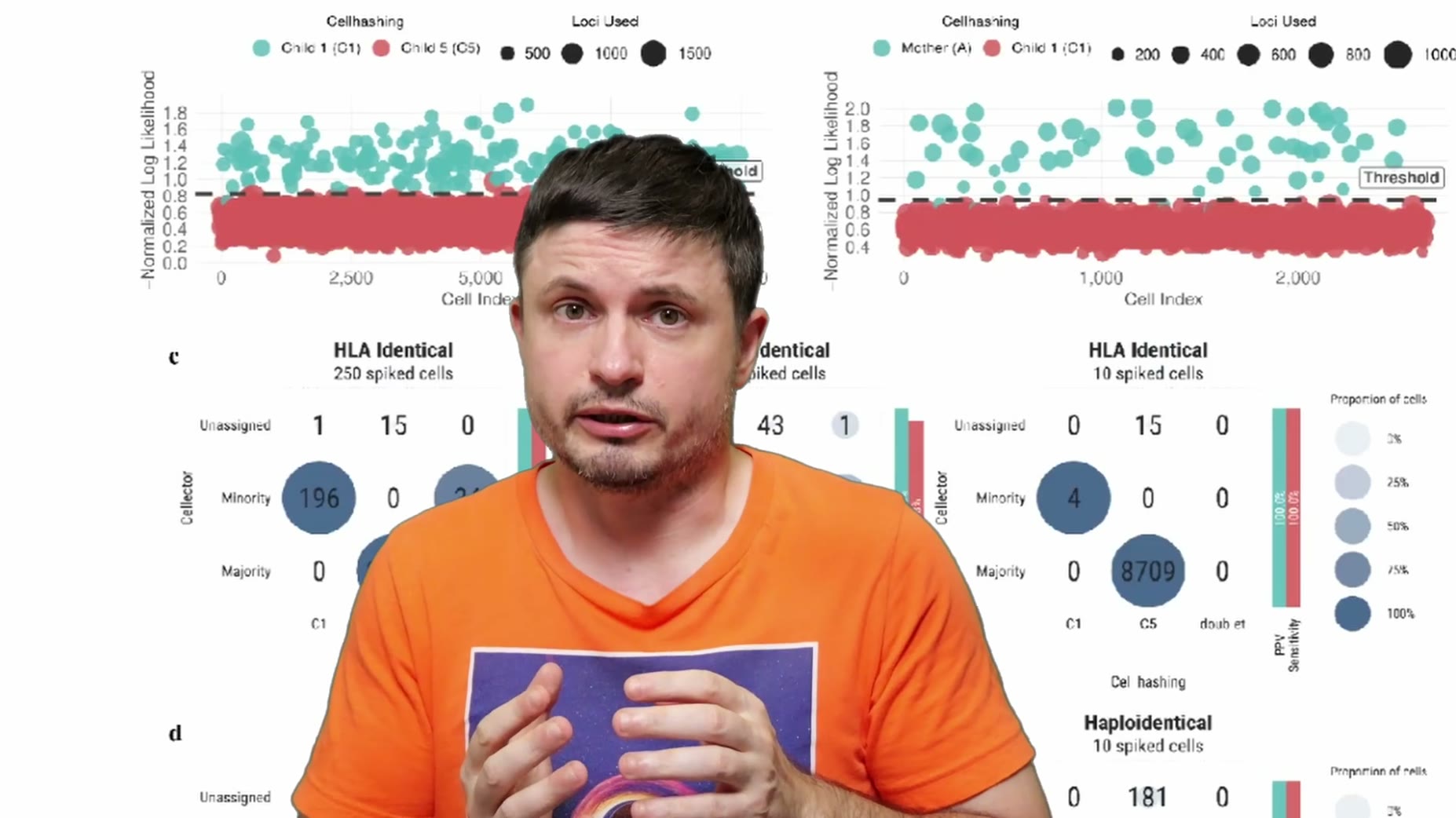
- Study cited (06:44): In May 2026 scientists introduced a new algorithm called Selector. Evidence class: PUBLISHED (named tool, no author or journal given).
- Mechanism (06:55): Selector analyzes single-nucleus RNA sequences of thousands of cells at once and builds a mathematical probability model of the host tissue's genotype, without needing prior parental genetic profiling.
- Mechanism (07:12): Selector then uses anomaly detection to scan every cell for subtle genetic mismatches, flagging microchimeric cells.
- Finding (07:27): Based on multiple unnamed studies, Selector's detection appears almost perfectly accurate and lets scientists reanalyze public genomic databases for previously missed microchimerism. Evidence class: PUBLISHED (studies not named).
- Quantified fact (08:01): Firstborn children were found to be positive for maternal microchimerism much more frequently than laterborn children.
- Speculation (08:15): The firstborn child seems to contain the most of the mother's cells, with subsequent pregnancies producing less, possibly due to competition or displacement.
- Finding (08:28): The maternal cells found were extremely diverse.
- Finding (08:32): In the brain, these cells included neurons, microglia, vascular and immune cells, and other neuronal subtypes typical of a human brain.
- Speculation (08:43): Because some of these cells are immune cells, this offers potential discoveries for future therapies.
- Speculation (08:51): Strategies involving chimeric cells could treat neurological disorders by using the mother's immune system inside the brain.
- Claim (09:21): In every pregnancy a woman carries living cells she received from her own mother while she was a developing fetus.
- Mechanism (09:31): When that woman becomes pregnant, some of those grandmother cells can cross the placenta and enter the developing baby.
- Study cited: Immunologists discovered this in 2021 by testing umbilical cords from newborns. Evidence class: PUBLISHED (researchers not named).
- Quantified fact: Cells originating from the baby's maternal grandmother were found in 20% of all umbilical cord samples tested.
- Claim: This provided direct physical evidence that living cells can pass through two separate pregnancies, connecting three generations simultaneously.
- Mechanism: Fetal cells from an older sibling can remain in the mother's tissue for several years and cross into a younger sibling during a subsequent pregnancy.
- Study cited: A study from Cincinnati Children's Hospital found that only a very specific tiny subset of maternal cells trains the immune system not to attack similar cells. Evidence class: PUBLISHED (institution named, researchers not named).
- Mechanism (ANALOGY): These specialized cells co-express two surface proteins the body associates with 'normal' rather than pathogen or transplant, described as acting like a 'cellular diplomat' that teaches the child's immune system long-term tolerance.
- Mechanism (12:44-12:48): The cellular exchange is bi-directional; mothers give cells to children and children also send cells back into mothers during pregnancy.
- Quantified fact (12:55-13:02): Fetal cells can persist in maternal organs, including the heart, liver, thyroid, and blood, for up to 38 years.
- Study cited (13:10): A study from the Journal of Reproductive Immunology by researchers from Oslo University Hospital offers hints on why some cells survive. Evidence class: PUBLISHED (journal and institution named).
- Term (13:22-13:28): While pregnant, babies share cells with their mothers in a process called microchimerism.
- Mechanism (13:30-13:42): The mother's immune system, via natural killer cells, constantly inspects leftover cells using KIR receptors, described as 'scanners.'
- Mechanism (ANALOGY) (13:46-13:58): If a cell's 'name tag' matches what the mother's body expects, natural killer cells let it stay; if there is a mismatch, guard cells catch and clear it out.
- Claim (14:11-14:25): Microchimeric cells appear to play a dual role; many act as helpers or repair units important to fetal development, but some are implicated in immune system dysfunction and autoimmune deficiencies.
- Mechanism (ANALOGY) (14:34-15:17): Fetal microchimeric cells can act like stem cells, migrating to maternal injury sites (heart attack, skin damage, surgical incision) and differentiating into local cell types such as heart muscle, blood vessels, and skin cells to aid healing.
- Finding (14:34-15:17): Higher fetal cell levels in kidney inflammation patients correlate with better organ function and lower clinical severity. Evidence class: PUBLISHED (study not named).
- Speculation, transition point (15:55): The host states these recent discoveries 'completely overwrite our understanding of human individuality,' marking a shift from reported findings to the host's own interpretive framing.
- Speculation (16:02): The host states these studies confirm 'we are not biological islands.'
- Claim (16:07): Living cells pass between mother and children from the earliest weeks of development until basically before death, establishing a lifelong cellular partnership spanning decades.
- Speculation (16:20): The host says this cellular connection spans generations because even your grandmother's cells eventually end up inside you.
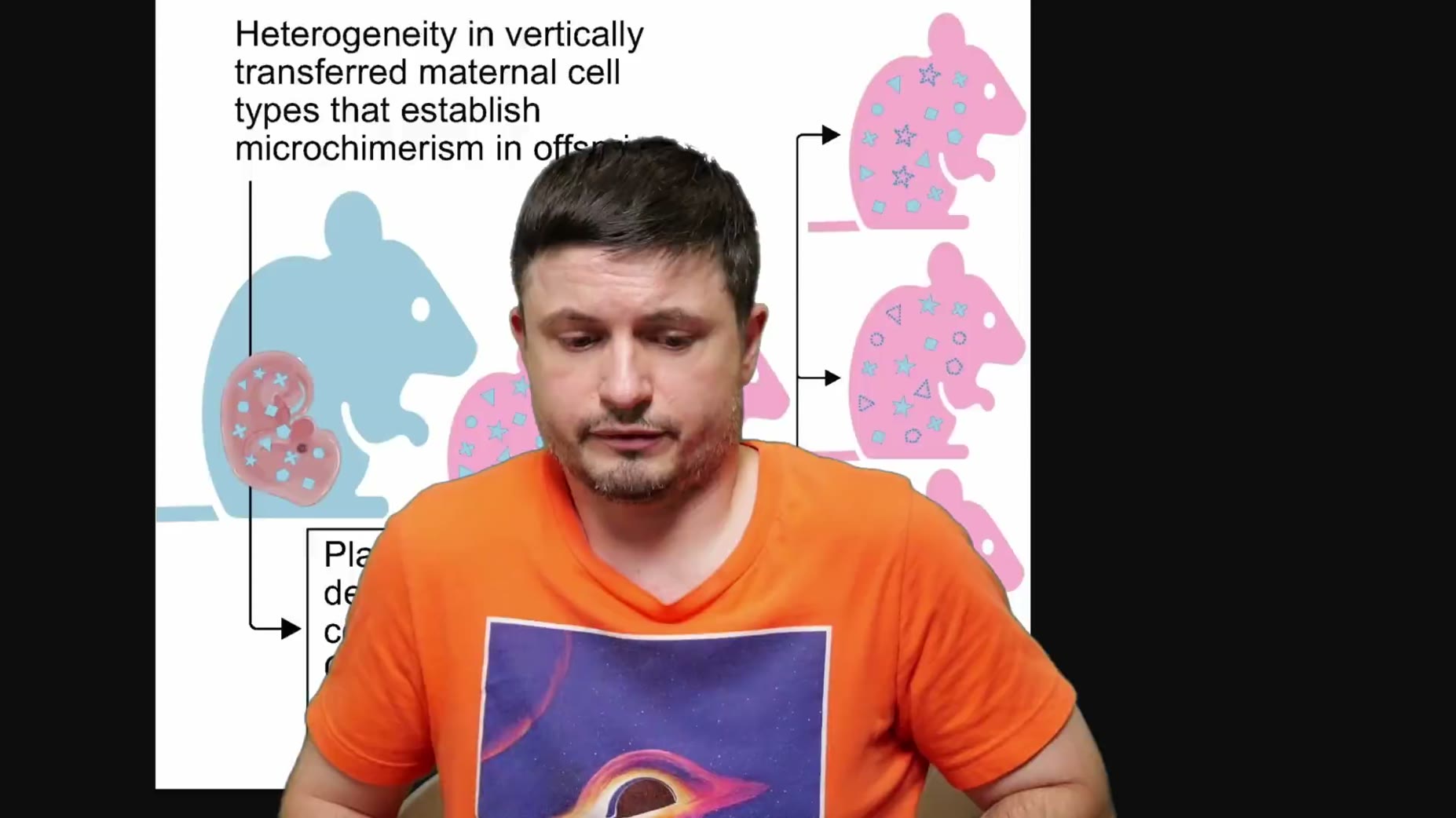
- Named on-screen artifact (16:20): A slide titled 'Heterogeneity in vertically transferred maternal cell types that establish microchimerism in offspring,' illustrated with a mother mouse, a fetus, and two offspring mice.
- Note (16:36): The host jokes 'Sorry dads, we're not really included in that picture,' noting the maternal-line cell transfer excludes fathers.
- Note (16:44): The host closes by thanking viewers and promoting Patreon support (ad-free videos, DMs, early access) and a channel t-shirt.
- Open question (08:15): The video does not resolve whether competition or displacement actually explains why firstborns carry more maternal cells than laterborns; it is offered as a possibility, not a confirmed mechanism.
- Open question: Throughout the video, claims are repeatedly hedged with phrases like 'seem to suggest' and 'scientists now think' (e.g. 03:38, 04:32, 05:08), indicating the source itself treats several mechanisms as provisional rather than settled.
- Note (17:26-18:02): The final portion of the video is a scrolling list of Patreon supporter names with a closing thank-you message, with no additional scientific content.
How this brief was shaped: Neuroscience / Mind Science · confidence High
A single narrator walks through a named, OCR-visible published study on maternal cell microchimerism in the brain, explaining the mechanism (cells crossing the placenta, migrating into the brain, apoptosis-driven decline) while framing it as a recent and partly speculative discovery about human biology.
The lens sets this brief's structure, never its facts — every claim is held to the same citation and fact-check standard.