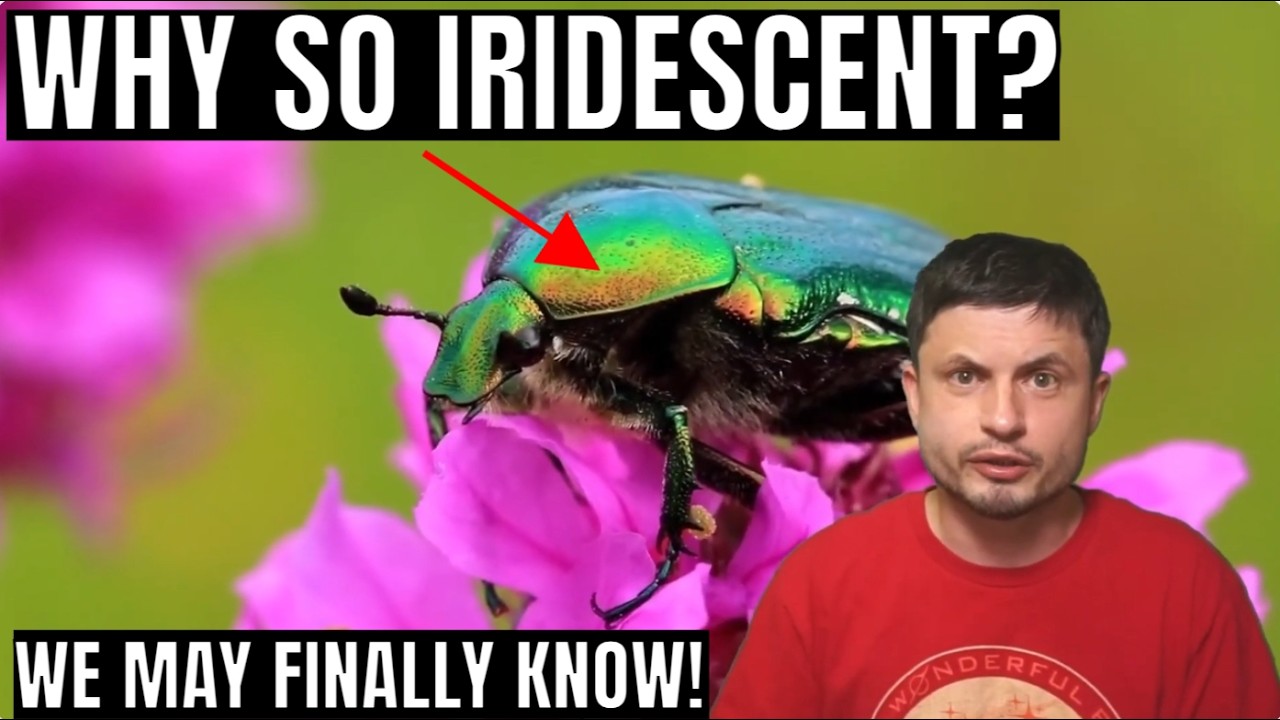
So, Why ARE Some Bugs Iridescent?
What this video is
⚡ a 11-minute video, readable in 60 secondsThis video investigates why iridescence evolved independently across many insects, birds, and other animals, challenging the common assumption that it exists mainly to attract mates. It builds the case for an alternative explanation, aposematism, where a visual signal warns predators an animal isn't worth attacking, and cites a recent chick study using artificial jewel beetle prey as the first experimental support for this defense function. The video also connects iridescence to Mullerian mimicry, where multiple defended species share warning signals for mutual protection.
[00:20] Iridescence is usually produced by structural coloration: tiny microstructures that interfere with light reflecting off a surface
Key takeaways
- [01:00] Because iridescence evolved independently many times, scientists initially assumed it functions to attract mates, citing peacocks as the example
- [01:44] Some beetle species only show iridescence in their non-reproductive larval form, undermining the mate-attraction theory
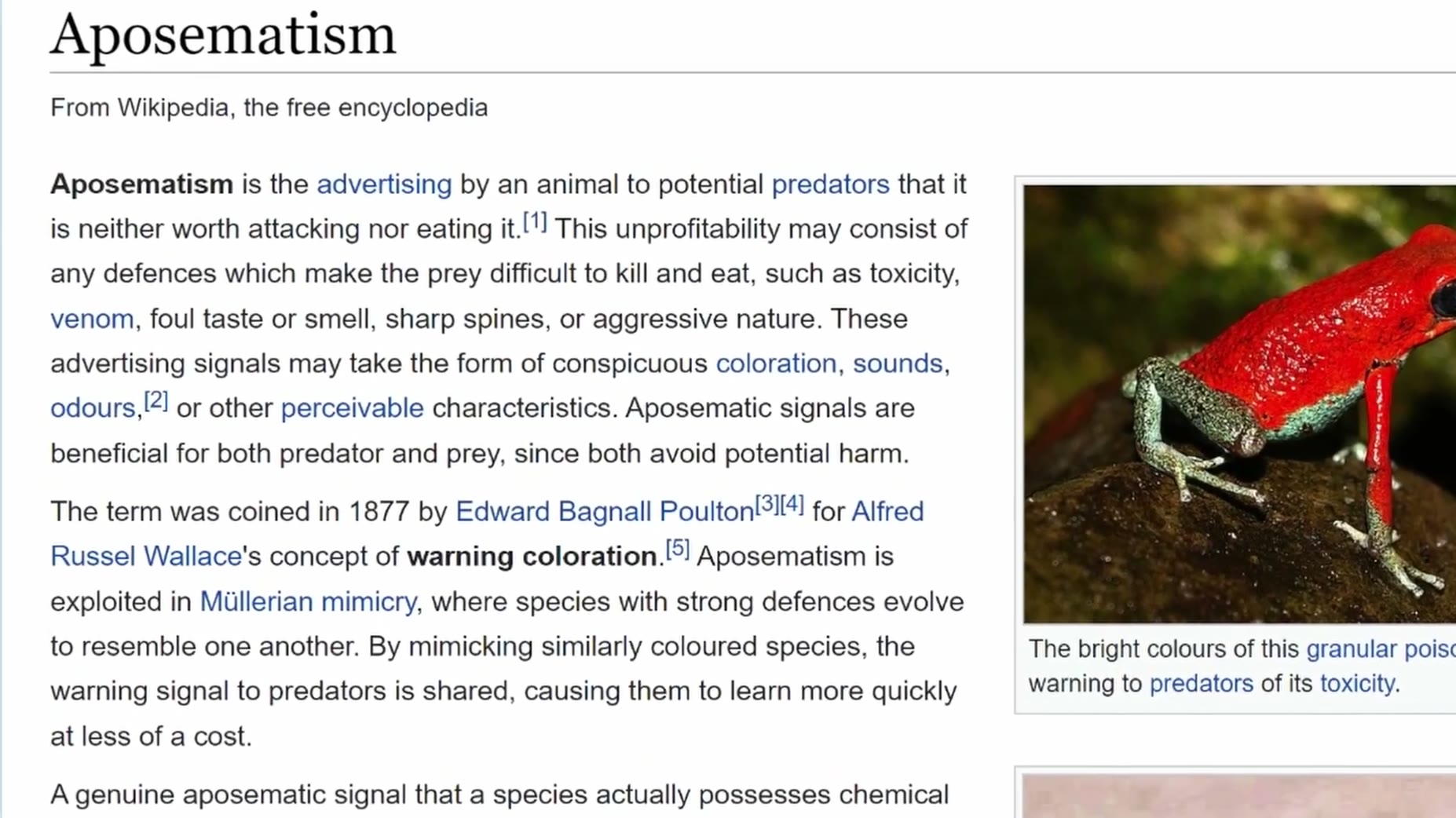
- [02:23] The alternative theory is aposematism: an animal signaling to predators that it is not worth attacking or eating
- [03:04] The term aposematism means "sign that warns other animals to stay away" and is not limited to colors
+ 7 more takeaways
- [03:19] The brighter and more conspicuous an animal is, the more likely it is to be toxic or dangerous
- [03:42] Some scientists believe iridescence itself is a type of aposematism, and a recent study supports this idea
- [05:35] In the study, birds generally avoided or hesitated at artificial prey showing iridescence, and to a lesser extent avoided glossiness
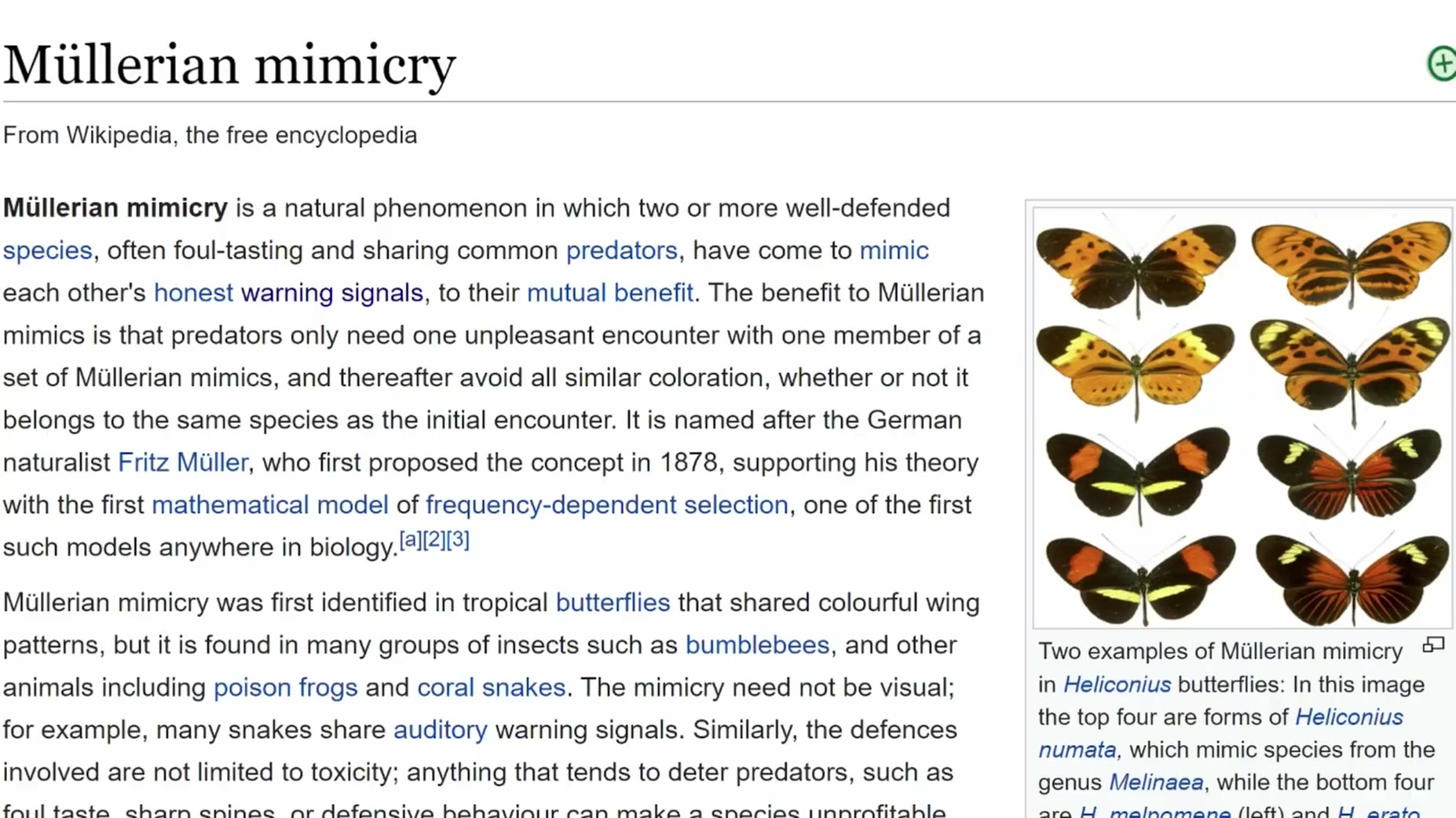
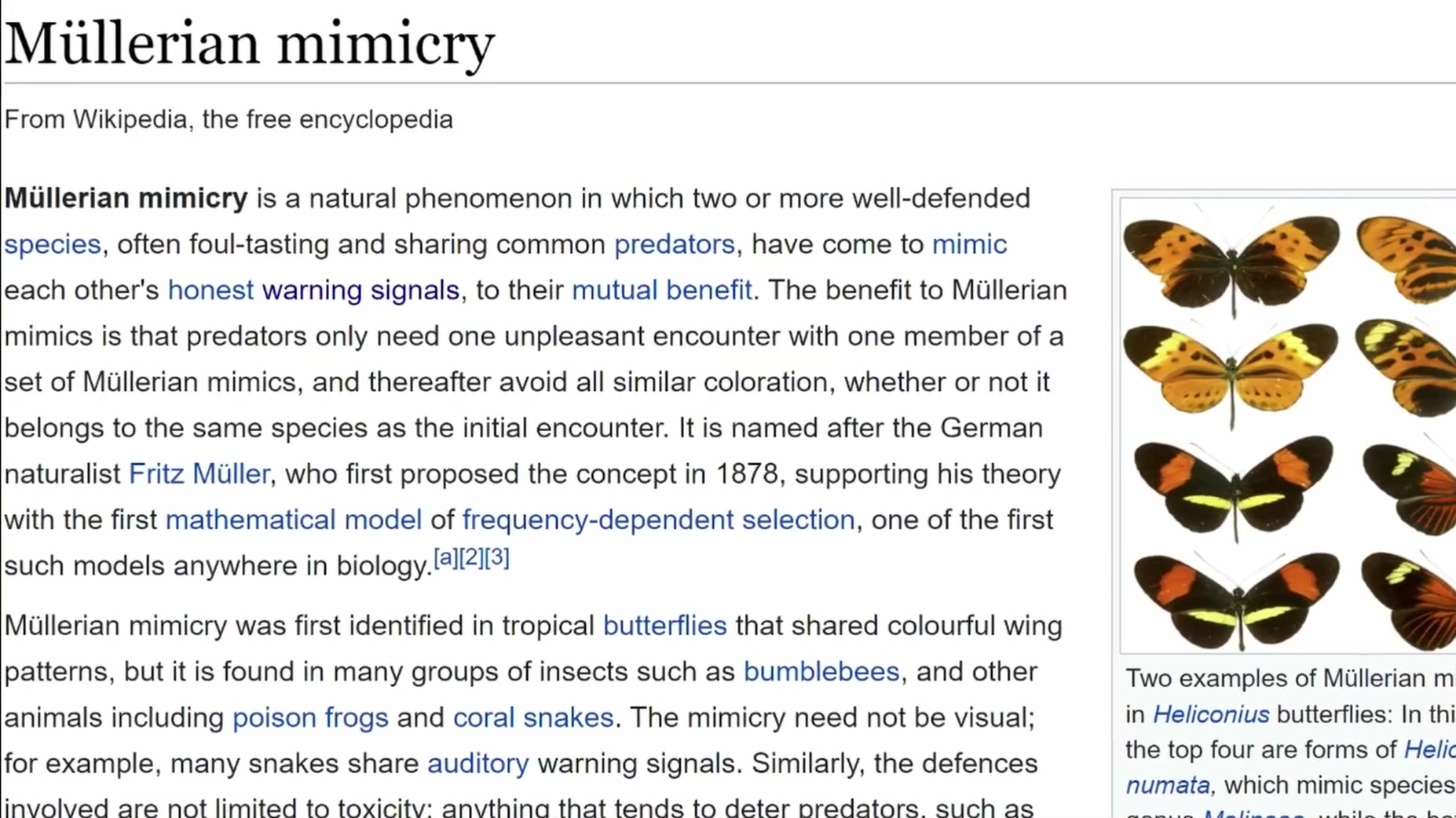
- [06:45] Non-toxic iridescent beetles may rely on Mullerian mimicry, first proposed by Fritz Muller in 1878
- [06:51] Mullerian mimicry: multiple well-defended species mimic each other's warning signals so predators need only one bad encounter to avoid them all
- [07:52] This study is described as the first experimental confirmation of iridescence functioning as a defense mechanism
- [08:15] It has also been suggested human body odor evolved as a form of aposematism, warning predators like wolves or tigers
Jump to a moment
Their links, sorted & clickable
🏛️ Communities & courses1
Support this channel on Patreon to help me make this a full time job🔗 Other links37
Alternatively, PayPal donations can be sent hereGet a Wonderful Person Tee: AmazonLinksLinksLinksLinksLinksSpace Engine is available for free hereTwitchNew CameraCPUVideo CardMotherboardRAMPSUCaseMicrophoneMixerRecording and EditingJörg Hempel CC BY SA 3.0Didier DescouensCC BY SA 4.0Tomfriedel CC BY 3.0Alexcooper1 CC BY SA 2.0Saperaud CC BY SA 3.0Patrick Gijsbers CC BY-SA 4.0Muhammad Mahdi Karim GFDL 1.2Hectonichus CC BY-SA 3.0Hectonichus CC BY-SA 3.0Gabsch CC BY-SA 3.0Licenses usedLicenses usedLicenses usedLicenses usedLicenses usedLicenses usedLicenses usedLicenses usedWas this brief useful?